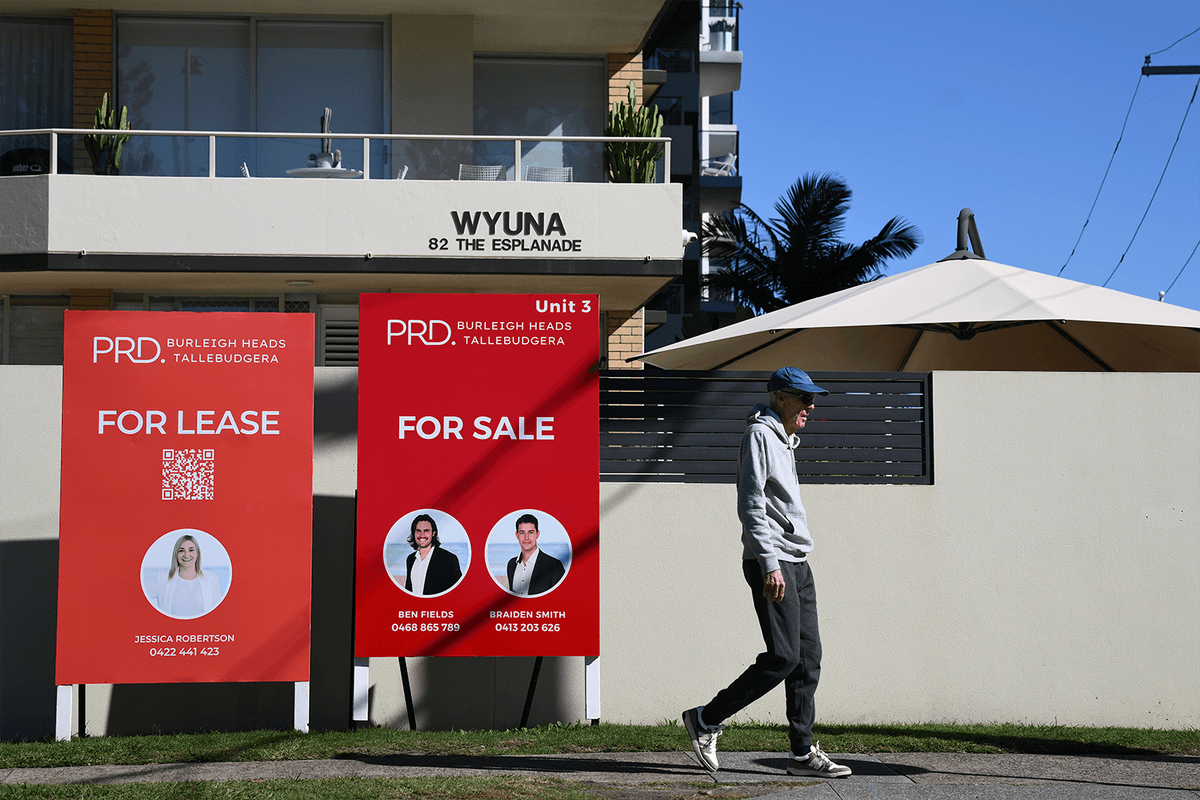
The latest data from Cotality has some good news. It shows that rent increases are slowing down.
But this is exactly the opposite of what all the self-interested shouting claimed would happen after the budget tax changes.
Let’s go back five months to May, when the Government announced changes to negative gearing and the capital gains tax (CGT). The initial reaction from investors, real estate agents, and anybody else who benefits from rapidly rising house prices was to loudly announce this would push house prices down.
And, along with some interest rate increases, that is what happened.
Their expectation was that homeowners would be outraged that the value of their home had dropped a bit in value. The response they got was not what they expected.
Most people were pleased with the falls. The common response was “Good, price falls are making housing more affordable for young people trying to get into the market.”
After failing to convince people to panic about a small dip in house prices, they shifted tactics and began to claim that this would push up rents.
Their logic was that the budget’s tax changes would discourage investors, reducing the number of investment properties. Less supply of investment properties would push up rents.
It was, they said, simple supply and demand.
Just as an aside, this should always have set off people’s BS alarms. Why would the owners of rental properties be worried about rents rising? This would be like gas companies worrying that the price of gas was going up.
The problem with this claim is that it doesn’t account for both supply and demand. It focuses only on supply. It doesn’t take into account that when landlords sell their properties, they don’t just disappear.
Get our newsletter
Quality research, analysis, explainers and factchecks from experts you can trust.
When someone sells, someone else must be buying.
As landlords are getting out of the market, this creates space for more first home buyers, most of whom were previously renters.
So, as the number of rental properties goes down (supply), so too does the number of families that want to rent (demand). Renters turn into homeowners.
As I explained at the time, the tax changes should have no impact on rents.
Five months later and despite all the claims that rents were going to increase much faster, we have not seen any acceleration in rent increases.
According to the Australian Bureau of Statistics, they’re increasing at the same rate as before the tax changes.
And the latest Cotality data seems to show that rents are slowing down. It also showed that vacancy rates were up, and there were stories that rental properties were taking longer to find new tenants. This is not what you would expect if the budget’s tax changes had caused a shortage of rental properties.
It is important to understand that it is much too soon to be able to say for sure what is happening. We will have to wait and see what happens to rents in the coming months.
And to be clear, rents are still increasing too quickly. They need to slow further. But the rapid increase in rents happened long before the tax changes in the budget, peaking three years earlier in 2023.
The reality is the changes to negative gearing and the CGT discount were designed to make housing more affordable. They’re not going to have much of an impact on rents one way or the other.
This is another lesson that we probably shouldn’t listen to the self-interested squealing from those who have been making huge returns from rapidly rising house prices.