Advanced search
The Point - home
DonateSubscribe
HomeWhat's NewOpinionOff the ChartsExplainersFactcheckAbout Us
The Point — home
DonateSubscribe
The Point — home
Advanced search
  • Home
  • What's New
  • Opinion
  • Off the Charts
  • Explainers
  • Factcheck
  • About Us
DonateSubscribe
Subscribe
  • Home
  • What's New
  • Opinion
  • Off the Charts
  • Explainers
  • Factcheck
  • About Us
The Point - home
Privacy PolicySitemapComplaints & CorrectionsNewsletter

The Point recognises the ancestral connections and custodianship of Traditional Owners throughout Australia. We pay respect to Aboriginal and Torres Strait Islander cultures and to Elders past and present.

©2025–2026 The Point, an initiative of The Australia Institute

WHAT'S NEW

Every four hours a gun is stolen in Australia: new research

Gun violence has been in Australian headlines regularly in recent months.

By Alice Grundy & Rod Campbell

Thu 30 Oct 2025 22.36 AEDT
Society & Inequality
Every four hours a gun is stolen in Australia: new research

Photo: AAP Image/Dean Lewins

Republish this article

This article is licensed under Creative Commons — Attribution-NoDerivatives 4.0 International (CC BY-ND 4.0).

Republishing guidelines

  • You must credit the author(s) and The Point.
  • You must link back to the original article.
  • You may not edit or modify the article content.
  • Images may be subject to separate copyright and are not included in this licence.

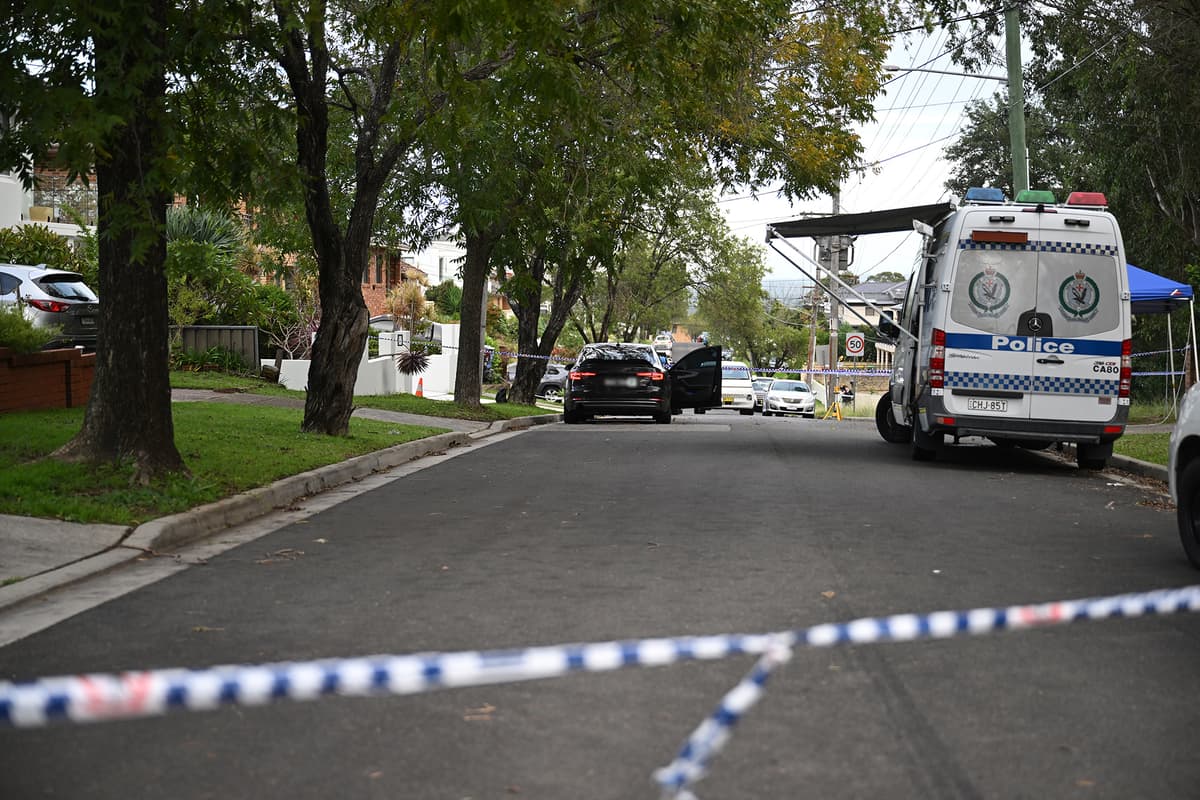
There was a random shooting in inner-west Sydney. Police officers were killed in regional Victoria. Shootings in Queensland are becoming common enough that they barely make the news.

There are now more than 4 million guns legally owned in Australia, more than before the Port Arthur tragedy in 1996.  

Worse still, significant numbers of legally-owned guns are stolen each year, according to new research published by the Australia Institute.  

According to police statistics in each state and the ACT, over 9,000 firearms were stolen from 2020 to 2024.  

That works out at over 2,000 guns per year on average, or one every four hours. 

Over the past two decades, at least 44,631 guns were stolen, a substantial supply of weapons into the hands of criminals.

Gaps in the data and a lack of information on unregistered firearms mean that the full number of firearms stolen in that time must be even larger. 

Data on firearm theft is not consistent, with different information provided depending on the state.  

For example, Victoria and South Australia provide information on the types of firearms stolen. Tasmania has numbers for both number of firearms stolen and incidents of firearms theft, showing on average three guns are stolen per robbery. Western Australia and Queensland estimated how many stolen guns were later recovered. 

The ACT provided only gun numbers, after initially saying that the data “will be extremely hard to extract however and may not be possible”. The NT did not provide any data at all. 

The inconsistency between states highlights that nearly 30 years after Port Arthur, the National Firearms Agreement is still not complete.  

The states have not harmonised their laws or data collection. A National Firearms Register still does not exist. The current timeline for the register is completion in 2028. 

This all shows that gun control is not a done deal in Australia. It is not something that was permanently dealt with by John Howard in the 1990s.

Gun control needs to be considered a work in progress by state and federal governments. It will take ongoing effort to reduce gun numbers, enforce existing laws and introduce new laws in response to changes in technology and social circumstances

Gun control needs to be back on the Australian policy agenda in order to keep Australians safe from gun violence.


Related Articles

WHAT'S NEW

Essential workers priced out of almost entire Australian rental market, new report finds

By Tegan George

Australians working full-time in essential services are being priced out of almost the entire rental market, with a new Anglicare Australia report revealing just how far housing costs have outstripped wages.

Society & Inequality
Essential workers priced out of almost entire Australian rental market, new report finds

OPINION

When essential workers can't afford to live in our communities, everyone pays the price

By Kasy Chambers

There was a time when having a decent job meant you could afford a decent home. You might not have been rich, but if you worked hard, you could pay the rent, cover the bills, and have something left over. For millions of Australians, that has fallen apart.

EconomySociety & Inequality
When essential workers can't afford to live in our communities, everyone pays the price

WHAT'S NEW

Public health experts warn Australia's patchwork gun laws put communities at risk

By Tegan George

Australia’s growing divide over gun reform has drawn criticism from public health experts, who say the country’s patchwork of laws is putting communities at risk. It comes as New South Wales begins its biggest firearms buyback in three decades.

Society & Inequality
Public health experts warn Australia's patchwork gun laws put communities at risk

OPINION

The inverse care law: how private healthcare can increase pressure on public hospitals

By Luke Slawomirski

Private health care is supposed to take pressure off public hospitals. Sometimes it can do the opposite. When scarce clinical resources are used where they’re least needed, public patients wait longer.

Society & InequalityHealth
The inverse care law: how private healthcare can increase pressure on public hospitals