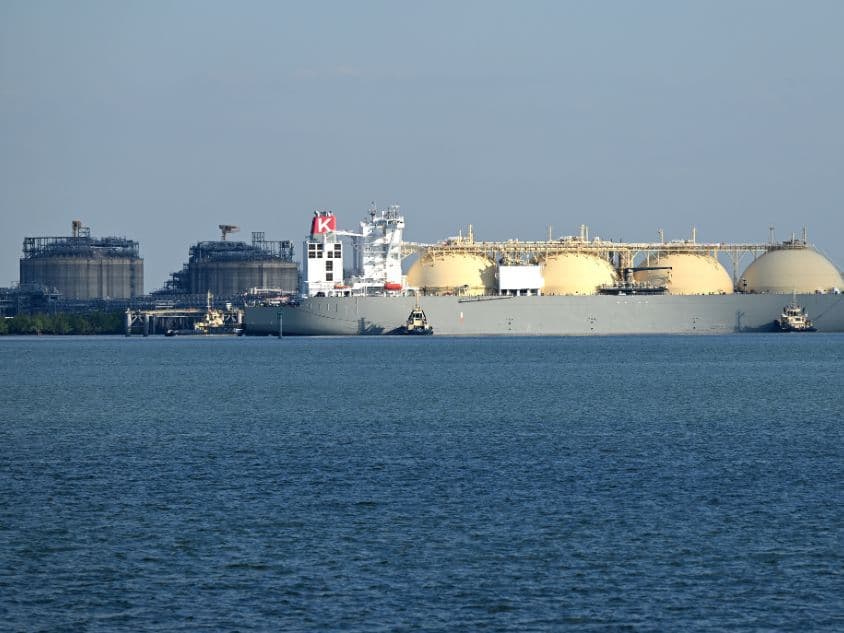
Australia’s gas industry is harming communities across the Asia-Pacific, with new research warning its aggressive expansion is fuelling human rights violations, environmental destruction and health crises.
The Jubilee Australia Research Centre found the damage extended along the gas supply chain, from extraction sites in the Northern Territory and Papua New Guinea to heavy industrial facilities in Thailand and South Korea.
It said people living near gas projects reported severe health impacts, including increased rates of cancer and respiratory illnesses, while communities were often “left in the dark” about the risks to their land, wellbeing and livelihoods.
“The experiences of communities living on the frontline of gas expansion are startlingly similar across the Asia-Pacific,” said James Sherley, senior climate justice campaigner at the Jubilee Australia Research Centre.
“Gas corporations operate with a disregard for international law, as the rights of communities are frequently dismissed in an effort to expedite profits, with governments enabling the harms wrought by this industry.”
The Asia-Pacific is the world’s largest importer and exporter of liquefied natural gas, driven by what the report described as the “seismic expansion of gas production in Australia” and Japan’s continued role in financing and “greenwashing” gas projects across the region.
“While Japanese companies and financiers bloat the role of gas, communities around the Asia-Pacific are paying the price,” said Mia Watanabe, a campaigner at Oil Change International.
“Japan cannot call itself a partner in Asia’s energy transition while it is pitching more gas to a region that is dealing with worsening climate impacts and terminals running below capacity.”
The report examined five case studies spanning the regional supply chain, featuring communities that are resisting the industry’s push for expansion.
Community leaders reported they hadn’t received the promised economic benefits and that gas projects had damaged local businesses and livelihoods, and the surrounding environment.
“Gas expansion in the Arafura and Timor Seas poses serious threats to our marine environment, and to the health, wellbeing and culture of First Nations people who share our Sea Country. And we represent just one part of the supply chain,” said Sea of Nations executive director Antonia Burke.
“All over the region, communities are resisting the fossil fuel agenda imposed on us by corporations and governments seeking to benefit from the destruction of our country.”
The Australia Institute’s head of fossil fuel transition, Louise Morris, said Australia had no right to claim to be a good-faith partner in the region’s energy transition.