Blue Mountains City Council is the latest local government to call for big polluters to pay for the costs of global warming. The council unanimously passed a motion earlier this week urging the Albanese Government to introduce a levy on fossil fuel companies to help cover the costs of climate-fuelled natural disasters.
By Tegan George & Rod Campbell
Fri 2 Oct 2026 09.13 AEST
Photo" AAP Image/Wolter Peeters, SMH Pool


Blue Mountains City Council is the latest local government to call for big polluters to pay for the costs of global warming.
The council unanimously passed a motion earlier this week urging the Albanese Government to introduce a levy on fossil fuel companies to help cover the costs of climate-fuelled natural disasters.
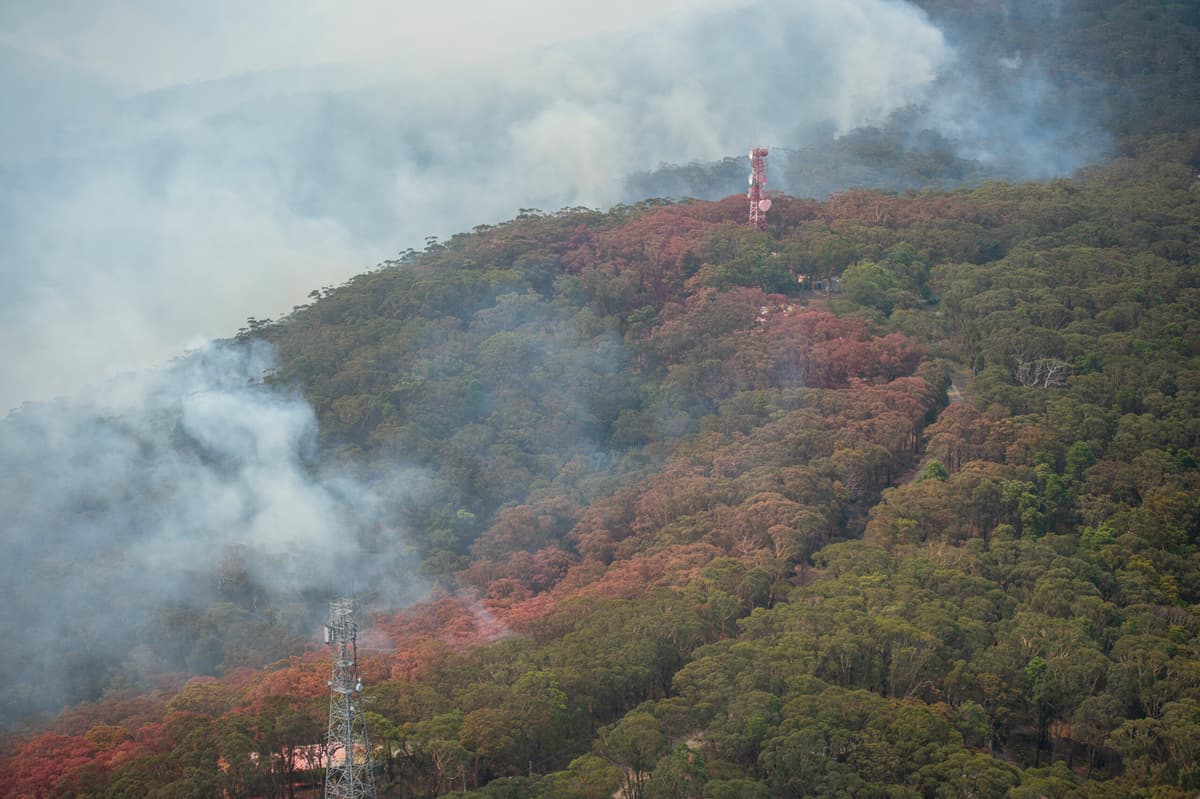
Seven severe fires tore through the region during the 2019–20 Black Summer, with the biggest at Gospers Mountain, where the locals dubbed it ‘The Monster’. It burned an area seven times the size of Singapore, making it the largest recorded ‘mega-fire’ to start from a single ignition point.
“The Blue Mountains is one of only two cities in the world surrounded by a World Heritage Area and in 2019-2020’s Black Summer, we saw over 80% of it burned by catastrophic bushfires,” said Blue Mountains City Council Mayor Mark Greenhill.
“As climate change worsens, these fires will grow more intense – and our Council is left to foot the bill for their damage.” Seven years on, the region is still recovering from the disaster, and the council and community are still paying for it through rising insurance premiums, damaged infrastructure and general clean-up costs.
“Our community is being left to pick up the bill for climate pollution while big coal and gas corporations make billions in profits,” said Anne Welch from the Blue Mountains Climate Compensation Group.
The Blue Mountains joins twelve other councils that have passed similar motions, arguing coal, oil and gas producers should be held partly responsible for extreme weather events. The City of Port Phillip in Melbourne will vote on a similar motion next week.
“If you make a mess, you should clean it up. Local councils and residents shouldn’t be left holding the bill while corporations pocket the profits,” said Ms Welch.
Quality research, analysis, explainers and factchecks from experts you can trust.
In June, the Australian Local Government Association passed a vote on a City of Sydney proposal for a Climate Compensation Fund, calling for Canberra to explore ways that fossil fuel companies could help cover disaster costs. Australia Institute research has shown that such a levy could raise up to $100 billion per year, with funding to help bridge the gap between rapidly increasing climate disaster costs and local government revenue.
“Local governments cannot raise much revenue, that’s just how Australia’s tax system works,” said Rod Campbell, Research Director at The Australia Institute.
“Councils can’t raise more money, yet they’re faced with rapidly increasing costs of responding to climate disasters.
“That’s why it is so significant that local governments are calling on the Federal Government to help with this problem.”
Serena Joyner, CEO, Bushfire Survivors for Climate Action, said it was imperative big polluters help pay for the damage they’re driving.
“Australia has always had bushfires, but as a Blue Mountains local for 28 years I know how much harder it is to defend against bushfires made more dangerous by climate change,” she said.
“I work with Australians who have lost everything to catastrophic fires, and like many people in the mountains I worry about protecting my home, being able to afford insurance and the safety of my loved ones who volunteer to keep our community safe.”
The council will also ask the Albanese government to establish a parliamentary inquiry into the adequacy of the 2025 National Adaptation Plan.

