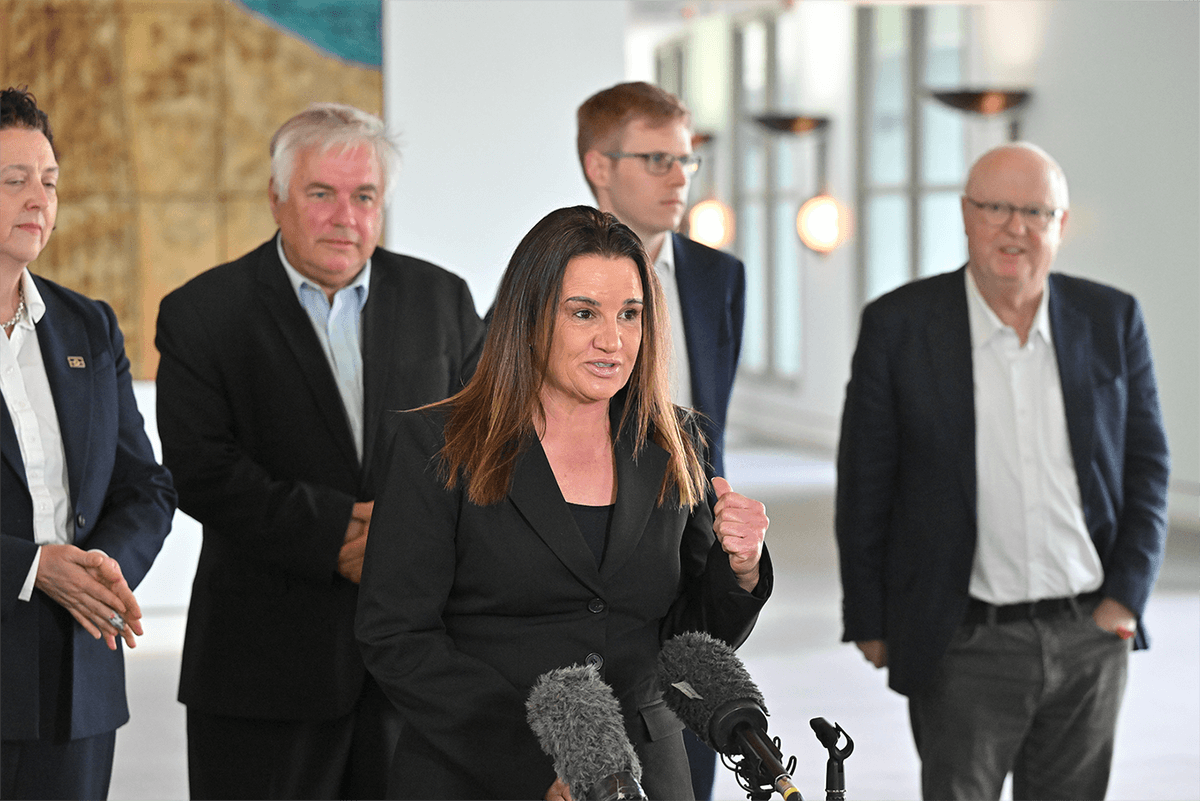
“Restricting access through bullying tactics goes against the spirit of our laws and has a chilling effect on Australians seeking to bring transparency to government,” said ACT independent Senator David Pocock.
Politicians aren’t the only ones raising serious concerns.
Legal experts, journalists and advocacy groups have also added their voices to the growing chorus.
“Earlier this year, the Coalition, Greens and crossbench came together to reject a more secretive government and weaker freedom of information laws,” said Bill Browne, director of the Australia Institute’s Democracy and Accountability Program
“An FOI applicant shouldn’t have to go to court to get the government information that they are entitled to. Senator Lambie’s private member’s bill is a solution to a problem that should never have emerged: that an FOI applicant can be bankrupted by the government for having their day in court.”
Senior counsel Geoffrey Watson accused the government of using legal costs to intimidate people seeking information.
“This Government seems intent on shutting citizens out of the courts with the threat of punishing costs orders – a typical litigation tactic of the well-heeled bully,” he said.
The Alliance for Journalists’ Freedom warned the case could have serious consequences for newsrooms.
“In a world of diminishing transparency, FOI remains one of the few tools that journalists have to get real, unfiltered information from the government,” said executive director Peter Greste.
“The decision to go to the Federal Court to seek costs in an FOI case risks setting a precedent that could break some newsrooms who are only acting in the public interest.”
An Auditor-General’s report into FOI administration, released in May 2026, found that across three government departments, almost 80 per cent of FOI requests were either partially or fully denied and that decision-making was “not consistently transparent, accountable and pro-disclosure”.
When applicants challenged decisions, 54 per cent resulted in further information being released.
“Freedom of Information only works if ordinary Australians can actually use it. Nobody should face financial ruin just for seeking access to government documents,” said independent MP Dr Helen Haines.
“The Albanese government should be restoring reduced trust in politics by increasing transparency, instead it is going the other way,” added Community Strong MP Allegra Spender.
Tasmanian MP Andrew Wilkie described transparency as the “cornerstone of our democracy”.
“The imbalance of power and resources between an individual and a government are so vast, we should be seeking to close that gulf, not widen it,” he said.