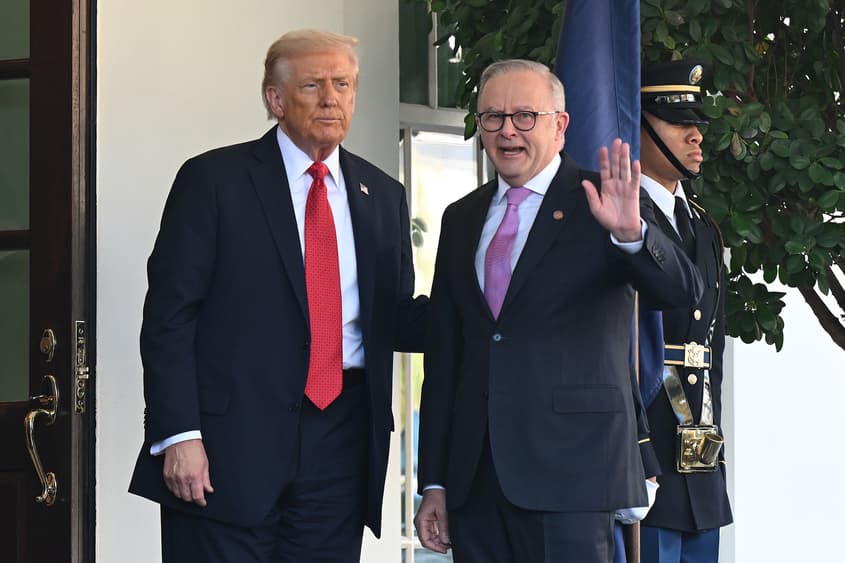
As Japan marks 80 years since the atomic bombings of Hiroshima and Nagasaki, concerns are mounting over a new nuclear arms race with the US and Russia seemingly putting testing back on the table.
Wed 3 Dec 2025 00.00
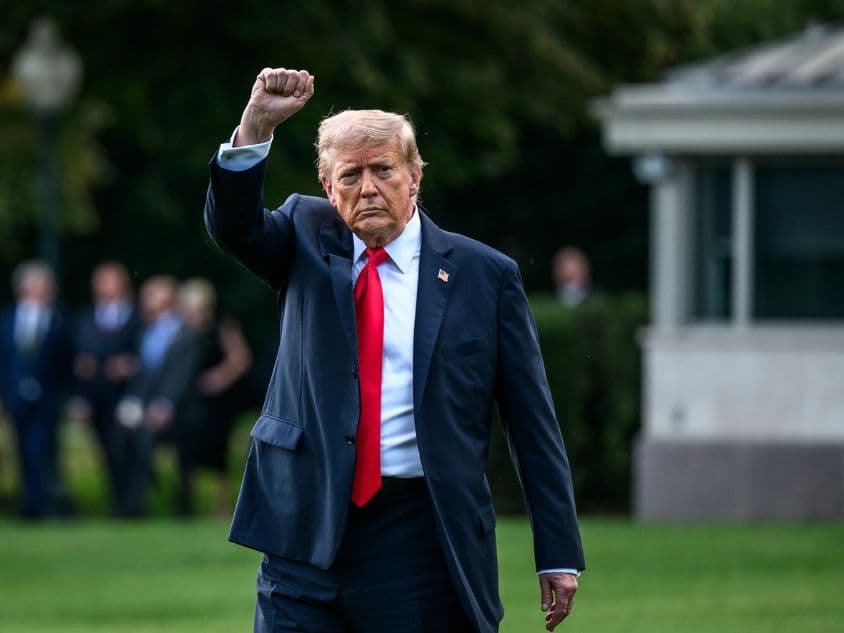
The White House/Flickr


As Japan marks 80 years since the atomic bombings of Hiroshima and Nagasaki, concerns are mounting over a new nuclear arms race with the US and Russia seemingly putting testing back on the table.
In late October, President Donald Trump ordered the Pentagon to start testing its nuclear arsenal for the first time in more than 33 years, reasoning it would be done “on an equal basis”.
“I’m saying that we’re going to test nuclear weapons like other countries do, yes,” said Mr Trump. “Russia’s testing, and China’s testing, but they don’t talk about it”.
Russia and China have not carried out such tests since the early to mid-1990s.
While the US has since sought to downplay the declaration, Dr Ruth Mitchell, neurosurgeon and Nobel Prize winner with the International Campaign to Abolish Nuclear Weapons said, “it was a terrible, irresponsible pronouncement” and cause for alarm.
“The best framing of this I’ve heard is like the road to hell in lined with people thinking, ‘Oh, he just said something silly again’ and not thinking it can’t have very serious consequences and implications.
Speaking on the Australia Institute’s After America podcast, Dr Mitchell cautioned people against dismissing the comments, pointing out the Trump administration’s brutal mass deportation efforts also started with shallow slogans about needing to “clean up the trash”.
“ICE are picking up people and basically disposing of them. I grew up in South America and this is starting to feel like Pinochet’s Chile.
“People are being disappeared, people are being lost in the system, no one knows where they are, including children.
“This is very very dire and all of that also started with this glib rhetoric.
“The consequences of that deeply unserious thinking are very serious for human beings.”
US Energy Secretary Chris Wright later attempted to recharacterise the President’s comments.
“I think the tests we’re talking about right now are system tests. These are not nuclear explosions,” he said. “These are what we call non-critical explosions.”
However, Dr Mitchell believes there’s still cause for concern.
“Unfortunately, I don’t think we can afford to dismiss Trump’s kind of instinct that he’d like to see some nuclear testing even though he doesn’t actually know what that is because it hasn’t stopped him before that he’s not appropriately briefed or oriented to any of these policy areas.”
Dr Mitchell visited Nagasaki and Hiroshima in October as part of the World CongressInternational Physicians for the Prevention of Nuclear War (IPPNW).
“The use of nuclear weapons and the human impact, it last forever and so seeing the impact on the lives, the bodies, the communities and the countryside as well of places like Nagasaki is really important.”
“It’s not just that the US dropped bombs on Hiroshima and Nagaskai in 1945. It’s about the hundreds and thousands of nuclear tests that have occurred since then.
According to the International Campaign to Abolish Nuclear Weapons (ICAN), at least eight countries have carried out an estimated total of 2,056 nuclear tests.
“We had British nuclear testing on unseated sovereign Aboriginal land in the South Australian desert.
“It’s not just the people who die right away. It’s not just the health of this generation and the next generation and the one to come. It’s the contamination of the earth, the disruption of the food cycle, the loss of sacred sites.
“Land, air, water is all contaminated and that has health, environmental and spiritual consequences.”
Dr Mitchell said the political climate in the US means the international medical community and civil society delegations no longer feel safe attending United Nations in New York.
“… we’re seeing diplomats, heads of state having their US visas cancelled, which is a huge violation of the agreement the United States has with the United Nations.
“If you’re going to host the main office, the global headquarters of the United Nations in New York City, then there’s an understanding and an agreement that there are responsibilities that go with that privilege.
“That means you have to let the diplomats and heads of state in. And so, cancelling the visas of very significant (people), whether it’s diplomats, heads of state, and now we see the cancellation of visas of other public figures, Nobel prize winning authors … this sort of stuff is super chilling.”
She said the IPPNW is considering relocating major meetings from New York to Geneva.
Prime Minister Curtin’s Christmas 1941 newspaper column advised the Australian people that henceforth we would look to America as our protector rather than Britain. To have questioned our trust in the USA at that time would have been unthinkable. A decade later, under Prime Minister Menzies, trust was cemented into the ANZUS treaty, which has remained the cornerstone of Australia’ security and self-confidence ever since. It has become an article of faith.
Donald Trump’s escalating military build-up in the Middle East has raised fears that the United States is on the brink of a new war with Iran.
For some strange reason, foursomes are back in vogue. Maybe it’s the persistence of Bridge Clubs, or the strange return of American Foursomes in the golfing world. How else can one explain the hold that quadrilaterals have over the imaginations of defence planners in the US and Australia?