Stop trying to make the Quad happen – it’s not gonna happen
For some strange reason, foursomes are back in vogue. Maybe it’s the persistence of Bridge Clubs, or the strange return of American Foursomes in the golfing world. How else can one explain the hold that quadrilaterals have over the imaginations of defence planners in the US and Australia?

Wed 25 Feb 2026 13.00
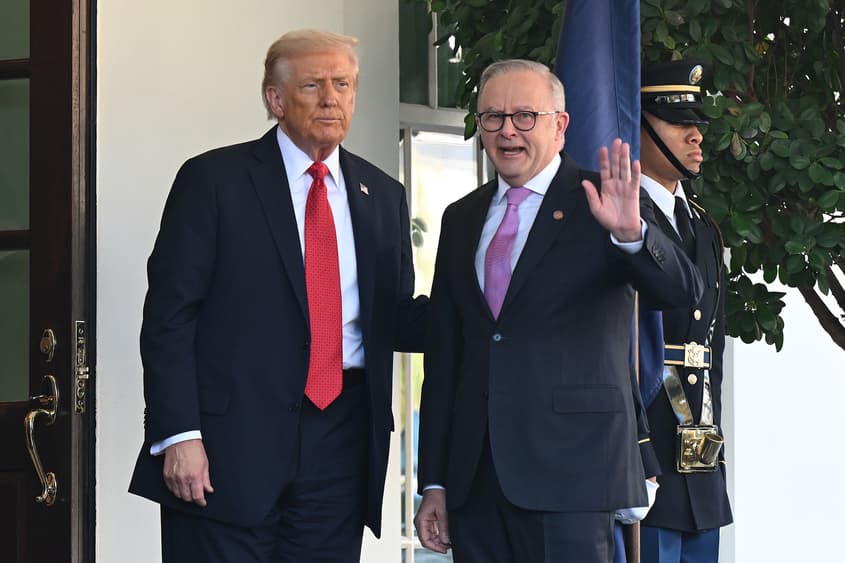
Photo: AAP Image/Lukas Coch


For some strange reason, foursomes are back in vogue. Maybe it’s the persistence of Bridge Clubs, or the strange return of American Foursomes in the golfing world. Or perhaps it’s the geometricians’ fascination with the elegance and symmetry of quadrilaterals – squares, rectangles, rhombuses and trapeziums of all sorts. How else can one explain the hold that quadrilaterals have over the imaginations of defence planners in the US and Australia?
As reported by The Sydney Morning Herald, Ely Ratner, a former assistant defence secretary for Indo-Pacific security affairs in the Biden administration, has proposed that “Australia, the United States, Japan and the Philippines should establish a formal defence alliance to counter China’s growing military power in Asia”. And, of course, he has advocated a significant increase in Australian defence spending so that we can afford AUKUS and all the other “important investments” – presumably to frighten off the “threat” from China.
We pointed out late last year that the Australia, US, Japan and India “Quad” is on its deathbed. It lacks the common security interests and the cultural alignments needed to make any alliance viable in the long-term. So, too, does the new variant. To channel the Mean Girls, “stop trying to make the Quad happen – it’s not gonna happen”. And for good reason – there’s a growing realisation across Asia that engagement rather than provocation delivers far better results in dealing with China.
Behind that observation is a couple of millenia of Asian experience in dealing with China. Thailand and Vietnam, in particular, are well practised in the art of negotiation with China, as are South Korea and Japan – though Prime Minister Takaichi might need a bit of a refresher course. All of that cultural and historical experience dwarfs whatever “wisdom” the US and Australia might think they’ve accumulated from dealing with a China that’s re-emerged from the collapse of the Ching dynasty and the colonialist opportunism that followed.
Australia’s constant search for the path of least resistance in avoiding anything that might resemble assertiveness in pursuit of national interests dooms any form of new quadrilateralism from the outset. And a multilateral arrangement without Indonesia, particularly given the recently inked Treaty on Common Security, makes no contemporary strategic sense at all.
Even less does it make diplomatic sense. The economies of most of the ASEAN members are booming, with southeast Asia emerging as a complementary economic powerhouse to that of China. So while there will be frictions and tensions with the massive economic force that China has become, that does not mean armed conflict.
Even more remote is the likelihood of military invasion by China. That currently exists only in the paranoia of those who seek to substantiate the ambitions of the military-industrial complex about which President Eisenhower warned us in in his 1961 farewell speech. “The potential for the disastrous rise of misplaced power exists and will persist.” President Trump and those who advocate the military containment of China would do well to familiarise themselves with Eisenhower’s warning.
So confections like the Quad, in any combination of partners, and treaties explicitly constructed around threats that are ungrounded by evidence will go the way of the Baghdad Pact and the Manila Treaty. These arrangements were as short-sighted as they were short-lived. Short term military arrangements substituted for sustained long-term diplomacy, and we’re still paying the costs of lost opportunities.
The “ruptured” world of which Canadian Prime Minister Carney spoke at Davos is amenable to repair and restoration. This won’t be achieved through a simple return to old formulas and the status quo ante. Rather, it will be the product of the discussion and negotiation that a sustained multilateral diplomacy will foster. Such a diplomacy will establish order and rules in the world as it now is, but a world re-imagined as it could be.
And that is a world that releases and relies upon human ingenuity to build prosperity – and the security that is the gift of prosperity – based on the international rule of law rather than deterrence and threat. And if Australia, working with the US, could make such a difference to the re-shaping of the twentieth century through Dr Evatt’s energies in San Francisco in 1945, why should we need any form of Quad to replicate what we’ve done before?
Allan Behm is an advisor at The Australia Institute’s International and Security Affairs program.
Related Articles
Shorter America This Week: Ceasefire?; Madman theory; Group hugs in space
It isn’t always easy to keep up with what’s happening in the US. “Shorter America” is a series where Dr Emma Shortis loops you in on what’s going on in America and shares news and analysis that you can trust.
Australia has significant power in the world, we should be using it more wisely
Australia is not a small nation with no agency.