Reluctance to look at US with "clear eyes" becoming increasingly untenable: US expert
As Europe grows increasingly alarmed by the Trump administration’s fixation on Greenland, the Albanese government is being urged to reassess Australia’s blind loyalty to the United States.
Tue 13 Jan 2026 13.00
The White House/Flickr


As Europe grows increasingly alarmed by the Trump administration’s fixation on Greenland, the Albanese government is being urged to reassess Australia’s blind loyalty to the United States.
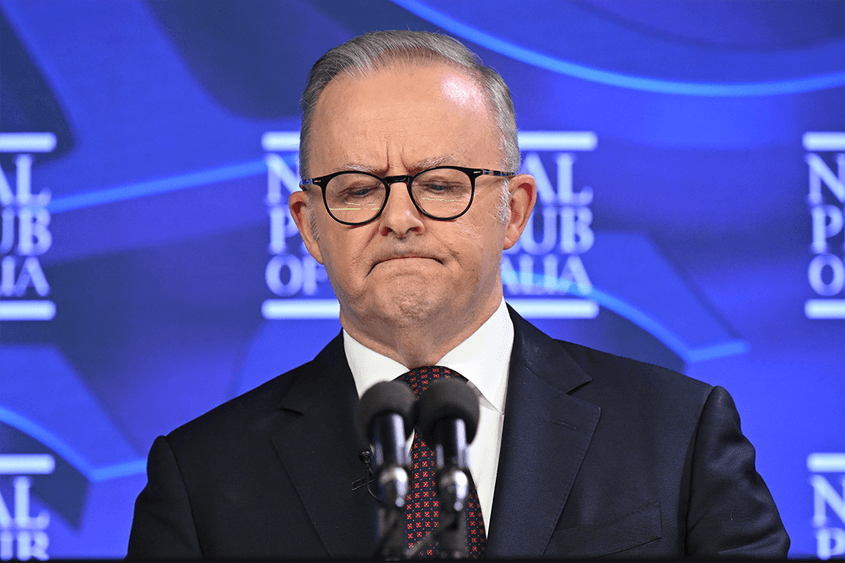
“It seems the Australian government is not willing to face the reality that we find ourselves in and clearly, that’s hard,” said Dr Emma Shortis, director of international and security affairs at the Australia Institute.
“US allies are struggling with that all over the world. But this reluctance to look at the United States with clear eyes, I think is just becoming increasingly untenable.”
Denmark’s Prime Minister Mette Frederiksen says her country faces a “decisive moment” as the Trump administration airs its ambitions to “own” Greenland, supposedly to stopRussia and China from exerting control over it. Greenland is a self-governing territory of Denmark.
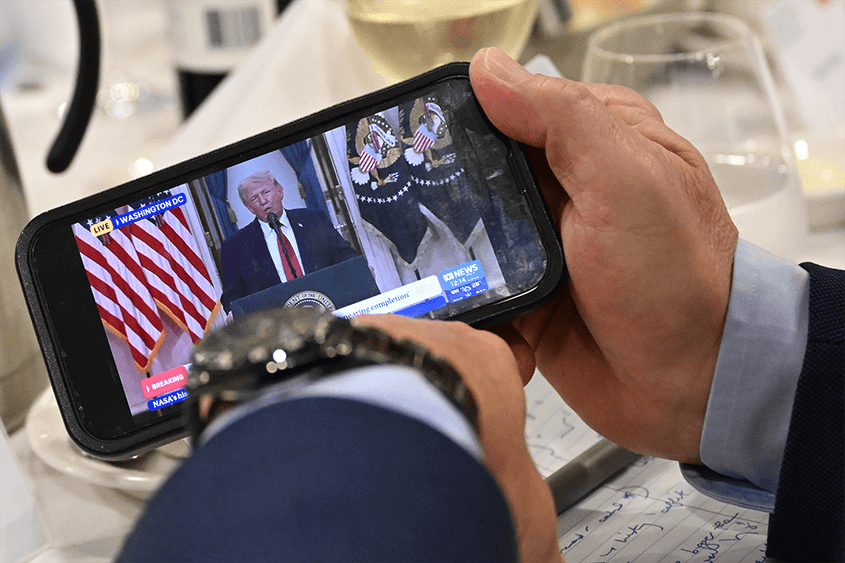
“I would like to make a deal, you know, the easy way,” US President Donald Trump has told journalists at the White House, “but if we don’t do it the easy way, we’re going to do it the hard way.”
“I think they (the Trump administration) saw Venezuela as a relatively straightforward, easy target, said Dr Emma Shortis on the Australia Institute’s After America podcast.
“They’re warming up to bigger ones and they’re being explicit about that.”
The ramp up in rhetoric around Greenland comes a little more than a week after US Special Forces abducted Venezuelan President Nicolás Maduro and his wife.
“Sometimes it does just punch you in the face that this is really happening, and it isn’t some cruel joke,” said Dr Shortis.
“While these people are embarrassing and often fumbling and shallow and sometimes predictable, they are also incredibly dangerous.”
President Trump has openly declared “I don’t need international law” and that he’s constrained only by his “own morality”.
Dr Shortis described it as “a terrifying thought”.
“These laws exist for a reason, and the total destruction of them makes the world a much more dangerous place for all of us.
“They clearly now are convinced that they’re invincible.”
She noted that when the US was “blowing up alleged drug boats” in the Caribbean Sea, the UK stopped sharing some intelligence with them “because they didn’t want to be associated with actions that they believe are illegal”.
“I think that’s pause for thought, particularly in Australia,” she said.
White House Deputy Chief of Staff Stephen Miller recently sparked global alarm when he proclaimed “no one will fight US militarily over future of Greenland.”
“They are apparently considering outright force, and I think they have talked about it so much now. They’ve gone on TV, national television, and talked up how Greenland should be the United States,” explained Dr Shortis.
“The language is escalating, and when they do this they’re not just talking to the base, they’re talking directly to Trump. That’s how Trump’s people get to him. They go on TV and theytalk back to him.
“I think they’re manoeuvring him into a position where not taking Greenland, not doing it, is going to make them look weak or look like they don’t stick to their word or their guns. And we know Trump hates that. He hates looking weak.”
As the days pass with no condemnation from the Australian government, Canberra risks being drawn into quiet complicity.
“I think it’s very clear where public sentiment is going on this issue in terms of how Australians feel about the United States,” Dr Shortis said.
Polling by the Australia Institute found “only 16% of Australians believe that the United States is a “very reliable” security ally”.
It also revealed that more than half of Australians would feel unsafe travelling to the United States.
“I think that’s a really clear indication of where the Australian public are at on our relationship with the United States,” she said.
Related Articles
Shorter America This Week: Ceasefire?; Madman theory; Group hugs in space
It isn’t always easy to keep up with what’s happening in the US. “Shorter America” is a series where Dr Emma Shortis loops you in on what’s going on in America and shares news and analysis that you can trust.
Australia has significant power in the world, we should be using it more wisely
Australia is not a small nation with no agency.