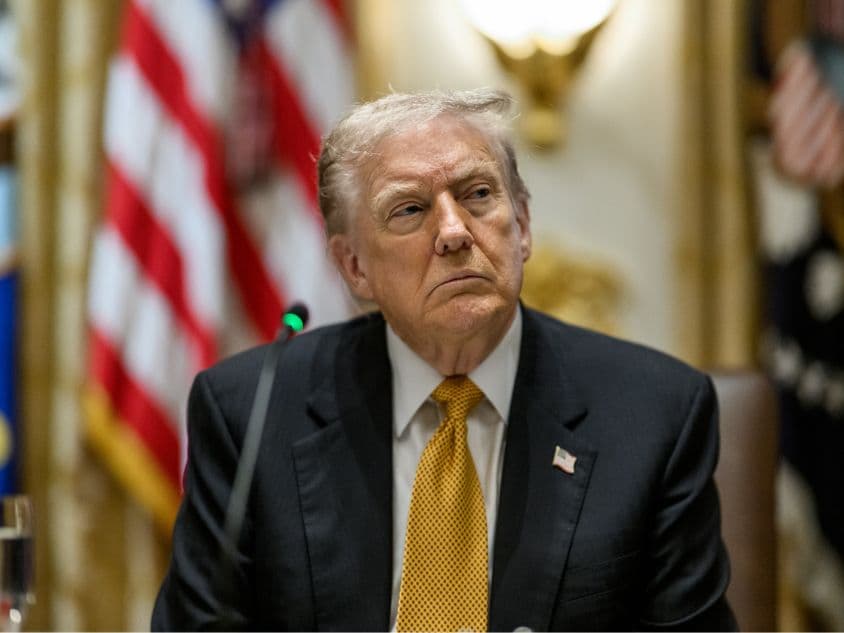
European leaders have pushed back against Donald Trump’s tariffs threat, declaring they won’t be “blackmailed” into surrendering Greenland, as the future of NATO hangs by a thread.
Wed 21 Jan 2026 01.00
The White House/Flickr


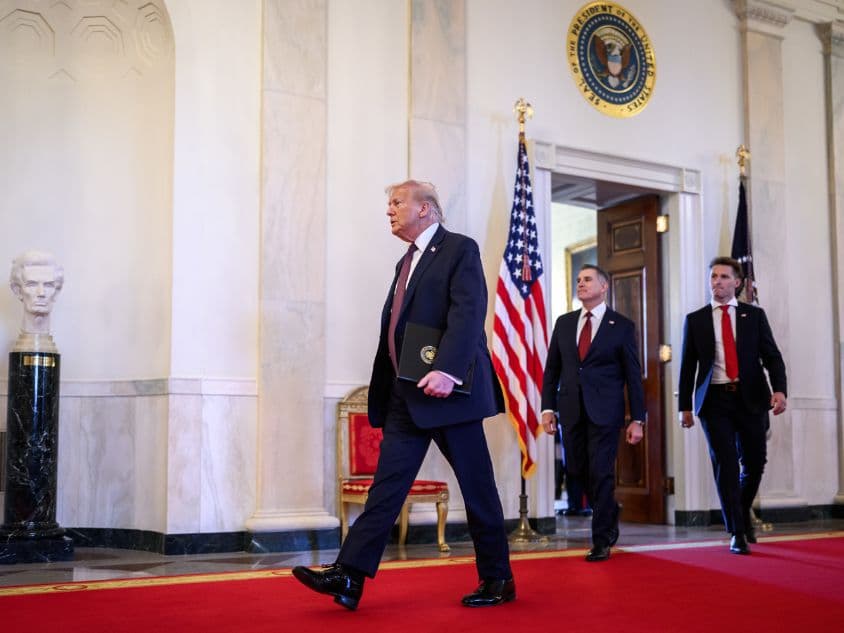
The US President has said he will impose a 10% import tax on goods from eight NATO (North Atlantic Treaty Organisation) allies if they oppose his proposed takeover, with the tariff set to increase to 25% in June.
“This has shaken NATO to its core, and it may well break the decades old alliance entirely,” said the Australia Institute’s Director of International & Security Affairs Dr Emma Shortis.
Denmark’s Prime Minister Mette Frederiksen has said “Europe won’t be blackmailed” while the UK has reaffirmed, “Our position on Greenland is non-negotiable”.
“When you’ve got them [European nations] preparing to dispatch actual troops to defend one NATO country against another NATO country, you have definitely crossed over into yet another circle of hell,” said Executive Vice President of the Centre of International Policy Matt Duss.
“This is really almost unimaginable the idea that we’d be doing this to some of our closest allies.”
Speaking on the Australia Institute’s After America podcast, Dr Shortis said regardless of what comes next, the Trump administration has fundamentally altered transatlantic relations.
“Trump’s actions have broken all trust and America’s traditional allies must adapt to this new reality,” said Dr Shortis.
“The America we thought we knew is gone and it isn’t coming back.”
NATO is a political and military alliance of 32 countries from Europe and North America.
It was formed in 1949 for collective defence against the Soviet Union but now acts “against all threats, from all directions”.
Mr Duss said he can’t see how it survives if its “most important member simply decides it will seize the territory of another member”.
“At that point, that’s not a security alliance anymore,” he said.
The Greenland dispute comes amidst continued instability in US foreign policy with the Trump administration now walking back rhetoric about possible military action against Iran.
“To see Donald Trump and all these other conservatives who are defending the harassment and arrest of protesters [in Iran] … now coming out, to pretend to be supporters of human rights, it’s just so cynical and instrumental,” said Mr Duss.
“It’s gross,” agreed Dr Shortis.
In contrast, mother of three Renee Good was shot dead by an Immigration and Customs Enforcement (ICE) agent on 7 January in Minneapolis, where the Department of Homeland Security says it’s now arrested over 10,000 illegal immigrants.
Recent polling shows the majority of Americans believe ICE has been “too tough” when stopping and detaining people while most Republican voters feel protesters have gone too far.
“You have seen rising protests against ICE. But I think the problem is our political elite has so immunised itself from political pressure just over many years, and this is a problem of both parties,” noted Mr Duss.
“Going back to 2020, you had, again, some of the biggest protests in American history after the murder of George Floyd.
“What did it do in terms of police reform? It did nothing.”
President Trump continues to “dangle the possibility” of invoking the Insurrection Act – which authorises the president to deploy military forces inside the United States to “suppress rebellion or domestic violence or to enforce the law” in extreme emergencies.
“People can see this footage, day after day after day, of these big guys in tactical gear walking around in desert camo in snowy Minnesota, just ridiculous on its face.
“Who are you hiding from in this camo gear? And [they’re] just harassing people, just acting like just unaccountable assholes.”
Dr Duss said he’s surprised Trump has exercised caution and hasn’t already invoked the act.
“I think he understands this would be such a serious move,” he said.
“We are approaching some really dangerous new territory. Really dangerous.”
Protests, he fears though, won’t be enough to create change.
“What tools do we have to actually impose costs on this administration such that they change course?”
Dr Shortis said it’s time Australia reframes its relationship with the United States.
“So that it recognises what is actually happening and reengages on a democratic level rather than just on this kind of shallow President to Prime Minister level that doesn’t engage with actual real people on the ground”.
Advertisement
It isn’t always easy to keep up with what’s happening in the US. “Shorter America” is a series where Dr Emma Shortis loops you in on what’s going on in America and shares news and analysis that you can trust.

Australian travellers have given the Trump presidency a resounding thumbs down.
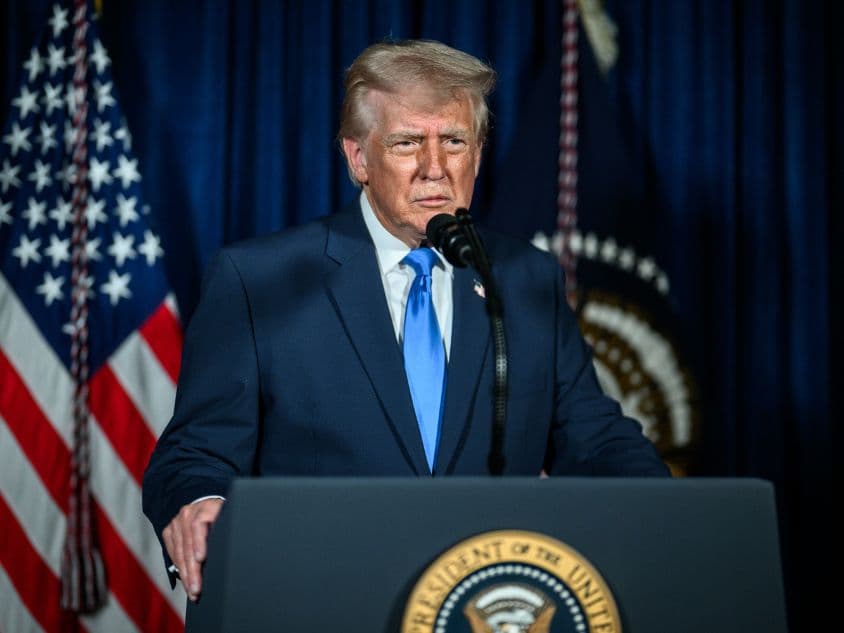
As US President Donald Trump threatens military intervention in Iran and ramps up rhetoric around “conquering” Greenland, experts are questioning whether it’s a sign of a “cornered animal” lashing out.