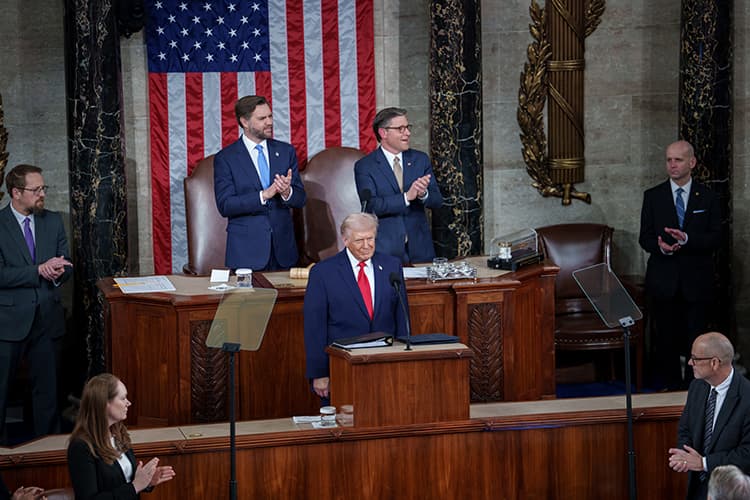
An extract from Amy Remeikis’ new book, Where It All Went Wrong: The Case Against John Howard’

Thu 5 Mar 2026 01.00
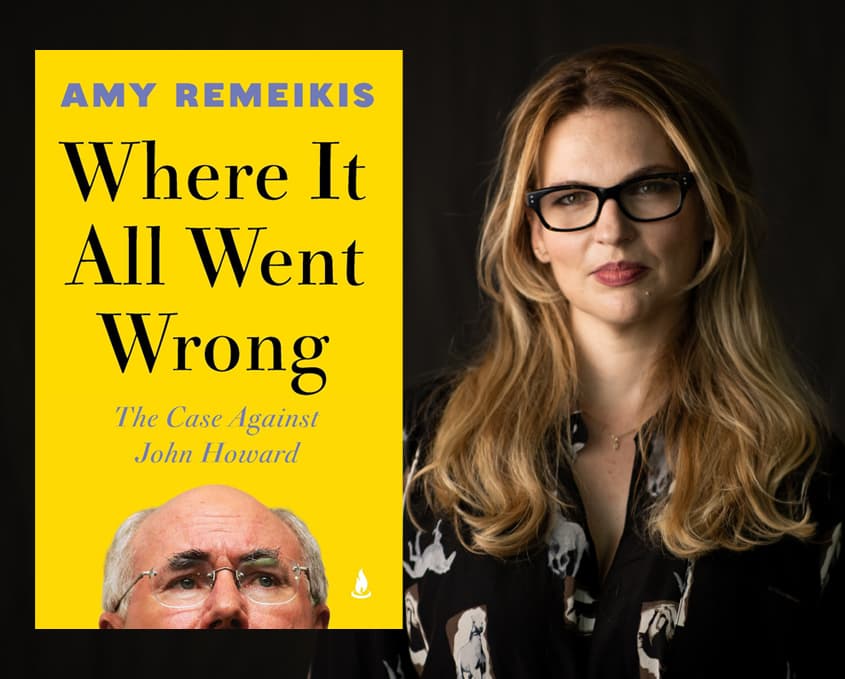


‘My friends, let me say to you today that America has no better friend anywhere in the world than Australia. Australians and Americans enjoy each other’s company. We share a love of sport and in some of them we are fierce competitors. And we even from time to time share the Academy Awards.’
— John Howard to the US Congress, 2002
In September 2001, John Howard travelled to America to commemorate the fiftieth anniversary of the ANZUS treaty.
Signed in 1951 between the United States, Australia and New Zealand, the treaty was part of Australia (and at the time New Zealand) looking for a protector. Following the denuding of Britain after World War II, the fall of Singapore to Japan, the bombing of Darwin and the lack of response from Mother England had Australia and New Zealand looking for a bigger wolf at the door, one that was less focused on Europe.
As the world remapped itself in the wake of World War II, America emerged as a global superpower – and we barnacled ourselves to them.
It’s safe to say that as Howard went to sleep on September 10, his heart was full of red, white and blue pageantry and affection.
He woke up on September 11, in a hotel just a few blocks away from the White House in Washington, DC, and was speaking to his press secretary about the coming day’s events as the first plane hit the World Trade Center. They thought it was a light aircraft, until the second plane hit the next tower. Howard could hear the sirens from his hotel room as emergency services rushed to the Pentagon, where a third plane had crashed. He could see the smoke rising from his room at the Willard hotel.
From that moment on, whether he knew it consciously or not, Australia was at war with a then still unknown enemy of the US.
Australia was with America, all the way. We haven’t been able to untangle ourselves since.
Howard spent the day after September 11 having high level meetings with American Congress representatives and bureaucrats. He later told Michael Gordon at The Age that being in America for September 11 may have led him to commit Australia to America’s response faster than he might have, if he had not witnessed the shock firsthand.
He was all in though.
As he flew back to Australia on September 12 on Air Force Two, which the Americans had made available to him, he had a conversation with his minister and ally Alexander Downer, and with history on his mind and the drums of war beating in his heart, he made a historic decision: ‘I spoke to Alexander Downer on the phone and out of that conversation the idea of invoking ANZUS came,’ he told the Australian Financial Review in 2021.
Two days later, Howard held a press conference with Downer and announced, for the first, and only time since, the ANZUS treaty was officially invoked.
What did it mean?
It is highly debatable that America would ever come to Australia’s rescue if the need arose, if it were not heavily in America’s own interest, so it makes complete sense that it would be Howard’s Australia which invoked the treaty, coming as it did on the heels of all the work Howard had done to revive the Anzac legend to the point of jingoistic suffocation.
Unlike the Nato agreement, the ANZUS treaty doesn’t mean diddly squat in terms of guarantees. It’s more of a feel-good statement of vibes and maybes, despite what the American cultists might claim.
The upshot of it all was that Australia would officially consider any requests from the United States for help, should they come. They did, not long after, and when Bush announced America was going to war ‘on terror’ in October 2001, Howard had already committed Australia to following.
That decision re-shackled Australia to America’s foreign policy and became the longest foreign war of our history.
In 2011, a decade on from the September 11 attacks, Australians were still fighting the war Howard had committed them to.
There were still no clear mission goals, or even an idea of what success would look like.
Then–prime minister Julia Gillard told the nation that while the cost of the war had been bitter, we needed ‘to see the mission through’.
Not even Howard could identify success as he did media for the tenth anniversary of September 11: ‘It’s not something that has a defined date when you can declare victory,’ he told Gordon in 2011.
No one surrendered, although the US did eventually give up its latest never-ending war in 2021, which gave Australia permission to call all its ADF back.
The Department of Veterans’ Affairs reports about 40,000 ADF personnel served in Afghanistan operations between 2001 and 2021, when the last of the ‘Coalition of the Willing’ troops withdrew, leaving Afghanistan back at the mercy of the Taliban.
Forty-seven Australians paid the ultimate price on the battlefields. Twenty-six were wounded. The unseen wounds many came home with were documented in the royal commission into veteran suicide. Australian soldiers were, as of late 2025, still under investigation for alleged war crimes committed against Afghanistan citizens.
We have never rebalanced the scales. Not even Labor dare criticise or distance Australia from the US, not in strategic and defence policy, and not in foreign policy, even as it becomes increasingly authoritarian and anti-democratic.
We still believe in the American alliance. No matter what, no matter who.
Australia has signed up to deliver at least $360 billion in a strategic defence deal with the United States and the United Kingdom, in the hopes of receiving nuclear-powered submarines from the US that they are under no obligation to deliver.
Even as Donald Trump carries out extrajudicial killings, sacks public servants who try to uphold the law, goes after the judiciary, targets political opponents for retribution, uses his public office for personal wealth building, encourages the kidnapping of people from US streets, unloads tariffs on allied nations, sparks trade wars, insults world leaders and allies, starves his citizens, guts public services and spending, pushes for gerrymanders, declares himself a king and above the law, lies, appoints reality TV stars and cronies to senior ministerial roles, and openly discusses a third term, Constitution be damned, Australia is by his side.
Howard tied us to America so tightly, it would take a world-altering event to unshackle us. The tragic truth is though, even then, we would probably be on America’s side, even if it meant our own destruction.
Amy Remeikis is a contributing editor for The New Daily and chief political analyst for The Australia Institute.
Her book Where It All Went Wrong: The Case Against John Howard is published by Simon & Schuster and available in all good bookshops and online.
Advertisement
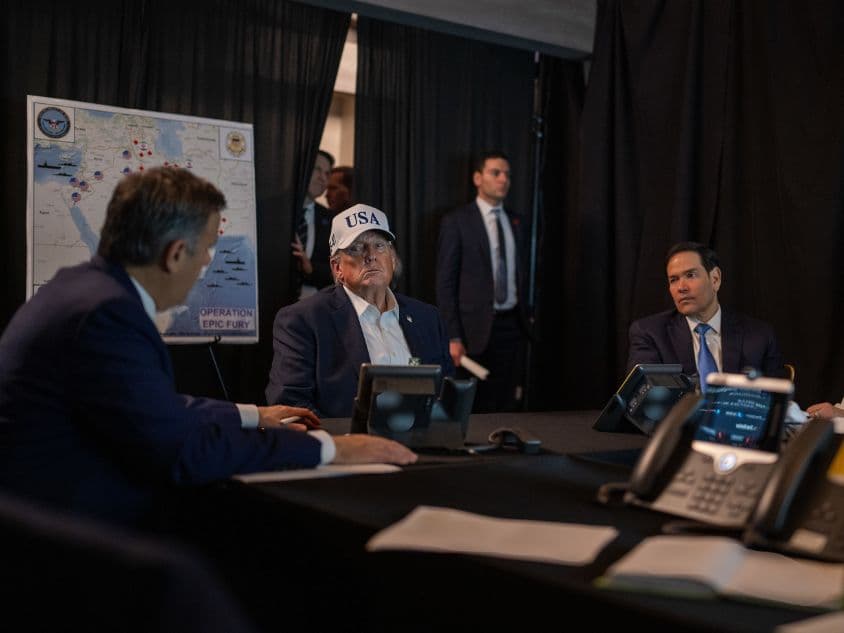
The Australia Institute’s International & Security Affairs advisor Allan Behm said the “decapitation of the regime” in Iran marks the beginning of “massive instability bordering on long-term chaos”.
Early on in his prime ministership, John Howard stood in front of Australia’s Indigenous leaders and told them he would not apologise for Australia’s past.
It isn’t always easy to keep up with what’s happening in the US. “Shorter America” is a series where Dr Emma Shortis loops you in on what’s going on in America and shares news and analysis that you can trust.