As the nation’s south-east languishes through another heatwave, new data has revealed what millions already know: more Australians are feeling the heat. The OECD has released its Economic Surveys for 2026 and it makes for sobering reading.
Wed 28 Jan 2026 01.00
Photo: AAP Image/Michael Currie


As the nation’s south-east languishes through another heatwave, new data has revealed what millions already know: more Australians are feeling the heat. The OECD has released its Economic Surveys for 2026 and it makes for sobering reading.
The report shows 80% of the population is now exposed to extreme heat, with average temperatures in Australia rising and heatwaves becoming more frequent.
“Climate change is putting Australians at risk as climate disasters worsen and Australia gets ever hotter,” said Jack Thrower, senior economist at The Australia Institute.
In the first month of 2026 alone, bushfires have claimed the life of one person and destroyed 300 properties in the country’s south-east.
The OECD noted “Australia is highly exposed to climate change” such as heatwaves, bushfires, drought, storms and coastal flooding.
It also identified “many of the major cities, which are mainly coastal, are vulnerable to rising sea levels”.
And yet – the report states – the country still has high emissions and low effective carbon prices.
“Australia is still throwing fuel on this fire with some of the world’s highest carbon emissions per person,” said Mr Thrower.
“Economics 101 says to tax what you don’t want and subsidise what you do want.”
The OECD report noted that Australia was “for many years an international laggard on climate action” and still has “among the highest per capita carbon emissions of any country in the world and among the lowest implicit prices of carbon.”
Put succinctly – it charges very little for carbon pollution compared with other advanced economies.
“Australia has one of the OECD’s lowest effective taxes on the emissions that are accelerating climate change and yet, is giving away over $10 billion every year in fossil fuel subsidies every year,” said Mr Thrower.
The report noted Australia’s tax system “relies heavily” on labour taxes rather than more efficient consumption, property and environmental taxes.
According to Australia Institute research, in 2024–25, Australian governments provided $14.9 billion worth of spending and tax breaks to assist fossil fuel producers and major users.
With natural disasters only forecast to increase in strength and frequency, the OECD said it poses a “major challenge” for the Australian economy and stressed that adaptation policy, such as investing in resilient infrastructure and community preparedness, is growing increasingly important.
“If Australia wants to take climate change seriously, it could start by axing fossil fuel subsidies and implementing a climate disaster levy, making the fossil fuel companies that profit from climate change pay for the damage they cause,” said Mr Throwers.
The Australia Institute has been calling for a dedicated, independently administered fund to meet the rising costs, which are now estimated to coast Australians over $13 billion every year.
Mr Thrower said the proposed National Climate Disaster Fund would be funded through a levy of $1 per tonne of carbon dioxide for all coal, gas and oil produced in Australia.
“These measures could raise tens of billions of dollars to invest in preparing communities for the inevitable impacts of locked-in climate change”.
The report noted that while emissions are “falling in line” with the Australian Government’s 2030 targets, particularly in the energy sector, “further efforts will be needed to reduce emissions over the long term, including in transport and agriculture”.
In 2025, the New Vehicle Efficiency Standard introduced Australia’s first mandatory vehicle emissions targets.
“These are less demanding than those in Europe and some other OECD economies,” noted the report, “but nonetheless represent a significant degree of regulatory catch- up.”
The report said Australia’s longer-term objective to reach net zero emissions by 2050 will require additional efforts, noting “the decarbonisation of electricity production will have to be completed” even as demand for electricity rises rapidly.
Advertisement

Whether we realise it or not, everyday Australians are already paying for the damage fossil fuel companies are causing to our climate though more frequent and extreme fires, floods, heatwaves and other disasters.
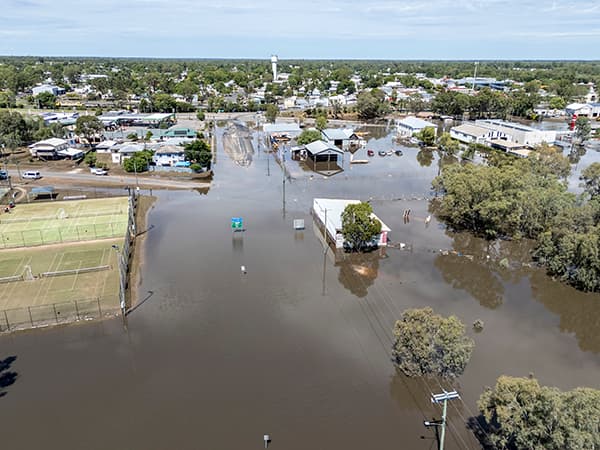
Research from the Australia Council of Social Services (ACOSS) released today shows that the benefits of the capital gains tax (CGT) 50% discount overwhelmingly favours the wealthiest electorates in the county.
New research shows fossil fuel subsidies will reach $16.3 billion in 2025–26, rising faster than the NDIS. Handouts to mining giants are growing faster than support for Australians with disability.

For the last decade, Australians have been continually told by the gas industry, media commentators and politicians we have a gas shortage. These claims are almost always used to pressure Australian governments to approve open new gas fields on the basis that the gas is needed to supply Australians and reduce gas prices.