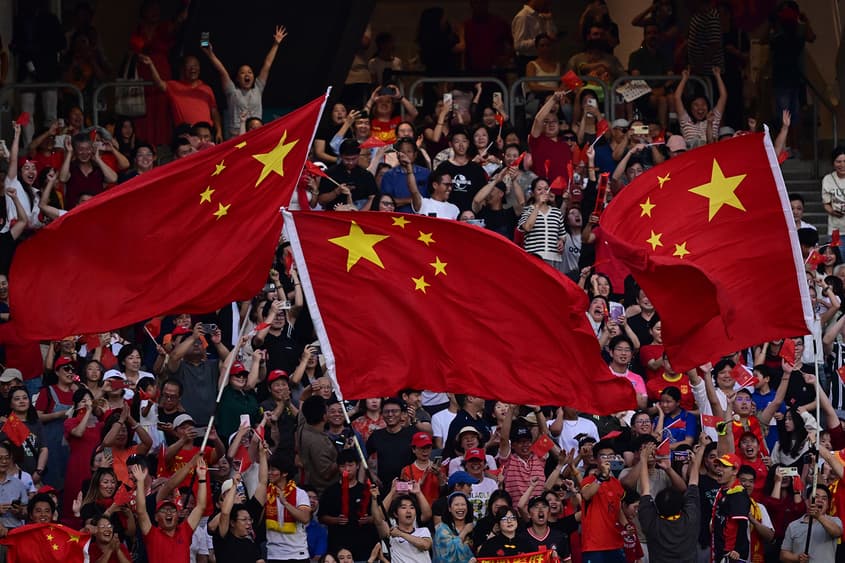
A leading US national security expert has warned “nuclear weapons are back with a vengeance”.
Fri 20 Feb 2026 01.00
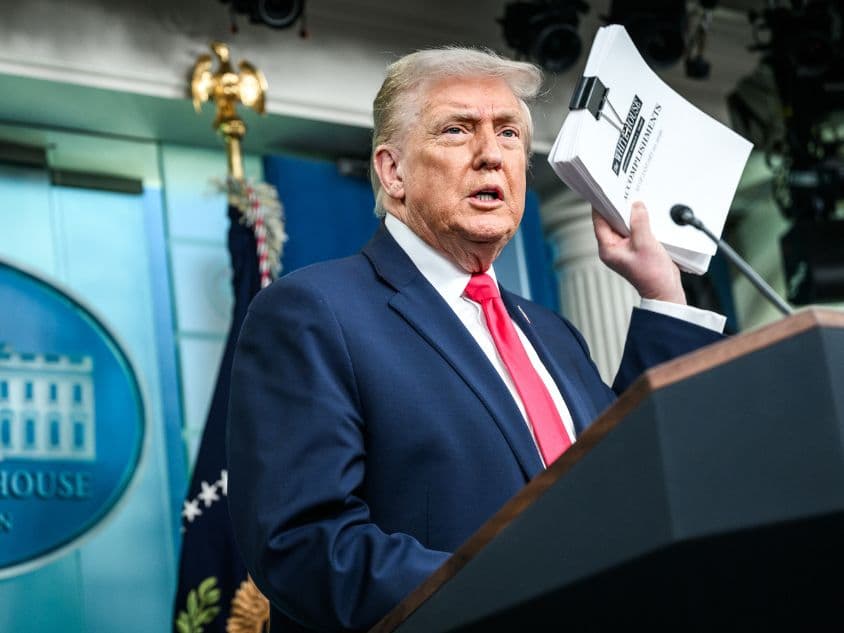
The White House/Flickr


A leading US national security expert has warned “nuclear weapons are back with a vengeance”.
Outgoing Federation of American Scientists global risk director Jon B. Wolfsthal says the lapse of an arms control treaty between the US and Russia risks ushering in “a new era of nuclear crisis and potentially nuclear war”.
He told the Australia Institute’s After America podcast that “there is no safe place should, God forbid, this happen”.
The New Strategic Arms Reduction Treaty (New START) expired on 5 February 2026 – removing the last legally binding limits on the two countries’ nuclear arsenals”.
“Both countries are legally free to build up and deploy as many nuclear weapons as they want,” said the Australia Institute’s International & Security Affairs Director Dr Emma Shortis.
Donald Trump’s renewed nuclear testing rhetoric and accusations against China are again fuelling global concern, with Dr Shortis pointing out the Doomsday Clock is now set to 85 seconds to midnight – the closest it has ever been to signaling a global catastrophe.
“One of the things that the bulletin specifically pointed to was the impending expiry of the New START treaty between the United States and Russia.”
Which has, since that decision, expired.
“I’m generally an optimist,” said Mr Wolfsthal.
“I work in nuclear arms control and nuclear war, so if you’re not an optimist, you’re an alcoholic.”
“Nuclear weapons are more central to our security strategy, both for blackmail, deterrence and coercion.”
However, he said humanity is now facing “the world that we worked hard to avoid for 80 years”.
“During the 1960s we had a number of nuclear crises between our countries and leaders recognised that chaos was going to kill us all literally.”
The 1980s saw the US and the Soviet Union stockpiling a combined 70,000 nuclear weapons, which has been brought down to around 7,000 thanks to negotiated arms control agreements.
“Nuclear weapons are seen now by not just the United States and Russia and China, but by multiple states as valuable tools, not just for international status and security, but actually for war fighting.”
The Trump administration is openly floating a return to nuclear weapons testing, pointing to its accusations that China conducted an underground nuclear explosion during Donald Trump’s first term in 2020.
“Basically, deterrence is a game of chicken,” said Mr Wolfsthal, a former Special Assistant to President Obama for National Security Affairs.
“If you have two people driving headfirst at each other on the highway, the first one to swerve is thought to be the loser.
“Donald Trump thinks that if he can play the drunk madman, the other country will have to swerve.”
The self-proclaimed ‘president of peace’ has become known for his volatile rhetoric and contradictory stances on issues, both at home and abroad – a strategy designed to keep his adversaries guessing what he’ll do next.
“He’s no peace treaty wannabe but he does, I think, recognise at its core that nuclear weapons are incredibly dangerous,” said Mr Wolfsthal.
“But he also believes that instability and unpredictability is a strength and when you combine nuclear weapons and unpredictability, it’s a very combustible mix.”
Mr Wolfsthal described the performance of US Defence Secretary Pete Hegseth as “dangerously poor”.
“He’s much more interested in fighting culture wars than in preventing nuclear wars … [it’s] an extraordinarily dangerous situation because very few people believe the president is of sound mind.”
He said many middle powers – such as France and Canada – are now reevaluating their own strategic posture.
In November 2025, South Korea finalised an agreement to build nuclear-powered submarines in partnership with the United States.
Australia too has inked a deal – the controversial $368 billion AUKUS security pact with the US and UK which is expected to deliver submarines in the early 2030s, though timelines remain uncertain.
The nuclear expert said the deal was more about “alliance management”, pointing out that Australia has benefited from the US providing its “nuclear umbrella” to allies for decades.
“That worked until the United States went bonkers and decided we don’t care about our allies. Now, you may be better off.”
He believes Australia is “fully capable” of having a latent nuclear program on its own.
“If Australia wanted to build a nuclear weapon, if there was a political consensus or a decision, it could probably do so within 10 years.
“It would cost you billions of dollars, but you’re spending billions of dollars on submarines. And so, it’s possible.”
He urged nations to unify instead and form a new “conglomerate coalition” and stand up to the United States.
“We have seen time and time again that when Donald Trump has met with significant pushback from a unified front, he backs down.
“We need somebody to throw cold water in our faces and say, wake up.”
Subscribe to After America on Apple Podcasts, Spotify, Pocket Casts or wherever you get your favourite podcasts.
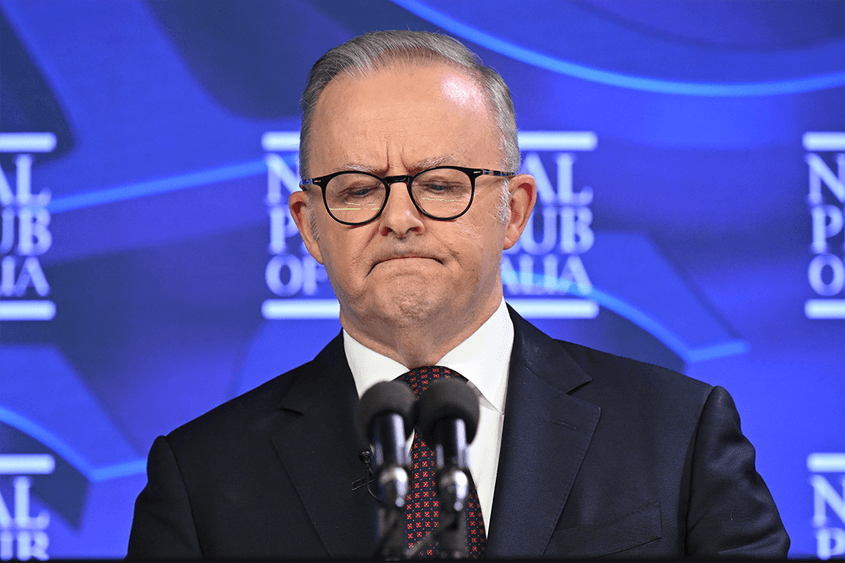
Last night, the Australian Prime Minister had the chance to face reality. His address to the nation was a recognition that Australians are deeply worried about the state of the world – as they should be. What the prime minister did not say is that this trouble lies at the feet of the President of the United States.
Advertisement
Will a gas export tax harm our diplomatic relationships? No. Foreign companies being sad about having to pay some tax in Australia is quite different to foreign countries losing trust in Australia as a reliable trade partner.
China is emerging as a quiet winner from Donald Trump’s escalating war in Iran, with its economy largely shielded from the worst of the global energy crisis.