How to foster global lawlessness: Destroy the UN and its agencies
Here’s a question that everyone should be asking as global rupture (to use Canadian Prime Minister Mark Carney’s word) spreads. What’s the best way to make the world more lawless, more chaotic and much more dangerous? The answer is stunningly simple. Defund the institutions responsible for managing the international rules-based order.

Tue 17 Feb 2026 12.10
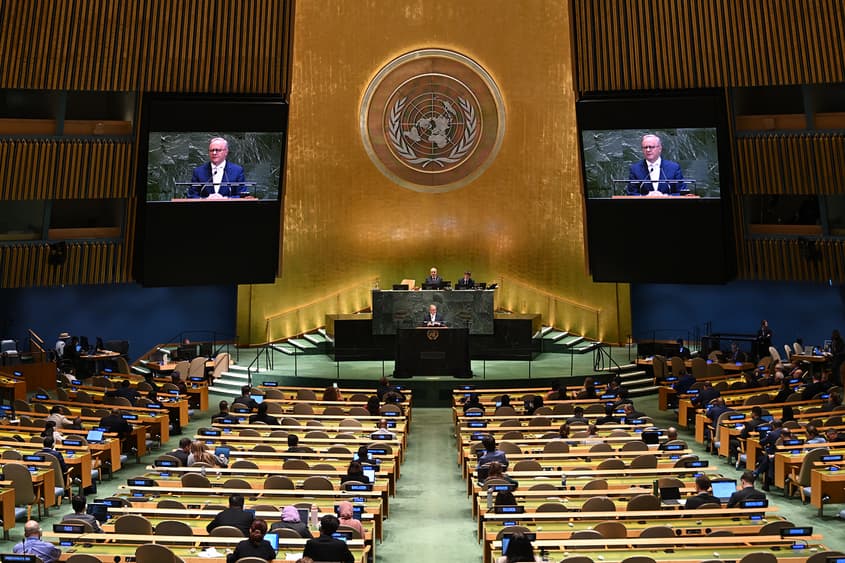
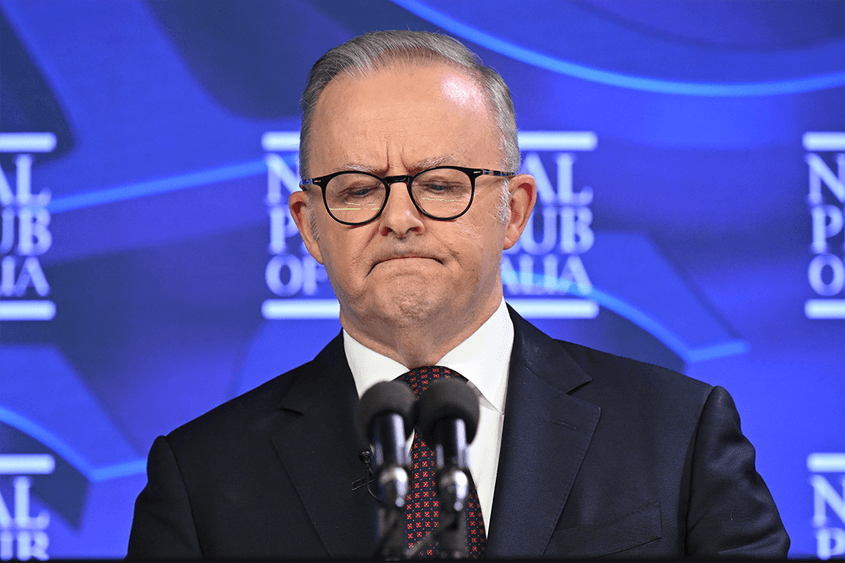
Photo: AAP Image/Lukas Coch


Here’s a question that everyone should be asking as global rupture (to use Canadian Prime Minister Mark Carney’s word) spreads.
What’s the best way to make the world more lawless, more chaotic and much more dangerous? The answer is stunningly simple. Defund the institutions responsible for managing the international rules-based order.
That’s what’s happening right now. And the saddest thing is that the country that has invested most in the institutions that have kept the global community on a more or less even keel for the past eighty years is the country that’s hastening their demise. The UN system is currently on life support. Without an urgent cash transfusion by its debtors, principally the United States, the UN’s chances of survival are slim.
At the end of January, the UN Secretary-General warned members that the organisation is at risk of “imminent financial collapse”. At the end of 2025, the UN faced a debt overhang of more than one and a half billion dollars. Its financial position is made even more precarious by an arcane budget rule that requires the UN to return to its members unspent funds that they haven’t actually paid. That’s right – the UN must repay money that it never actually spent or received.
The Secretary-General’s warning comes in the wake of President Trump’s sustained campaign of withdrawal from international organisations considered “wasteful, ineffective or harmful”, starting in February 2025 with the UN Human Rights Council, UNESCO and the UN Relief and Works Agency for Palestinian Refugees. Trump also announced that the US would not pay any arrears to these organisations.
In January this year, Trump followed up his earlier Executive Order with a Presidential Memorandum to US Department and Agency heads withdrawing the US from an additional 66 international organisations ranging from climate, ecological and environmental bureaux to various ECOSOC commissions. The US also withdrew from various other institutions, including those focused on anti-piracy, anti-terrorism and prevention of violence against children, along with institutes dealing with democracy, justiceand the rule of law.
In his press statement elaborating on Trump’s memorandum, US Secretary of State Marco Rubio identified mismanagement, waste, ineffectiveness and direct harm to the interests of the US, along with threats to America’s “sovereignty, freedoms and general prosperity”. In terms reminiscent of the “running dogs” and “imperialist lackeys” of authoritarian communiques of fifty years ago, Rubio claimed that “from DEI mandates to ‘gender equity’ campaigns to climate orthodoxy, many international organizations now serve a globalist project rooted in the discredited fantasy of the ‘End of History’.”
If any of that is true, that it has been allowed to happen represents a startling failure in US multilateral diplomacy. Moreover, the hyped-up language and straw-men binaries that underpin Rubio’s statement is the antithesis of the calm control and elegant elocution that has distinguished State Department diplomacy and American diplomats for generations. It is a grim commentary on the destruction of the prodigious talent that the State Department built up over the past eighty years.
So, what’s to be done?
First, countries like Australia – the prosperous, stable and secure countries that account for over half of the global economy – need to advocate the critical role of the international rule of law in maintaining world peace and the critical place of the UN and its agencies in providing the institutional mechanisms through which the international rule of law operates. Surely the United States sees itself as such a country.
And if it does, the second thing like-minded countries need to do is to represent their concerns to the US through both political and official channels. Instead of tip-toeingaround President Trump, the leaders of the democratic nations should emulate Prime Minister Carney in talking truth to power. Quite simply, President Trump is acting neither in his interests nor in the interests of the US.
Perhaps the third thing Prime Minister Albanese might consider, if he would like to host a high-level international visit that is demonstration and protest free, is to invite the UN Secretary General to undertake an official visit to Australia. That would permit the Albanese government to give at least symbolic effect to its oft-repeated words of support for the international rules-based order.
It would also provide the opportunity for Australia to promote the case for the expansion of the permanent membership of the UN Security Council to include nations from “the global south” such as Brazil and India, as well as one or more of the economic engines of Asia, such as Indonesia, Japan and South Korea. And if the US wants to maximise the RoI on its UN dues, perhaps it might be persuaded to support relocation of some of the specialised agencies from Europe and North America to Africa, Asiaand Latin America.
It is just amazing where a financial refloat of the UN and its agencies might take us.
Allan Behm is an advisor at the Australia Institute’s International & Security Affairs program.
Related Articles
The Wrap: A missed opportunity to face reality
Last night, the Australian Prime Minister had the chance to face reality. His address to the nation was a recognition that Australians are deeply worried about the state of the world – as they should be. What the prime minister did not say is that this trouble lies at the feet of the President of the United States.