A permanent ban on fracking is back on the agenda in Tasmania with the Tasmanian Greens planning to introduce a bill to ban the harmful practice in the opening days of parliament.
Mon 2 Mar 2026 01.00
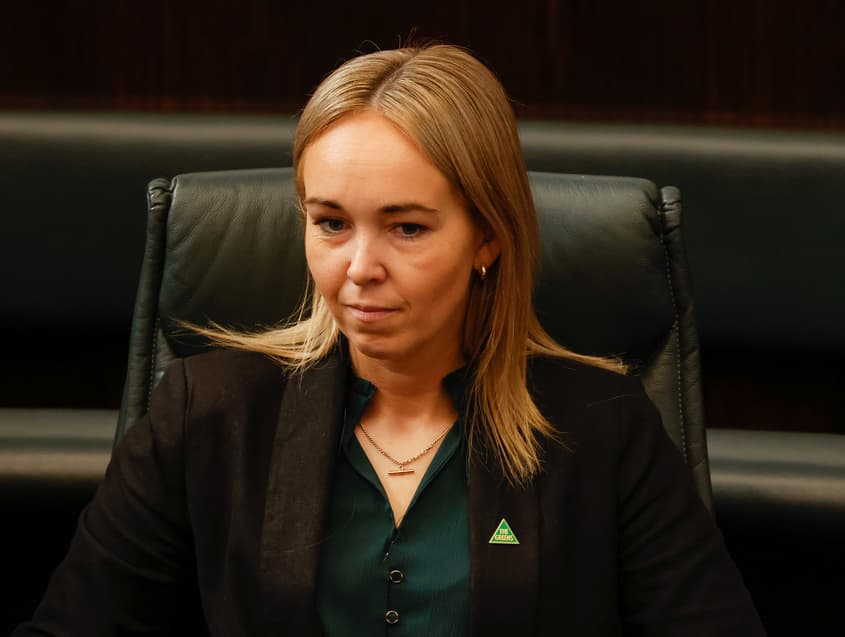
Photo: Greens Member Tabatha Badger at the Parliament of Tasmania. AAP Image/Rob Blakers


A permanent ban on fracking is back on the agenda in Tasmania with the Tasmanian Greens planning to introduce a bill to ban the harmful practice in the opening days of parliament.
The state has maintained a temporary ban on hydraulic fracturing (also known as fracking) for oil and gas since 2015, extending five-year moratoriums in 2020 and again in 2025.
However, the Greens want to follow Victoria’s lead and rule it out permanently.
“What possible reason could the Liberals have for keeping the farm gate open to future gas and oil possibilities?” said Tasmanian Greens MP Tabatha Badger.
“This Bill is a significant step to providing our farmers and future generations genuine certainty that this practice will not be undertaken in the climate crisis.”
Victoria legislated a permanent ban on the mining technique in 2018 and remains the only Australian state to outlaw the practice.
“Fracking is water-intensive, chemically complex and leaves behind large volumes of contaminated wastewater,” explained Louise Morris, an advocate at the Australia Institute.
“Even when it operates ‘as designed’, it carries long-term risks to groundwater, farming, and community health.”
Farmers argue it would tarnish the state’s brand and reputation and are calling on politicians to make their priority “crystal clear”.
“For far too long, farmers and the food they produce have been taken for granted … We need to back our Tasmanian-branded produce with the certainty of supply and quality,” said Brett Hall, cattle farmer and Frack Free Tasmania Secretary.
In October 2025, Tasmanian Minister for Primary Industries and Water Gavin Pearce described agriculture as “a pillar of Tasmania’s economy” and placed its farm-gate value at almost $2.5 billion in 2022-23.
He also confirmed the Government remains “on track” to reach its ambitious AgriVision 2050goal to grow the annual farm-gate value of agriculture to $10 billion by 2050.
Mr Hall said, “Such a bold strategy and level of investment require sound legislated policy to ensure success.”
“Our communities and the next generation of farmers need this support to reduce the risk of unintended consequences from the current possibility of gas mining on their land.”
Tasmania’s latest moratorium is valid until 2030, but community campaigners warn rolling extensions risk mirroring Western Australia.
“The Tasmanian Government has kicked the can down the road with successive five-year moratoriums … just like WA did until they opened up areas like the timeless landscapes of the Kimberley to this exploitative boom and bust industry,” said Frack Free Tasmania President Shaun Thurstans.
“Western Australia’s experience shows how quickly policy settings can shift,” Ms Morris said.
And it’s not the only jurisdiction that has reversed course.
The Northern Territory Government overturned its 18-month moratorium on fracking in April 2018, sparking intense community backlash.
It further enraged environmentalists in February 2026 when it announced a new onshore petroleum acreage release in the Beetaloo Sub-basin.
“Fracking threatens everything we love about the Territory; our free-flowing rivers, magnificent springs, our climate, and incredible diversity,” said Dr Kirsty Howey, executive director of Environment Centre NT.
In Queensland last year, the Crisafulli Government announced it was “stepping on the gas” and releasing nine new gas exploration fields across 16,000 sq km in the Cooper/Eromanga and Bowen/Surat Basins.
The Queensland Conservation Council (QCC) described it as “devastating and deceitful”.
QCC Director Dave Copeman said at the time it was “a greater area of land than all wind farms and solar farms that would be required to get Queensland to 100% renewable energy”.
“This should not be a postcode lottery,” said Ms Morris.
“Farming communities in Western Australia, the Northern Territory and Queensland deserve the same protections being achieved in Victoria and being pursued in Tasmania.”
She’s calling for the Albanese Government to implement a national ban.
“Climate science is unequivocal that expanding new gas fields is incompatible with meeting our emissions reduction commitments.”
Mr Hall is urging the Government to embrace the bill, saying “we have the opportunity now to control our destiny and avoid a fractured future.”
Advertisement

New analysis shows Japan is emerging as a major player in global gas trading, despite producing no liquefied natural gas of its own – and it’s all thanks to Australia.
Nothing in this world is certain but death, taxes, and the decommissioning of aging oil and gas infrastructure. An accelerated energy transition will accelerate asset retirements, but field decline is occurring regardless.
A leading conservation organisation has sounded the alarm over the ongoing destruction of critical black cockatoo habitat in Western Australia.