New analysis shows Japan is emerging as a major player in global gas trading, despite producing no liquefied natural gas of its own – and it’s all thanks to Australia.
Mon 2 Mar 2026 01.00
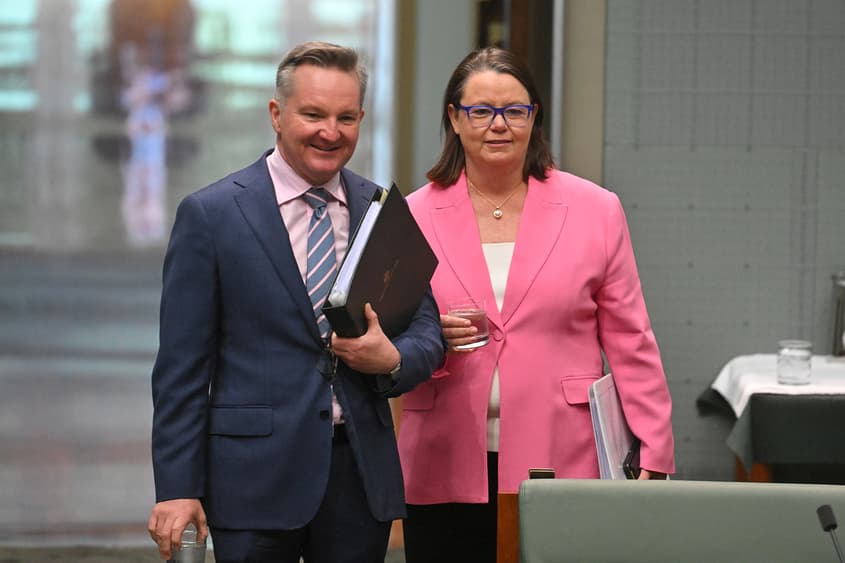
Photo: AAP Image/Mick Tsikas


New analysis shows Japan is emerging as a major player in global gas trading, despite producing no liquefied natural gas of its own – and it’s all thanks to Australia.
Research by the Institute for Energy Economics and Financial Analysis (IEEFA) has revealed Japan resold a record volume of LNG in the 2024 financial year, rather than consuming it domestically.
“When overseas buyers can on-sell Australian gas at a profit while those same corporations pay almost no tax for our gas, you know something needs to be fixed,” said Louise Morris, an advocate at the Australia Institute.
A survey by the Japan Organization for Metals and Energy Security (JOGMEC) found that 40 per cent, or four in every ten cargoes, of LNG managed by Japanese companies are now sold overseas – up sharply from just 16 per cent in FY2018.
Critics say the data undercuts longstanding claims that Australian LNG exports are critical for Japan’s energy security.
“That means Australian gas isn’t just keeping the lights on in Tokyo, the Japanese sellers are making a profit. Meanwhile Australians are told there’s a shortage. It doesn’t add up,” Ms Morris said.
Independent Senator David Pocock has added his voice to calls for a 25 per cent tax on gas exports.
The idea, suggested by the Australian Council of Trade Unions last year, could raise $17 billion a year in revenue according to analysis by the Australia Institute.
“We’re in this ridiculous situation where, as one of the biggest gas exporters in the world, we have the Petroleum Resources Rent Tax (PRRT) collecting less revenue than [the] beer tax,” Senator Pocock said.
The IEEFA has pointed out that while Japan’s domestic LNG consumption marginally increased in FY2024, overall it has fallen by nearly 20 per cent in the last six years.
That shift has opened the door for energy companies to redirect supply to more lucrative overseas markets.
“The latest figures show Japan is reselling huge amounts of LNG into global markets, approximately 1.7 times Japan’s total direct imports from Australia,” pointed out Ms Morris.
“We extract the gas. We export most of it. Companies make windfall profits and barely pay any tax. And Australians pay more than ever for electricity. That’s not an energy policy – that’s a gas giveaway,” Ms Morris said.
Indeed, the JOGMEC survey shows Japan resold more LNG than Russia produced in the same period.
Both Australia and Japan have publicly committed to achieving net zero by 2050, with Japan setting an interim reduction target of 46 per cent by 2030.
Yet its energy policy continues to rely heavily on financing and importing fossil fuels, particularly gas.
The Jubilee Australia Research Centre says Australia is helping Japan and Korea build an “Asia-wide gas empire”.
It’s Gas Empire 2025 report reveals the two countries poured US$20.5 billion of public finance into Australian LNG projects between 2008 and 2024.
In February 2026, the Albanese Government was accused of prioritising Japanese gas industry profits over Australian households and climate goals, after an InfluenceMap report revealed the depth of corporate sway over national gas policy.
It found Japanese fossil fuel companies met privately with Australian cabinet ministers and officials at least 24 times since Labor’s 2022 election win.
Ms Morris says now is the time for the Albanese Government to step up and impose a 25 per cent export tax, which would ensure Australians “get a fair return on our own resources”.
“Australia should not be a quarry for multinational gas traders. If companies want to export our resources, they should pay for selling our finite resources.”
Advertisement

The debate over the capital gains tax discount comes down to a very simple question: who do you think should pay more income tax? Should a high-income executive who makes a $400,000 capital gain (that is, a profit) from selling an investment property pay a higher tax rate than a full-time retail worker on minimum wage who decides to pick up a few extra shifts?


The greenhouse gas data is one of those rare data sets where you want the figures to go down – less is better. And the problem for any efforts to limit the impact of climate change is that Australia’s emissions have not been going down anywhere near as fast as they need to be.
British economist Gary Stevenson, known as 'the People's Economist' has delivered blunt advice to Australian politicians during his tour of Australia, warning that living standards will continue to deteriorate unless they start taxing the “super-rich elite.”