A fresh political battle is brewing over how Australia should fix the housing crisis, with Shadow Treasurer Tim Wilson arguing against changes to the capital gains tax (CGT) despite criticising the scheme in the past.
Thu 5 Mar 2026 01.00
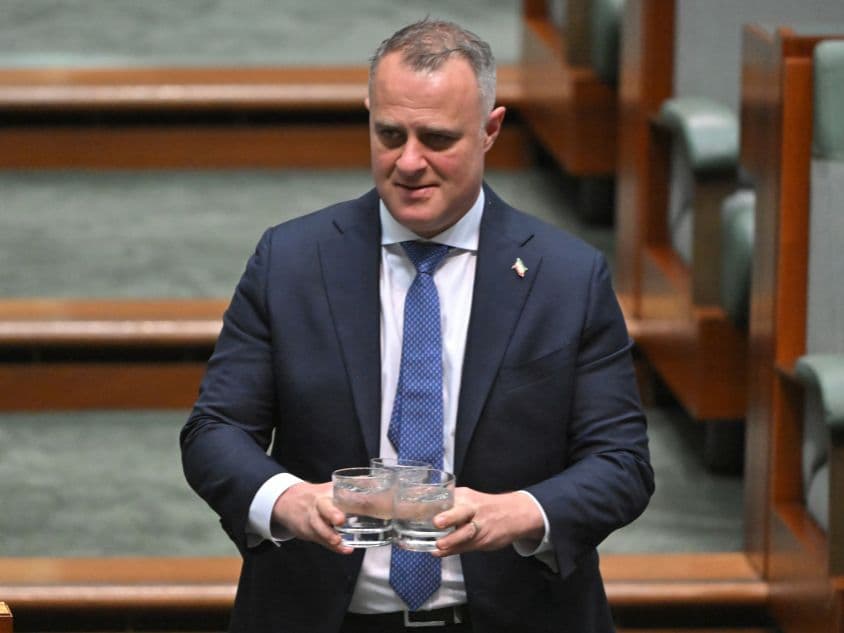
AAP Image/Mick Tsikas


A fresh political battle is brewing over how Australia should fix the housing crisis, with Shadow Treasurer Tim Wilson arguing against changes to the capital gains tax (CGT) despite criticising the scheme in the past.
Treasurer Jim Chalmers is considering reforms to the 50 per cent CGT discount ahead of the May Federal Budget as the Government looks to address ‘intergenerational equity’ and housing affordability.
But Mr Wilson has rejected calls to scale it back, labelling any reduction a “revenue grab”.
“Tim Wilson’s solution is we should give the richest people in Australia a tax cut because then they won’t be so tempted to reduce their tax by capital gains,” said Greg Jericho, chief economist at the Australia Institute.
The Shadow Treasurer has described the top tax rate of 45 per cent as “punitive”, arguing rising wages are being “outstripped by inflation”.
“We’re in an environment that is not incentivising work,” he told Sky News.
“He was making the case that the top tax rate is really creating a disincentive to work. There’s no real reason to work when you’re getting taxed that much,” Mr Jericho told the Australia Institute’s Dollars & Sense podcast.
“So, once you make $190,000, I mean who can really be bothered getting out of bed after that?”
The Parliamentary Budget Office estimates that the Australian government will forego $247 billion in revenue over the next decade due to the CGT discount.
Mr Jericho said 60 per cent of the CGT discount goes to the nation’s richest one per cent.
“That’s people earning more than $362,000 a year.”
He pointed out that when Australia is compared to other developed nations, high-income earners (who earn two-and-a-half times the average wage) aren’t taxed more than their counterparts overseas.
“Australia is an extremely low taxing nation,” said Mr Jericho. “When it comes to income tax, we’re pretty much on the average.”
As an example, he pointed out that it’s lower than Canada, France, the UK, Germany and Italy.
While it’s higher than the US (32 per cent), he said he can’t see high income earners in Australia “going to up sticks and go to America” because they’re going to pay 4 per cent less in tax.
“Australians pretty much across all earning levels pay a lot less income tax now than they did in the past, but especially the high-income earners.
“By far the biggest tax cuts have gone to those earning two, three, four times the median income.”
He’s urging the Treasurer to “go hard and change the country” and stop handing out fossil fuel subsidies at the same time.
“This year the figure came in at $10.8 billion in the year, which comes in at $30 million a day or $20,500 a minute, every minute.”
Mr Jericho said while the Fuel Tax Credit scheme was originally introduced to help pay for the upkeep of roads, only five per cent is explicitly designated in legislation as road funding.
“It’s a total crock and it has become this extremely expensive thing.”
He estimates about half is going to mining companies “who are not struggling”.
“Our most profitable industry – certainly in terms of profits – and the government is deciding we need to give them a $5 billion handout.
“Even as a percentage of their profits, it’s minuscule. It’s not like if we took this away, they would struggle or they’d be going under. It’s not what’s keeping them going. It’s just a little cherry on top of a very big sundae”.
Mr Jericho said a better alternative would be to introduce a cap that is set at a level so that farmers can still access the benefits.
Subscribe to Dollars & Sense on Apple Podcasts, Spotify, Pocket Casts or wherever you get your favourite podcasts.
Advertisement

The health of the economy was revealed this week with the release of economic growth figures showing the economy grew at a better-than-expected rate of 2.6% for 2025. This compared to the forecast of just 2.2%.
The Workplace Gender Equality Agency (WGEA) has released their gender pay gap data today and while we took a tiny step closer to pay equity, men are still almost twice as likely to be in the highest earning quartile – earning more than $220,000.
Independent Senator for the ACT David Pocock has called for an inquiry into why gas companies pay less for gas exports than Australians pay in the beer excise.
New analysis shows Japan is emerging as a major player in global gas trading, despite producing no liquefied natural gas of its own – and it’s all thanks to Australia.