The Workplace Gender Equality Agency (WGEA) has released their gender pay gap data today and while we took a tiny step closer to pay equity, men are still almost twice as likely to be in the highest earning quartile – earning more than $220,000.
Tue 3 Mar 2026 13.00
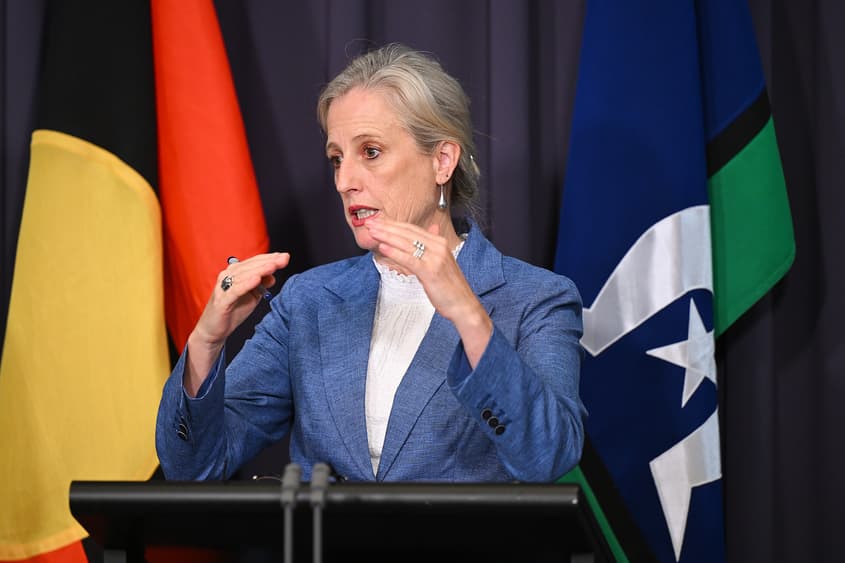
Photo: AAP Image/Lukas Coch


The Workplace Gender Equality Agency (WGEA) has released their gender pay gap data today and while we took a tiny step closer to pay equity, men are still almost twice as likely to be in the highest earning quartile – earning more than $220,000.
For reference, the median salary for a full-time worker in Australia is around $90,000 – or $85,000 if you’re a woman.
It’s important to note that WGEA’s gender pay gap data does not reflect different pay for the same work but looks at average remuneration across industries. Gaps are driven by the gendered makeup of certain industries, discrepancies in employment levels and a gendered gap in additional payments including superannuation, bonuses and overtime. Around 50% of employers have an average gender pay gap larger than 11.2%, meaning women only earn 88 cents for every dollar than men earn.
Employers in male-dominated industries have the highest pay gaps. The majority of employers in construction, mining and electricity, gas, water and waste services have a higher-than-average pay gap; women in construction earn, on average, only 74 cents for every dollar a man earns.
Employers with large pay gaps also have a more gendered spread of workers across the workplace. This means men are concentrated in higher paying roles, and women are in overrepresented in lower paying roles. For example, Sydney Ultrasound for Women has a pay gap in favour of men of 79%, even though almost all (97%) its employees are women. The gap is driven by significant discrepancies between levels of pay at the upper quartile ($350,000) and the lower quartile ($76,000). Basically, men are the bosses, and they earn a lot more than the women at the bottom.
While equal pay for equal work is enshrined in law, there is little regulation of additional payments such as super, bonuses and overtime, which unsurprisingly, men have greater access to. Employers in male-dominated industries have the highest gender gap in these payments. In these industries, 50% of employers have a discretionary pay gap of at least 42.8% – meaning for every dollar of bonuses and overtime men get, women only get 57 cents.
It’s great that the gap is snailing towards closed, clearly the WGEA reporting requirements are working – the majority of employers reduced their gender pay gap over the last year. But more is needed to ensure women don’t bear the economic brunt of the bias embedded in our workplaces.
Every year, we talk about this gap and some helpful people (usually men) accuse us of not understanding that men are simply paid more because they choose to do more demanding work. Bricklaying instead of palliative nursing, for example. Mining instead of teaching. Or, that women choose to work less so they can care for their children (as though men have no children!), and the pay gap simply reflects a gap in hours, rather than salaries.
Last year, Jobs and Skills Australia released occupation specific data on the employment hours gap. For example, Fibrous Plasterers (mostly men) have a median pay gap of 50.4%, but only a 11% gap in hours worked. Explain that away, helpful men.
Advertisement
Independent Senator for the ACT David Pocock has called for an inquiry into why gas companies pay less for gas exports than Australians pay in the beer excise.
If you live in Sydney, do you know how many guns are being stockpiled just down the road?

New analysis shows Japan is emerging as a major player in global gas trading, despite producing no liquefied natural gas of its own – and it’s all thanks to Australia.
The debate over the capital gains tax discount comes down to a very simple question: who do you think should pay more income tax? Should a high-income executive who makes a $400,000 capital gain (that is, a profit) from selling an investment property pay a higher tax rate than a full-time retail worker on minimum wage who decides to pick up a few extra shifts?