Advanced search
The Point - home
DonateSubscribe
HomeWhat's NewOpinionOff the ChartsExplainersFactcheckAbout Us
The Point — home
DonateSubscribe
The Point — home
Advanced search
  • Home
  • What's New
  • Opinion
  • Off the Charts
  • Explainers
  • Factcheck
  • About Us
DonateSubscribe
Subscribe
  • Home
  • What's New
  • Opinion
  • Off the Charts
  • Explainers
  • Factcheck
  • About Us
The Point - home
Privacy PolicySitemapComplaints & CorrectionsNewsletter

The Point recognises the ancestral connections and custodianship of Traditional Owners throughout Australia. We pay respect to Aboriginal and Torres Strait Islander cultures and to Elders past and present.

©2025–2026 The Point, an initiative of The Australia Institute

WHAT'S NEW

Fuel costs and RBA hikes equal to a 90 basis point rate rise: 'this is brutal'

Combined with the 50 basis points rise in February and March in less than 2 months households are paying the equivalent of a 90 basis point rise in interest rates.

By Greg Jericho

Thu 26 Mar 2026 15.19 AEDT
EconomySociety & Inequality
Fuel costs and RBA hikes equal to a 90 basis point rate rise: 'this is brutal'

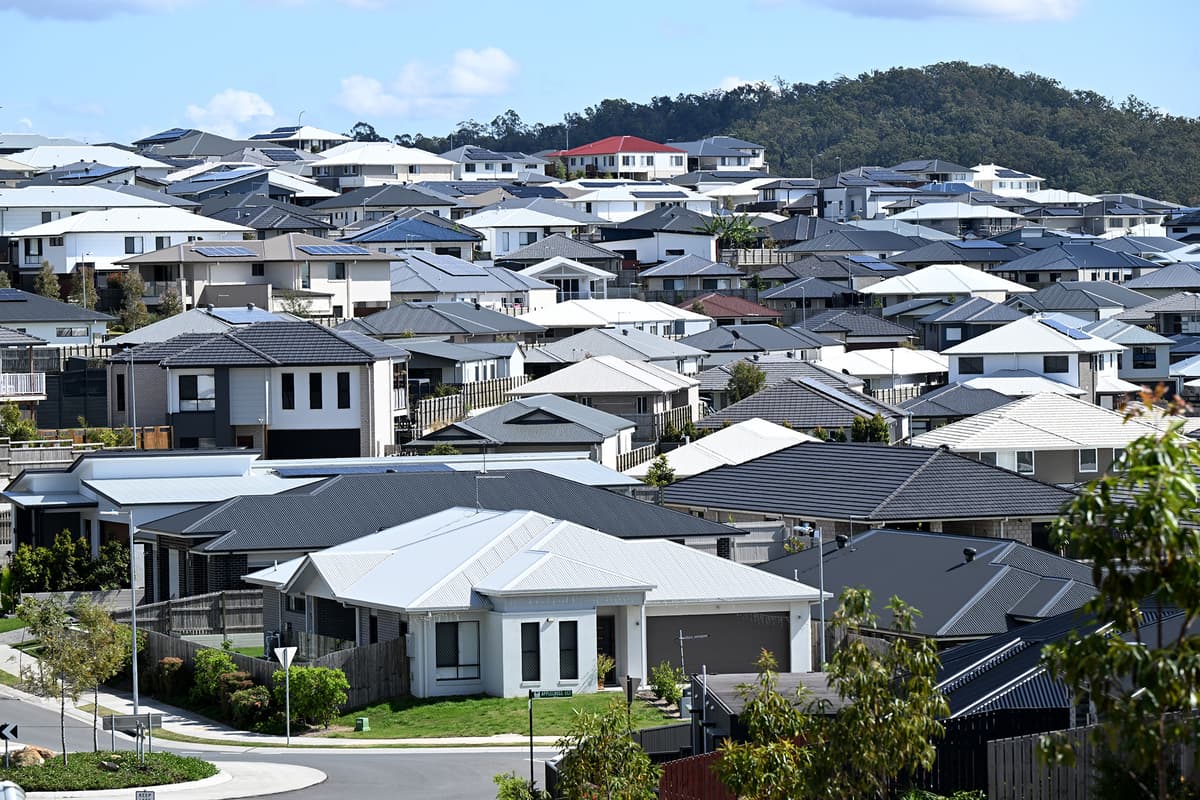
Photo: AAP Image/Darren England

Republish this article

This article is licensed under Creative Commons — Attribution-NoDerivatives 4.0 International (CC BY-ND 4.0).

Republishing guidelines

  • You must credit the author(s) and The Point.
  • You must link back to the original article.
  • You may not edit or modify the article content.
  • Images may be subject to separate copyright and are not included in this licence.

The petrol price figures from yesterday now show that unleaded prices have risen 31% since the Iran War began – up some 59.5 cent per litre.

Earlier last week, senior research fellow at the Australia Institute, David Richardson calculated the impact of petrol price rises compared to the cost of a 25 basis points interest rate rise. Last Friday we estimated it at roughly the same cost.

Now the increase in petrol prices is costing Australians around $784 million – i.e. that’s how much extra we’re paying for fuel. By comparison the cost of a rate rise is just $495m

So the cost of the petrol price rises so far is equivalent to 1.6 times the rate rise or a 40 basis points rates rise.

Combined with the 50 basis points rise in February and March in less than 2 months households are paying the equivalent of a 90 basis point rise in interest rates.

That. Is. Brutal.

Advertisement
Related Articles

OPINION

Six ways to save the Commonwealth billions, fairly and efficiently

By Matt Grudnoff & Greg Jericho

If the government wants to pursue significant spending cuts, this piece proposes six options that help achieve short term equity and long run efficiency goals. Together, they could save between $14 billion and $62 billion.

Economy
Six ways to save the Commonwealth billions, fairly and efficiently

OPINION

Who gets to decide what a 'realistic' energy transition is?

By Ray Wills & Peter Newman

There is a difference between what Australia should do and what our most influential businesses would prefer we don’t do. Our energy debate too often blurs the two by insisting on being ‘realistic’.

ClimateEconomy
Who gets to decide what a 'realistic' energy transition is?

OPINION

There's other ways to fight inflation than making mortgage holders pay

By David Shoebridge

You don’t get out of an economic crisis like the one we’re in through austerity. Cutting government services will only result in the people who can least afford it, falling further and further behind.

Economy
There's other ways to fight inflation than making mortgage holders pay

WHAT'S NEW

Essential workers priced out of almost entire Australian rental market, new report finds

By Tegan George

Australians working full-time in essential services are being priced out of almost the entire rental market, with a new Anglicare Australia report revealing just how far housing costs have outstripped wages.

Society & Inequality
Essential workers priced out of almost entire Australian rental market, new report finds

