Concerned your teenager is gambling? The data shows that 1 in 3 do
Around 600,000 of Australia’s teenage gamblers are aged just 12-17 years old, which is enough to fill the MCG six times over.

Australia’s win against tobacco shows that we can solve big public health problems. But there are other health epidemics that we’re way behind on. When it comes to obesity – a major risk factor in many health problems – Australia is in the top five nations.
Sat 9 May 2026 09.00 AEST

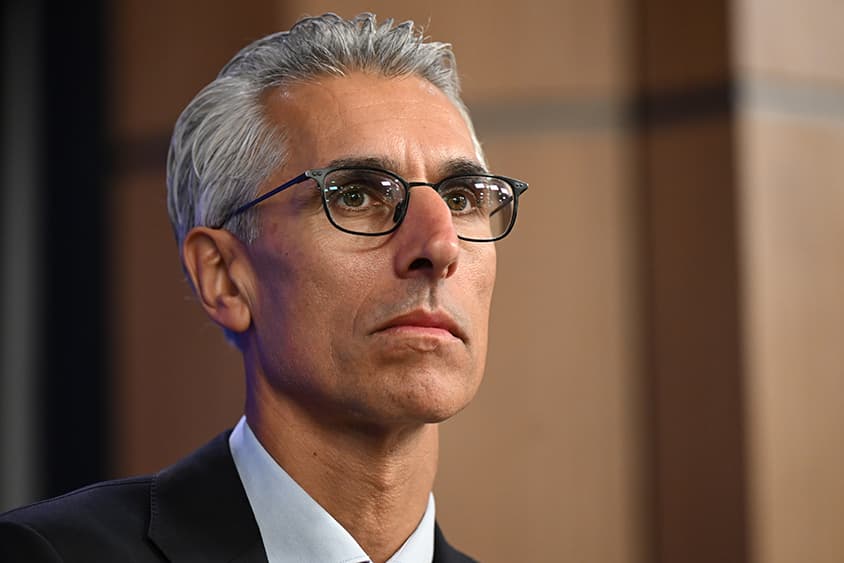
Photo: AAP Image/Joel Carrett
In the 1990s and 2010s, the Australia introduced a series of reforms to discourage cigarette and tobacco smoking. These included plain packaging, advertising restrictions, smoke-free public spaces and increased tobacco excise.
The reforms worked. Between 2001 and 2023, the number of daily smokers fell from 25% to 8.3%. That’s a 67% decline in just over 20 years.
Recent OECD analysis suggests that reduced smoking is preventing about 12,000 cases of four key chronic conditions – cardiovascular disease (CVD), cancer, diabetes and chronic lung disease (COPD) – each year. The flow-on benefits, including lower mortality, reduced demand for health care, improved quality of life and greater workforce participation, amount to over $130 billion a year.
Australia’s win against tobacco shows that we can solve big public health problems.
But there are other health epidemics that we’re way behind on. When it comes to obesity – a major risk factor in many health problems – Australia is in the top five nations. The result is almost 42,000 new chronic disease cases a year.
Cancer, cardiovascular disease, and diabetes combined are the most common cause of death in Australia. OECD modelling suggests that if they were eliminated, our total health expenditure would decline by 40% over the next two decades. That’s around $107 billion a year at current spending levels. Workforce participation and productivity would increase by the equivalent of 296,000 full-time workers per year, lifting annual economic output by 2.6%. Currently that would mean an additional $55 billion a year in national income.
Completely eliminating these diseases – and obesity – is unrealistic. But even halving obesity levels to align with the best-performing countries would generate major health, budget and economic gains.
Ensuring people with chronic conditions receive good medical care is essential. But treating disease after it occurs is not the same as preventing it in the first place.
The OECD estimates that bringing Australia’s cancer and cardiovascular disease survival rates into line with the top quartile of countries would reduce premature mortality by about 1.0% and 0.2%, respectively. Reducing obesity by that magnitude would, by contrast, cut premature mortality by 6.5% and boost annual economic growth by more than 0.8%.
New weight-loss drugs such as Ozempic will have a role. But they’re no substitute for prevention. They are expensive, require long-term use, and treat obesity once it has already developed. A health system that relies on downstream treatment will always be playing catch-up.
Tackling obesity before it occurs
The fall in smoking happened because Australia changed the environment in which choices were made. Tobacco became more expensive. Advertising was restricted. Packaging was stripped of glamour and warnings became unavoidable. Public education campaigns made the risks visible. Smoking was pushed out of workplaces, restaurants, pubs and shared spaces.
Together, these measures changed norms, incentives and behaviour.
We can apply a similar approach to tackle obesity.
The most obvious starting point is a tax on sugar-sweetened beverages. Sugary drinks have no nutritional value and are strongly associated with excess energy intake. A levy could be designed not merely to raise revenue, but to push manufacturers to reformulate products with less sugar, as has occurred overseas.
The second priority is marketing, where we could restrict the promotion of unhealthy food and drinks to children. This is especially important online, where advertising is personalised, persistent and difficult to monitor. Restrictions on junk food advertising during children’s viewing hours are no longer enough when children consume media across phones, tablets, games and social platforms.
We could also consider an advertising levy on companies that promote sugary drinks and ultra-processed foods. Companies could still advertise. But the more they spend promoting unhealthy products, the more they pay. Revenue could specifically fund healthy food subsidies, nutrition programs and public health campaigns.
Third, we could make healthy food more affordable. There is little point telling families to buy more fresh food if the cheaper, more convenient option are highly processed calories. Subsidies for fruit and vegetables – especially in low-income and regional communities – would be a sensible companion to taxes on unhealthy products.
There will be predictable objections. Industry will argue that taxes are unfair, advertising restrictions are excessive, and governments should stay out of people’s kitchens. Similar arguments were made about tobacco. But Australia did not become a world leader in tobacco control by accepting industry talking points. It acted because the health and economic costs were too large to ignore.
Obesity is now the main driver of preventable chronic disease in Australia, with consequences for premature mortality, healthcare spending, workforce participation and economic prosperity.
We can keep treating the consequences, or we can act earlier.
Tobacco control showed that prevention works when governments are willing to take on the commercial drivers of ill health. Why couldn’t we apply the same ambition to obesity?
Advertisement

Around 600,000 of Australia’s teenage gamblers are aged just 12-17 years old, which is enough to fill the MCG six times over.
The Australian Human Rights Commission (AHRC) has released its first annual “human rights health check” to track Australia’s progress in protecting human rights and highlight persistent gaps. The 2026 assessment cautioned that “global and local trends are eroding democracy” and said Australia lacks adequate safeguards to respond to the challenges.