The oil crisis has not only caused petrol prices to soar, it has revealed just how little competition there is among the big oil companies. A couple weeks ago the ACCC announced that it would be looking into uncompetitive behaviour by petrol companies in the rural areas.
Fri 27 Mar 2026 11.00
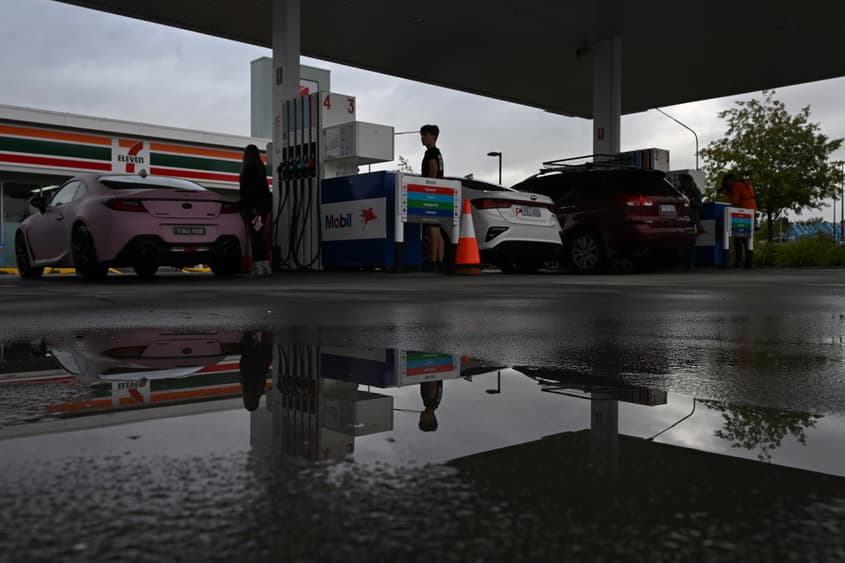
Photo: AAP Image/Lukas Coch


The oil crisis has not only caused petrol prices to soar, it has revealed just how little competition there is among the big oil companies.
A couple weeks ago the ACCC announced that it would be looking into uncompetitive behaviour by petrol companies in the rural areas.
However, as Matt Grudnoff explained on the Dollars & Sense podcast this week, many forms of price gouging remain perfectly legal. And while it is good to know that they have their eyes on illegal behaviour, the ACCC really should not just be limiting it to the rural areas.
Most people who have family members in different parts of Australia or who have done a few road trips will know that petrol prices usually are quite different depending on the state, city, town you are in. It’s always quite weird to cross a border or drive to a different town and see different prices to what was in the town 6 hours down the road.
No more.
Up to yesterday petrol prices had risen on average around 32% across the nation – for an average of 61 cents/litre – since the Iran War began.
But the price rises have been very different across the capital cities.
In Melbourne, prices have gone up around 50 cents a litre, while in Perth they have gone up 95.5 cents. In Adelaide prices are up 82.8 cents while in Sydney it is 61 cents.
What is weird however is that prior to the invasion prices for petrol across the nation varied widely. On 26 Feb, the cheapest petrol was in Perth at $1.62/l while in Melbourne it was $2.02/l – a difference of 39.6 cents or 24%.
Now however the difference between the highest and lowest price is just 7 cents or about 2.9%
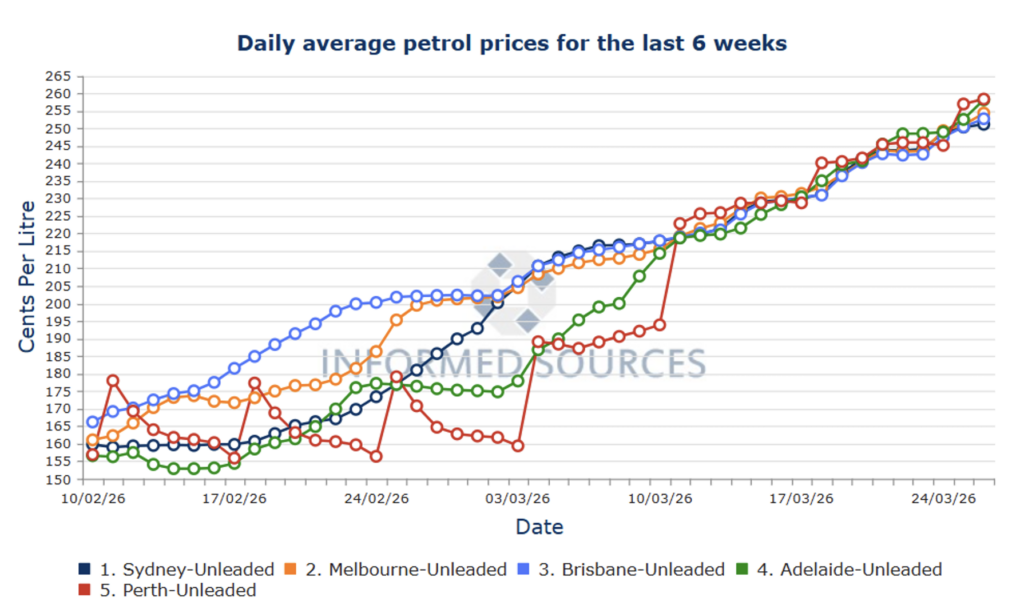
Where once capital cities had widely different prices, and where Perth especially had big shifts during the week with cheap days, now petrol basically costs the same across the country and rises in a steady line.
It’s almost like there really is no competition between the petrol companies and they can use this crisis to increase prices to an amount that suit them.
Australia’s peak council for community services ACOSS has joined the torrent of support including the Greens and independent members of parliament for a 25% levy on gas exports, originally proposed by the ACTU.
Advertisement
Australia’s shrinking local media landscape has fuelled growth in independent news outlets, with publishers gathering in rural South Australia to discuss the challenges facing community journalism. The Local and Independent News Association (LINA) summit in Murray Bridge comes amid growing concerns about the sustainability of regional news.

Combined with the 50 basis points rise in February and March in less than 2 months households are paying the equivalent of a 90 basis point rise in interest rates.