A lead analyst has argued that conditions are ripe for an overhaul of how Australia taxes liquefied natural gas (LNG) exports, with gas giants preparing to cash in on another global price surge.
New analysis from the Institute for Energy Economics and Financial Analysis (IEEFA) describes the international crisis as a “pivotal moment” for the Albanese government, as it reviews potential reforms to Australia’s resources tax and royalty regimes.
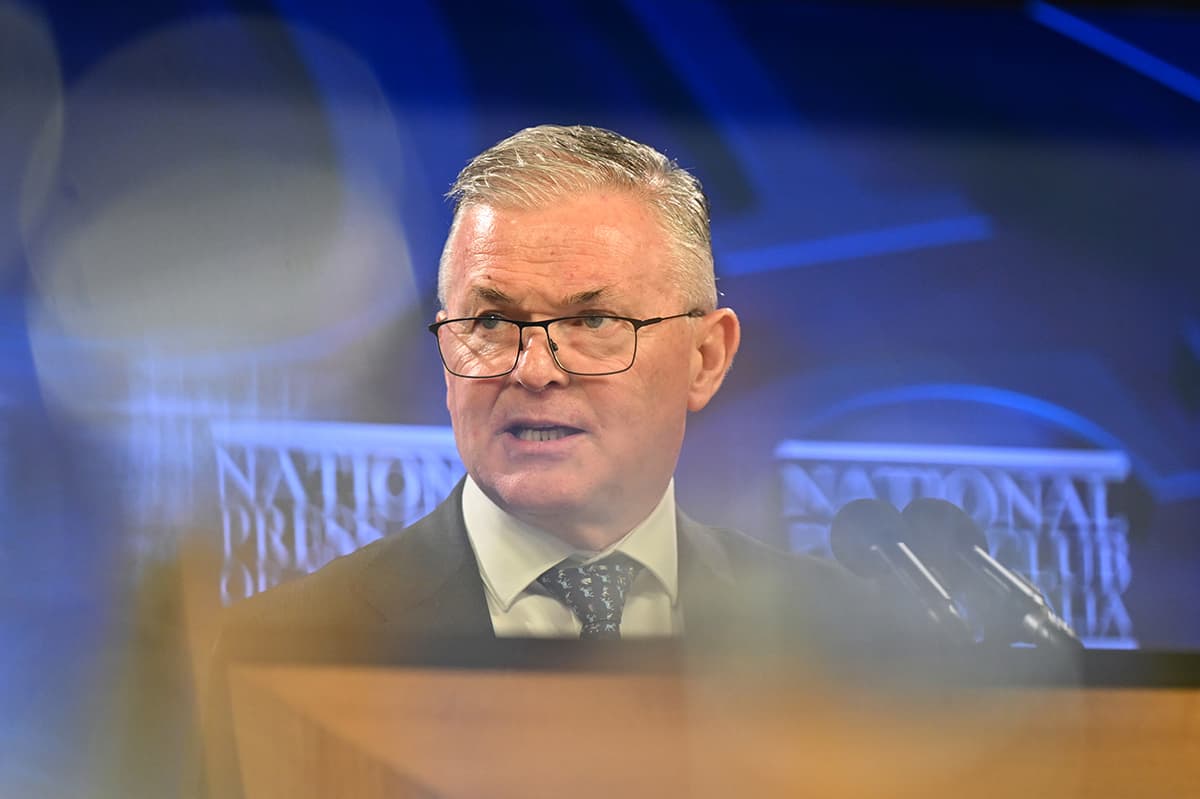
“The current system does not appear to be working, and prices are expected to be elevated for an extended period,” said author Josh Runciman, IEEFA’s lead analyst for Australian gas.
“With Australian LNG exporters set to earn windfall profits for the second time in five years, the broader public is increasingly questioning the value to them.”
Iranian attacks have knocked out 17 per cent of Qatar’s LNG export capacity, damaging the world’s largest LNG export plant and two of its trains.
The International Energy Agency (IEA) expects repairs will take up to five years, with supply disruptions likely to persist well beyond the end of the conflict.
“The war in the Middle East is just a month old, but it has already created [an LNG] supply crunch that has almost doubled LNG prices amid intense competition between buyers,” the analysis stated.
Oil and gas sector profits in Australia surged from $13 billion in 2020–21 to $62 billion in 2022–23 when Russia invaded Ukraine.
However, as Mr Runciman pointed out, government revenues failed to keep pace with this spike, due to the structure of Australia’s tax system.
“Australia’s taxation of LNG exports suggests that higher international prices will not fully translate into higher tax receipts,” he said.
“Oil and gas royalties as a share of export earnings were lower in that period when LNG prices peaked, than in years of more normal pricing.”
IEEFA said several tax reform models would improve on the current Petroleum Resource Rent Tax (PRRT), with a flat LNG tax singled out as one of the best performing options due to its simplicity and ability to deliver steady revenue.
The ACTU’s proposed 25 per cent gas export tax has gained significant momentum with IEEFA noting: “The Australian government has overwhelming public support for a new tax on LNG exports, which in part likely reflects growing awareness of the adverse economic impacts of high oil and gas prices.”
According to Dr Richard Denniss, co-chief executive of the Australia Institute, “a gas export tax is a no brainer for Australia. For decades, we have seen successive governments tinkering with the disastrous Petroleum Resource Rent Tax (PRRT), which despite booming gas exports, collects less than beer excise or HECS repayments.”
“It is time to start from scratch; a simple tax on the value of gas exports will be hard to avoid, and would deliver huge revenues for ordinary Australians.”
Analysis by the Australia Institute shows the proposed tax could generate around $17 billion in government revenue every year.
“Imagine if the Albanese Government had introduced an export tax back in 2022, by now we would have collected almost 64 billion. The only reason so many Australians feel so poor is that our governments keep giving so much of our gas away for free.”
The Australia Institute estimates that the public misses out on $350 million in revenue each week that the government delays implementing the 25% export tax, with its Gas Giveaway Tracker showing losses in real time.
“Every day the Albanese Government delays introducing a gas export tax the deficit gets bigger and Australians get angrier. It’s time to act.”
A windfall tax has also drawn support, with Independent MP Allegra Spender among those pushing for a levy of at least 50 per cent on revenue earned above expected levels due to global supply disruptions.
Mr Runciman said it would deliver benefits during price spikes but would “fail to ensure Australians receive a reasonable royalty return during periods of normal pricing”.
“Now is an opportunity to not just focus on the short-term opportunity to capture windfall profits, but to set up a system that will work better in all market contexts,” he said.
Gas lobbyists have warned that the proposed levy would jeopardise $70 billion in government revenue.
“This is a legitimate concern,” said Mr Runciman. “But it will be important to critically review industry arguments.”
“For example, IEEFA has found that industry statements on the impact of the increased Queensland coal royalties often did not accurately represent reality.”
The Queensland Government overhauled its coal royalty rates in 2022 during Russia’s invasion of Ukraine to capture high profits during peak prices.
According to the ABC, it has since netted the state almost $40 billion in revenue, including the 2025-26 projection of $6.17 billion.
Mr Runciman said it was time Canberra reevaluated its tax policies and priorities.
“The government needs to seriously consider reforming the nation’s taxation of gas and LNG exports to ensure Australians share in the value of gas that belongs to all Australians,” he said.