The Australian Government has now released its formal response to the Australian parliament’s inquiry into online gambling and gambling advertising. The response was tabled in Parliament at about four o’clock on the Tuesday afternoon that most of Parliamentary press pack were locked in a room without their phones or laptops so that they could read an advanced copy of the budget.
If that was a way of ‘taking out the trash’ and making sure as few people as possible saw whatever the Government was trying to hide, it didn’t stop the story leading major news bulletins throughout the day. The Government will be hoping that now the Budget is public, the conversation will move on.
Australians have waited almost three years for the Government’s response.
The inquiry into the harms caused by online gambling, commonly known as the Murphy review after the late Labor MP Peta Murphy, who chaired the inquiry, was released in June 2023. Through the inquiry, Murphy achieved a rare consensus in Australian politics – ambitious reforms taking on vested interests that were backed by every parliamentarian on the committee, Labor, Liberal and independent alike. As the final report makes clear: “Australians do not like being flooded by messages and inducements to gamble online and worry about the effect this is having on children and young people.”
The report made 31 recommendations, which include a total ban on all forms of advertising for gambling phased in over three years. If the government had acted quickly, the gambling ads that saturate Australian TV, computer, and phone screens would now be a thing of the past.
Other recommendations included establishing Commonwealth responsibility for the harms caused by online gambling, through a national regulator and a single government minister. As it stands, the de-facto regulator of Australia’s online gambling is the Northern Territory Racing and Wagering Commission, which has been accused of being ineffective and having conflicts of interest. The idea was that these reforms would be funded through a levy imposed on the online gambling industry.
So – three years on – what has the government got to say about the $50 billion online gambling industry? Rather than a ban on advertising, it has announced certain restrictions that will see fewer gambling ads in front of Australian eyeballs. This includes:
- a ban on all wagering advertising during live sporting events on broadcast channels between 6:00am and 8:30pm;
- a ban on all wagering advertising in sports venues and on players’ and officials’ uniforms;
- a restriction on all wagering advertising on broadcast television to no more than 3 wagering advertisements per hour per channel between 6:00am and 8:30pm;
- a ban on all wagering advertising on broadcast radio during school drop-off (8:00-9:00am) and pick-up (3:00-4:00pm) hours;
- a ban on all wagering advertising on online platforms, except where users are logged in, are 18 years or older, and have not opted out of such advertising (triple lock functionality); and
- a ban on the use of notable people (including celebrities and athletes) and the promotion of odds in wagering advertising.
These reforms are welcome, but they stop well short of the ban that the Murphy Review recommended. Do gambling advertisements stop being harmful after 8:30pm? Do children stop listening to the radio after 4pm?
Aside from ads, the Government’s response includes a range of proposals, including:
- Extending existing bans on illegal online gambling services;
- Banning online keno – which allows people to bet up to $1000 in three minutes;
- Prohibiting people from participating in international lotteries and ‘reward club’ type lotteries;
- Responding to a review of the BetStop, a program which allows people to register to exclude themselves from online and phone gambling for at least three months;
- Reviewing a ban on the use of credit cards for online gambling, which was put in place in 2024;
- Expanding Commonwealth-funded financial counselling services for people who are experiencing financial hardship as a result of gambling harm;
- A national awareness campaign about the dangers of online gambling;
- Making match fixing a criminal offence; and
- Continuing to enforce already existing mandatory minimum classifications for computer games that contain gambling-like content.
If they are to be implemented, many of these reforms will have to first pass through Parliament.
The response flies in the face of the widespread public support for genuine gambling reform. Polling just released by The Australia Institute shows that three in four Australians (77%) would support a ban on gambling advertisements. This includes the majority of voters across the political spectrum, as follows:
- 81% of Labor voters
- 78% of Coalition voters
- 88% of Greens voters
- 66% of One Nation voters
- 85% of independent voters
- 79% of other voters
- 72% of undecided voters
Gambling inflicts enormous harm on the Australian community. Australians are the biggest gamblers in the world, and lose over $31 billion to gambling every year. In addition to the financial losses, gambling problems are linked to suicide and family violence. Problem gamblers lose their jobs, homes and families to their addiction.
To make matters worse, analysis by the Australia Institute shows that large numbers of Australians start gambling well before they reach the legal minimum age of 18. Almost one in three 12-17-year-olds gamble (30 per cent), and this increases to almost half (46 per cent) when young people turn 18. This means that Australian teenagers are more likely to gamble than they are to play any of the most popular team sports.
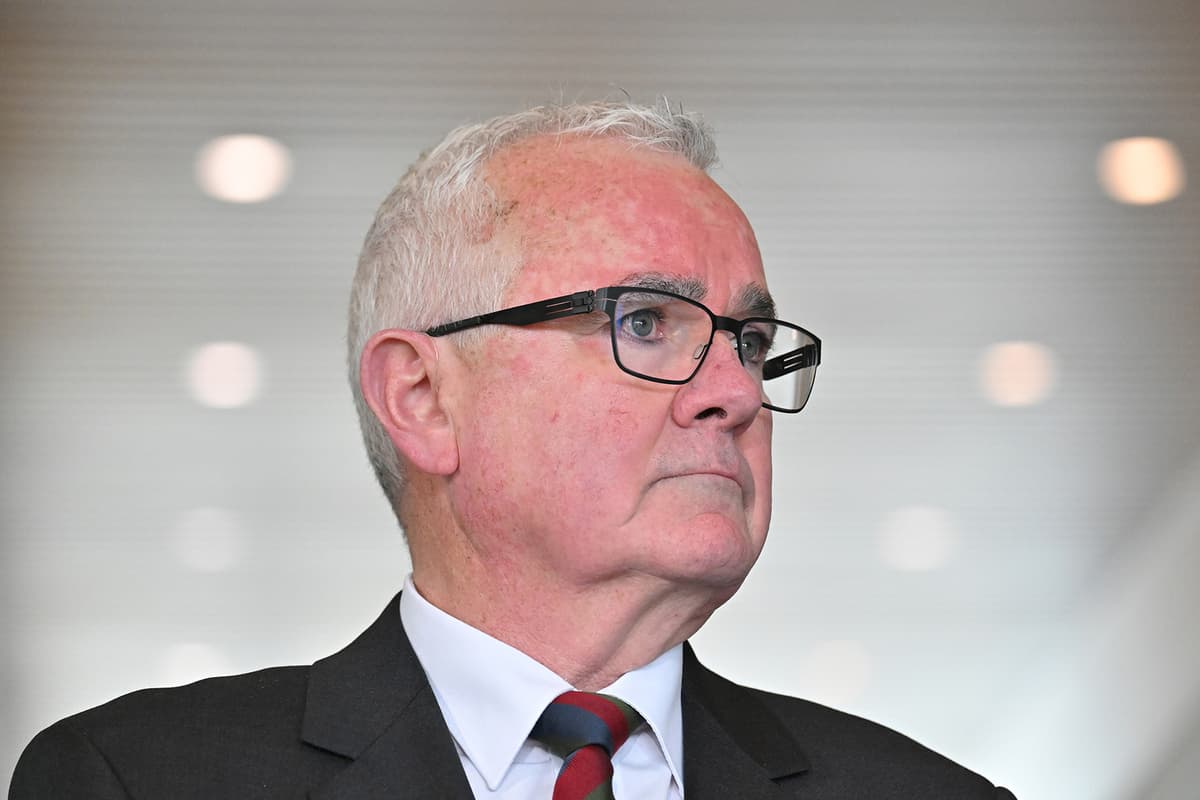
As long-time gambling reform advocate and Independent MP Andrew Wilkie said in his response to the Albanese Government’s announcement:
“No wonder big swathes of the community are recoiling from the ALP and Coalition parties, not that I hold any hope that the ascendant One Nation party would be any better on gambling reform. A pox on all of them.”