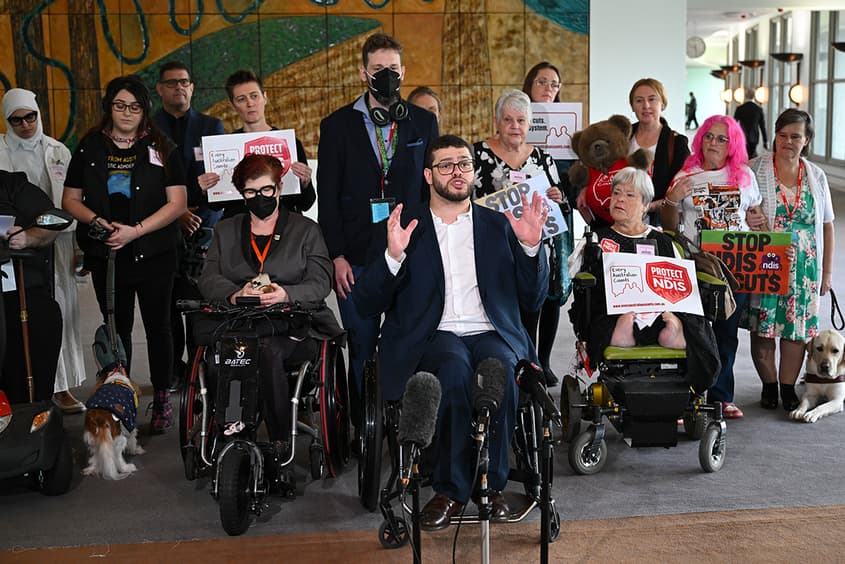
Disability advocates say Treasurer Jim Chalmer’s fifth budget will go down as “the cruellest act of the Albanese Government”, with groups describing the decision to slash $37 billion from the National Disability Insurance Scheme (NDIS) as ‘revolting’, ‘frightening’ and ‘deeply troubling’.
Changes to eligibility requirements will see 160,000 participants cut from the scheme over the next four years, as the government looks to cap annual growth at 8 per cent by 2028.
“The Albanese Government has never been afraid of policies that kill people who need support, and the unfathomable size of these NDIS cuts is the most egregious example yet,” said Kristin O’Connell, an Antipoverty Centre spokesperson.
Greens senator Jordon Steele-John said he was ‘revolted’.
“Labor are slapping themselves on the back this morning. Well, how dare they,” he said.
“How dare they celebrate the devastation of the NDIS and the defunding of so many vital community supports.”
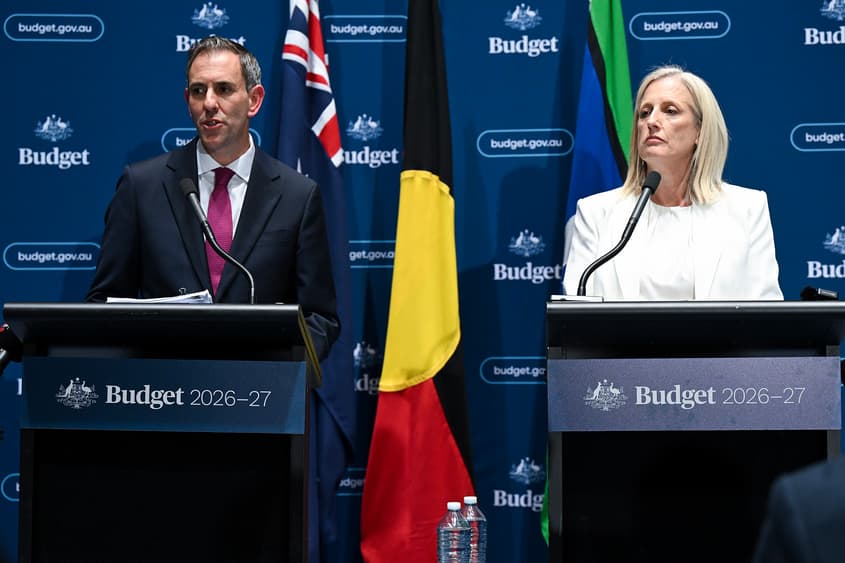
The cuts are the largest savings measure in the budget, with Treasurer Jim Chalmers arguing they were necessary to rein in the program’s spiralling costs.
“A big part of our savings package will restore the NDIS to its original intent and secure its future, so it grows in a sustainable way in line with programs like Medicare,” he said in his Budget speech to Parliament.
“This difficult but necessary reform will save $37.8 billion over the forward estimates.”
Matt Grudnoff, senior economist at the Australia Institute, said the “cuts are so large that in the last year of the forward estimates in 2029-30, when the cuts are fully implemented, they will be costing the NDIS $16 billion a year.”
“Now that’s 25% tax gas exports money, that’s a huge amount of money. They are massive, brutal cuts.”
NDIS eligibility will be based on a participant’s functional ability – how their condition impairs their day-to-day-life – rather than a diagnosis, with autistic people and those with lower-support needs to be most affected.
Dr Cherry Baylosis, from the Disability Advocacy Network, told SBS that there needs to be a viable alternative to address the gap in support.
“Drastic is an appropriate word,” she said. “I think we are going to see some unprecedented changes with the scheme, including access. We can anticipate that there will be, uh, a large amount of people exiting the scheme, difficulties accessing the scheme as well, as well as seeing a reduction to plans as well.”
The scheme’s cost grew by more than 10.3% last year and was on track to cost $63bn by 2028-29.
Now, the government is aiming for it to plateau at around $53 billion a year until 2030.
“I do not know how members of the government got to sleep last night knowing what they’ve done. And I don’t know how they are living with themselves this morning,” said Senator Steele-John.
Treasury forecasts the changes will bring participant numbers down from 760,000 to 600,000 by 2030.
The average plan funding will also be reduced from $31,000 to $26,000 per participant, saving $5,000 and returning to 2023 levels.
“We are deeply concerned about the effect of these cuts on people with a disability, who must be at the centre of any reform to this vital scheme,” said Australian Council of Social Service CEO Dr Cassandra Goldie.
“The 2026 federal budget will be remembered as the cruellest act of the Albanese government and will cause incalculable harm to disabled people, their carers and communities,” said Ms O’Connell.
“This budget targets disabled people but does nothing to scrutinise the private organisations who cash in on our need for support.”
The changes received mixed reviews from the crossbench.
Independent MP for Clark Andrew Wilkie was sceptical.
“The $37.8 billion forecast saving for the NDIS looks unrealistic, and the prospect of the State Government significantly increasing the delivery of disability services for Tasmanians is fanciful,” said Mr Wilkie.
Independent Member for Wentworth Allegra Spender cautiously welcomed the proposal, saying the proof will be in the government’s ability to implement the changes, which will bring about the “savings”.
“The NDIS reforms are needed but come with a big asterisk – we can’t bank them until delivered,” she said.
The government said it will also increase oversight of providers and payments to “fight fraud and stop rorts”.
The budget papers also pointed to a $2 billion commitment to establish the Thriving Kids program and a $3 billion provision for other foundational supports outside the NDIS.
Health Minister Mark Butler will introduce legislation this week to begin the overhaul.