The Greens have accused major corporations of capitalising on global instability to drive stronger inflation and boost profits, following the release of new Reserve Bank of Australia (RBA) research.
The RBA found businesses adjusted prices more frequently in 2022 and 2023 than they did before the COVID-19 pandemic.
The shift helped fuel an inflation surge that prompted the RBA to raise interest rates for three consecutive months.
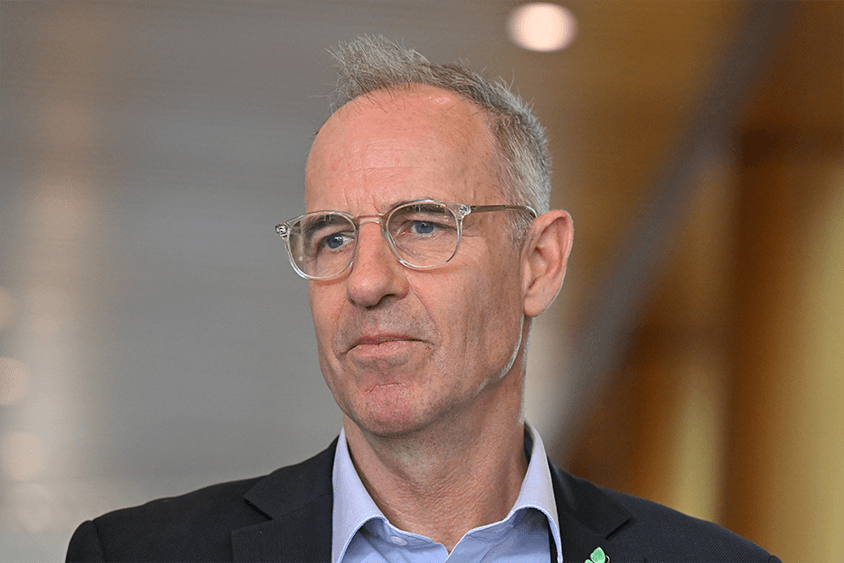
“The Reserve Bank has again acknowledged that changes in corporate pricing behaviour played a sizeable role in the inflation crisis,” Greens Economic Justice Spokesperson Senator Nick McKim said.
“This backs up what the Greens have been saying for years. Corporations used the cover of global shocks to gouge consumers and pad their profits.”
Speaking in Sydney this week, RBA’s chief economist Sarah Hunter warned that businesses are now passing rising costs onto consumers more quickly than in the past, increasing the risk that global shocks such as higher oil prices could keep inflation elevated for longer.
Australia’s annual inflation rate currently sits at 4.6 per cent, well above the RBA’s target range of 2 to 3 per cent, which the central bank is aiming to restore over the coming years.
“The answer cannot be higher interest rates and more pain for ordinary people while the corporations driving inflation walk away with billions,” said Senator McKim.
“We need strong anti-price gouging laws to stop corporations exploiting crises to rip people off.”
The Australia Institute’s chief economist, Greg Jericho, criticised the RBA’s willingness to blame inflation on household demand, arguing further rate hikes were “pointless” as recent inflation pressures were being heavily driven by petrol prices.
“The Reserve Bank is determined to smash households even though the cause of inflation is overwhelmingly due to international events,” he said.
“The cash rate does not change the price of oil and has only a marginal impact via the exchange rate.”
He also pointed out that in 2025, wages grew slower than inflation, “which means that wages clearly are not the cause of rising prices”.
Jericho blamed big business for the rate rise rollercoaster in 2022 and 2023, which resulted in one of the fastest and most aggressive tightening cycles in recent RBA history.
He said that Australia Institute research showed inflation would have actually stayed within the Reserve Bank’s target range in 2023, if corporations hadn’t gouged customers at the checkout.
“This means the nine back-to-back interest rate rises probably wouldn’t have happened without these excess corporate profits.”
The research found Australian businesses increased their prices by a total of $160 billion more than they would have if they had only increased prices in line with costs and economic growth.
The Greens have called for stronger competition laws, with Senator McKim arguing that cost-of-living pressures were being worsened by a small number of large corporations dominating major industries.
“One of the reasons Australians are paying too much for food, insurance, banking and flights is because a handful of giant corporations dominate entire sectors of the economy,” said Senator McKim.
“We need a boost to competition powers to meet this challenge of concentrated market power.
“Divestiture powers – as exist around the world – are needed so that courts and governments can break up companies that misuse their market power and squeeze Australian consumers.”
The RBA has signalled rates could remain on hold at its next board meeting in June.
In the minutes of its May meeting, members noted that the conflict in the Middle East was likely to slow the economy and reduce hiring, “worsening the short-term trade-off between the Board’s inflation and employment objectives”.
“The questions were how large this softening would be and what would be required to bring inflation back to target in a timely way,” it stated.