Factcheck: The ASU is right, a gas tax could pay for vital community services
The Australian Services Union is right, a 25% gas tax would raise far more than PRRT, and enough to pay for vital community services Australians rely on.
There's a tell when a politician has been captured by an industry lobby. The language shifts. Well, the Albanese government is repeating Big Gas talking points word for word. Except Australians aren't buying it.

Wed 20 May 2026 01.00 AEST
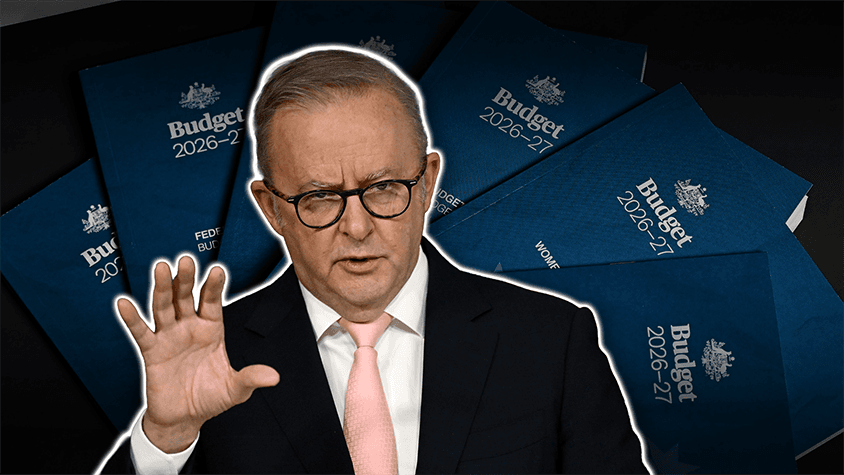
Photo: AAP Image/Susie Dodds
There’s a tell when a politician has been captured by an industry lobby. The language shifts. The carefully prepared lines about “existing contracts,” “investment certainty,” and “there’s already a tax, actually” start flowing out with the smoothness of a media brief, because that’s exactly what they are.
The Prime Minister Anthony Albanese on all evidence appears to have been captured. So has Resources Minister Madeleine King.
Prime Minister: blink twice if you need help. Australians are ready to help free you from the gas lobby capture.
The clearest proof came on ABC Perth on 13 May, when host Oliver Peterson pointed out that the Australia Institute analysis says a 25 per cent gas export tax could raise $17 billion a year. The Prime Minister’s response? “Well, this is something that’s just come from, you know, a social media campaign.”
No Prime Minister, this idea came from the Australian Council of Trade Unions as part of the Economic Reform Roundtable.
Former Treasury Secretary Ken Henry – not known for his TikTok dancing – told a Senate inquiry the PRRT “does such a tiny bit that anybody should be embarrassed to use that as an argument for not changing the taxation arrangements.”
The ACTU, Commonwealth Bank CEO Matt Comyn, crossbench senators, some brave ALP backbenchers, and an unusual coalition stretching from the Greens to One Nation all support reform. That’s not a hashtag. That’s a national movement.
What makes the ABC Perth interview extraordinary is what came just before it. In the same breath, Albanese explained his change of mind on negative gearing by saying governments “need to be prepared to respond to circumstances and make decisions in the national interest.” He said kicking the can down the road wasn’t good enough. Apparently that principle applies to property investors. For multinational gas corporations, the can keeps rolling.
Albanese also insisted gas companies “paid $22 billion of tax last year.”
That is the gas industry’s own talking point, and it papers over a spectacular story. The Australia Institute’s Gas Taxation Inquiry submission analysis showed Santos paid zero company tax on $47 billion in sales over a decade. INPEX – wholly foreign-owned – paid just $483 million in company tax on $81 billion in income, while exporting more gas each year than NSW, Victoria and South Australia combined consume. Chevron made its first-ever Petroleum Rent Resource Tax (PRRT) payment only last August. Shell confirmed to the Senate inquiry it had paid zero PRRT for the previous decade on profits of $2.5 billion a year.
Meanwhile, the Australia Institute’s live gas tracker shows that since July 2022, we have missed out on more than 70 billion dollars (growing by $2 million per hour) in revenue, by not taxing gas. It also shows that HECS repayments contribute more to government revenue each year than the entire gas export industry pays in PRRT. And of course, Australia’s national beer excise raises more than PRRT. The tobacco tax raises more. And every week we delay, costs Australians roughly $350 million in foregone revenue.
Resources Minister Madeleine King is reading from the same script, telling ABC Sydney that the PRRT “is designed to enable what has been, quite truthfully, hundreds of billions of dollars of investment into Australia.” That’s the industry’s founding argument from the 1980s, when the LNG sector received significant support to establish its infrastructure. The sector is now ingrained in our politics and extraordinarily profitable, and has made roughly $149 billion from exports in the last four years alone. The infrastructure is built – with significant historical government subsidies and incentives. The gas is flowing – mostly offshore.
The argument that fair taxation would now chase investors away from fully operational, cash-generating facilities is, as Ken Henry put it, ‘crap’. The gas industry did not flee Norway when they put a 78% tax on export gas revenue.
And the “existing contracts” defence, Albanese’s other go-to, doesn’t hold up either. The Lowy Institute found that long-term Sale and Purchase Agreements with Japan and Korea use fixed, oil-linked pricing that isn’t tied to Australian tax settings. Buyers won’t pay more. Producers’ margins shrink. That’s the point. The companies can’t take their bat and ball somewhere else. As Richard Denniss noted: they can walk, but they can’t take our gas with them.
The numbers are, in every direction, embarrassing. Qatar and Australia export similar volumes of gas. Qatar collects five times the government revenue. Japan – the country the government has been using LNG as diplomatic currency with – collected nearly $40 billion in taxes on gas imports over five years, compared to Australia’s $7 billion in PRRT. The importer taxes our gas more than we do.
Industry lobby capture doesn’t require anything dramatic. It doesn’t need brown paper bags, or smoke-filled rooms. It just requires a government that has decided the interests of INPEX, Chevron, Woodside and Shell matter more than the interests of the Australian public and has taken on the gas lobby’s language so completely, it no longer notices.
Prime Minister, we know you’re in there somewhere. The Prime Minister who changed his mind on Stage Three tax cuts because it was the right thing to do. The Labor government that says it believes in a fair go, and an economy that works for people.
Blink twice. Because Australians know Big Gas is taking the piss.
Advertisement


The Australian Services Union is right, a 25% gas tax would raise far more than PRRT, and enough to pay for vital community services Australians rely on.
The Albanese Government’s move to tackle the CGT discount is aimed at addressing one of the very settings many economists and housing advocates argue helped push the dream of home ownership further out of reach.