New analysis has found Australians would be paying significantly more tax today if income tax brackets had been indexed to inflation since the Howard government came to power.
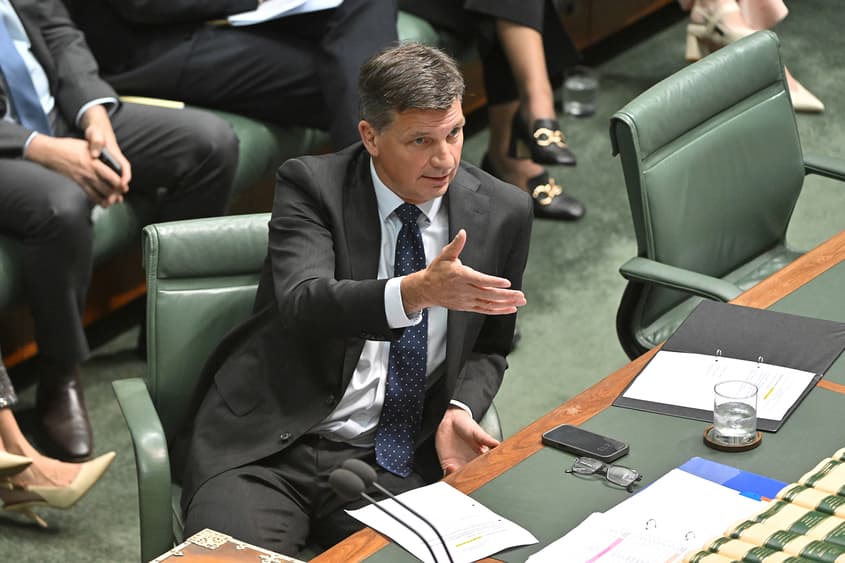
The Australia Institute’s report challenges Opposition Leader Angus Taylor’s claim that indexation is needed to protect workers from bracket creep, which he described as a “stealth raid on Australians working hard to get ahead”.
“Angus Taylor makes a cute argument that managing bracket creep manually rather than automatically is, in some way, ‘stealing’ from taxpayers, but his claim just doesn’t stack up,” said Dr Richard Denniss, co-CEO of The Australia Institute.
“Australia Institute research clearly demonstrates that under the current system, favoured by everyone from John Howard to Anthony Albanese, Australian taxpayers are keeping more of what they earn.”
Bracket creep is where inflation and cost-of-living pay increases push workers into higher income tax brackets, resulting in a higher proportion of their wages being taxed.
Taylor announced the policy in his budget reply speech last month, declaring that failing to index income tax thresholds with inflation was a form of “stealing” from taxpayers.
He said the Coalition’s “Tax Back Guarantee” plan would be phased in, with bracket indexation initially applying to workers earning up to $135,000 a year from 2028-29.
Indexation would automatically increase tax thresholds in line with inflation to prevent workers moving into higher tax brackets solely because of rising wages.
Taylor estimated the proposal would save the typical taxpayer $250 in its first year and about $1,000 annually from the fourth year, telling Parliament it was “generational tax reform”.
However, the Australia Institute’s modelling reached a different conclusion.
It found that a taxpayer earning an average weekly wage is $147 per week (or $7,583 per year) better off now than if tax brackets had been indexed to inflation since 1996.
“Nurses, teachers and police are between $172 and $207 per week better off,” Dr Denniss pointed out.
“Someone doing really well, earning double the average income, is $355 per week better off.”
Report author David Richardson, Senior Research Fellow at the Australia Institute, said automatic tax indexation could also work against broader efforts to contain inflation.
“A significant problem … is that they deliver the largest personal income tax cuts at times of high inflation, times where the Reserve Bank is usually trying to curtail household spending rather than stimulate it,” he wrote.
Mr Richardson also noted that in 1996, no tax was payable on income below $5,400.
Had tax brackets been indexed to inflation, the threshold would have risen to $11,310 by 2026-27.
Instead, it’s currently set at $18,200.
“Hence tax indexation would have reduced the tax-free threshold for all personal income taxpayers,” he wrote.
Dr Denniss argued that discretionary tax changes gave governments greater flexibility to respond to changing economic conditions.
“The current system enables governments to manage the ebbs and flows of the national and global economies,” he said.
“They can take into account things like high inflation, a global pandemic or a war in the Middle East.
He argued the modelling showed taxpayers had generally benefited from that flexibility over the past 30 years.
“It’s a huge stretch to suggest that by continuing to do what John Howard and Peter Costello did is stealing from taxpayers, he said.