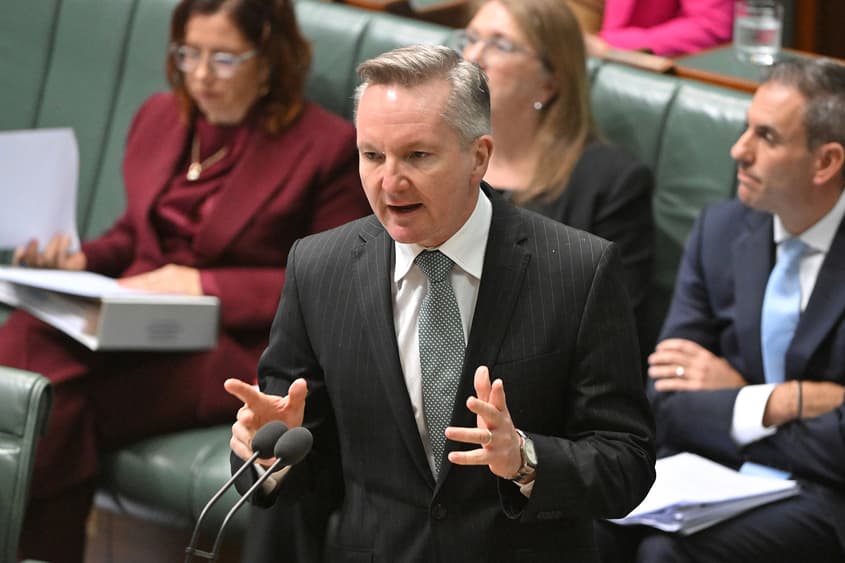
Australia has backed an ambitious global electrification target, with Climate and Energy Minister Chris Bowen declaring “the world is having an electrification moment”.
Minister Bowen joined Turkish COP31 President-designate Murat Kurum and UN climate chief Simon Stiell to launch the initiative at the mid-year climate talks in Bonn, Germany.
Dubbed the “35 by 35” goal, it aims to increase the share of the world’s energy that comes from electricity from about 20 per cent today to 35 per cent by 2035.
Australia is currently projected to increase electricity’s share of energy consumption to just 26 per cent by then, well short of the proposed target.
Greenpeace welcomed the initiative but said limiting global warming to 1.5°C would require a rapid phase-out of fossil fuels, alongside greater electrification.
“As Minister Bowen said, we are in the middle of a global fossil fuel crisis,” said Greenpeace Australia Pacific COP31 lead Dr Simon Bradshaw.
“Ending the fossil fuel chokehold is the only path towards greater peace and security and the only way to keep 1.5°C within reach.”
According to the Climate Council, the Albanese government has approved 36 new, expanded or extended coal, oil and gas developments since coming to power.
“This means an immediate halt to new fossil fuel projects — including Woodside’s reckless Browse gas project — and developing a national roadmap away from fossil fuel production,” Dr Bradshaw said.
Mr Stiell told journalists at a press conference that “we must hit fast-forward on electrification” as it would help drive economic growth while tackling climate change.
“Electrification is a global game changer, supercharging economies, jobs, and living standards, while fighting back against the global climate crisis,” he said.
Minister Bowen said electrification had “emerged with clarity” as a key focus of discussions ahead of November’s 2026 UN Climate Change Conference.
“Whether it be electrifying industry in a great industrial powerhouse like Germany or assisting African communities with the journey to clean cooking or improving the energy security of Pacific nations by replacing diesel with solar energy, renewable energy is now the cheapest form of power available to us,” he told the conference.
Mr Bowen said the share of global energy generated from renewables has more than tripled since the Paris Agreement was signed in 2016, with a 20-fold leap in global battery installations in the past five years.
“$2.3 trillion of investment is flowing into clean energy – two-thirds of all investment in energy worldwide. Because that’s where the growth and certainty are,” he noted.
“We all need to meet the moment to achieve real action.”
Greenpeace said Australia was not the only COP31 host facing scrutiny over its continued support for fossil fuels.
“It is a deep contradiction that Türkiye, as COP31 host, is championing a vision of electrification in the global arena while continuing to keep 37 active coal power plants running and leaving the door open for new projects at home,” said Berkan Ozyer, Director of Greenpeace Türkiye.
The global environmental organisation said supporting renewable electrification across the Pacific should be a priority for Australia.
“Nowhere are the benefits of renewable electrification clearer than in the Pacific,” said Dr Bradshaw, arguing it would help reduce inequality.
“The Pacific is already facing the brunt of a climate crisis and now faces the compounding injustice of an energy crisis brought on by fossil fuel dependence.
“It did not create either of these crises but is among the most exposed to both.
“The Pacific is leading the global push beyond fossil fuels, with the aim of becoming the world’s first fossil fuel-free region.”
Fiji and Tuvalu will host official pre-COP meetings in October, placing Pacific climate priorities at the centre of preparations for the summit.