The New South Wales Government has been accused of orchestrating “one of the bigger environmental frauds in Australian history” by using a new carbon credits method to fund a long-promised national park.
Tue 21 Jul 2026 11.25 AEST
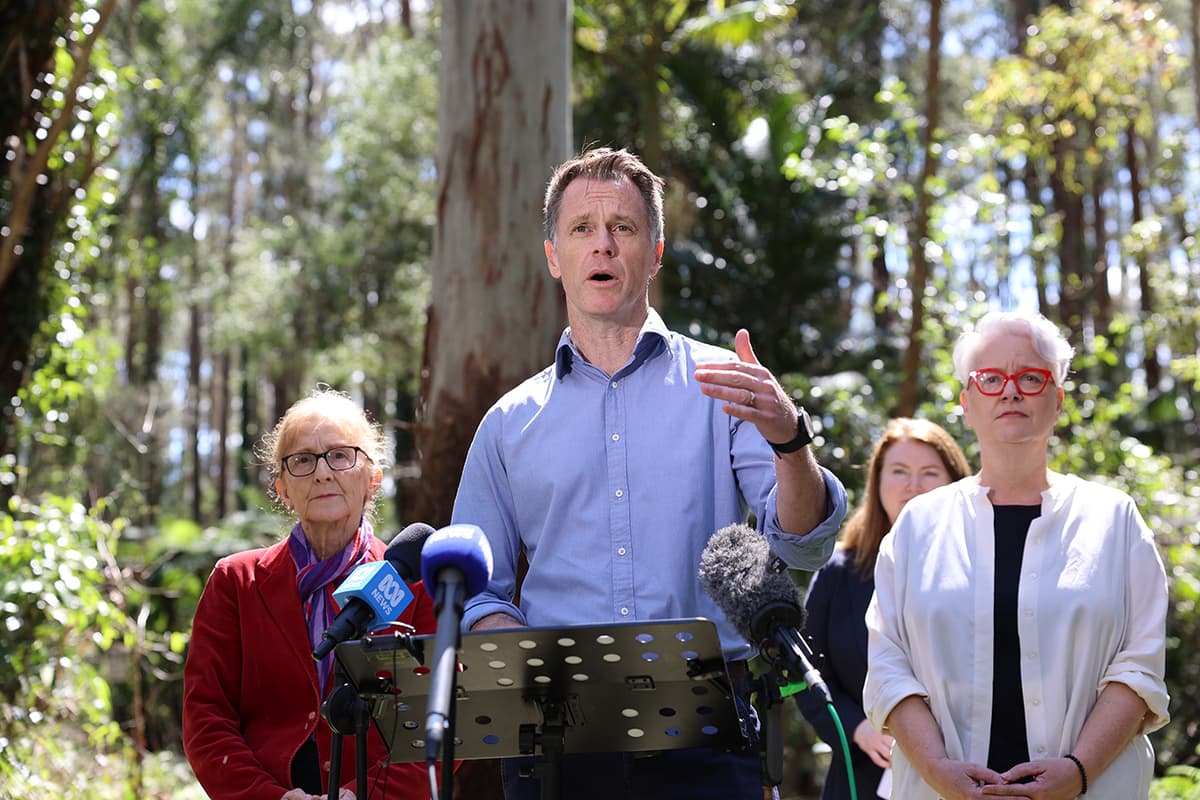
Photo: AAP Image/David Wigley
The New South Wales Government has been accused of orchestrating “one of the bigger environmental frauds in Australian history” by using a new carbon credits method to fund a long-promised national park.
Speaking on the What’s the Point? podcast, the Australia Institute’s co-CEO Dr Richard Denniss said it was ‘deeply fraudulent’ for the Minns government to use the Australian Carbon Credit Unit (ACCU) method to bankroll the Great Koala National Park.
“They’ve been promising to do this for over a decade,” said Dr Denniss.
“But then in the last year or so, the New South Wales government started to say, ‘Ah, what I meant to say was I might set up a national park but only if I get some sweet, juicy carbon credit cash from the federal government’.”
The new Improved Native Forest Management (INFM) ACCU method allows state governments to earn carbon credits by protecting native forests on public land that were previously earmarked for logging.
By preventing planned logging, the forests are expected to store more carbon as they continue to grow.
Fossil fuel companies can then buy the credits as offsets to count towards their own emissions reduction targets.
“What a carbon offset is, is the idea that ‘it’s okay for me to pollute. It’s okay for me to do harm to the environment because you did something good. So, your good thing offsets my bad thing’,” explained Dr Denniss.
“So, the New South Wales government is going to get cash from Woodside, Santos, other big fossil fuel producers, in exchange for protecting some trees that they committed to protecting over a decade ago.”
NSW Labor first committed to establishing the Great Koala National Park in 2015 and repeated the pledge before the March 2023 election, saying the 176,000-hectare site would protect at least 12,000 koalas and more than 100 other threatened species.
Despite previously allocating $80 million to the project, in September 2025, Labor parliamentarians voted against a motion to guarantee its establishment, whether the federal carbon credit method was approved or not.
At the time, NSW Premier Chris Minns said the state government “has to deliver” the park, which he’ll now be able to do, fulfilling an election promise before the March 2027 polls and potentially earning millions of dollars through the sale of its ACCUs.
“In principle, carbon credits can be okay,” said Dr Denniss.
“I don’t think offsets are ever okay.
“But this Great Koala National Park is both bad credits because nothing extra is happening, and those bad credits are going to be used to justify a bad activity — the expansion of carbon pollution.”
The Safeguard Mechanism reforms passed the Senate after the government accepted 14 government amendments and two Australian Greens amendments.
The Coalition had moved to disallow the INFM methodology determination, with Nationals leader Matt Canavan arguing it would incentivise governments to cease native timber harvesting rather than actively manage public forests.
“Labor’s new carbon credit approval will cause irreversible damage to Australia’s sustainable native forestry industry, sovereign timber supply capability, agricultural land and regional communities – locking up productive forest land for 100 years,” he said at the time.
Dr Denniss said its approval allowed fossil fuel companies to help justify their continued expansion of coal and gas production.
“This is greenwash. If we wanted to take the science of climate change seriously, we wouldn’t be opening new gas and coal projects,” he said.
He said the point of the carbon offsets was to “hide something simple”.
“All of this moving feast of koala parks, credit methods, offsets, the Safeguard Mechanism — it’s all a wall of sound.
“It’s all cover to hide the fact that we’re not doing the simple stuff.
“We’re not transitioning away from fossil fuels. We’re expanding them. We’re not listening to climate science. We’re still doing science denial, even though we changed government back in 2022.”
What’s the Point? with Richard Denniss explains the political and economic decisions shaping the lives of everyday Australians lives, answering key questions along the way. By getting straight to the point, Richard helps listeners understand how democracy works and why it matters.
Advertisement
Greens Senator Sarah Hanson-Young said on ABC’s 730 last night that a 25% tax on gas exports would be “bigger and simpler” than Labor’s proposed gas reservation policy. She's right.