Australia’s gas industry is harming communities across the Asia-Pacific, with new research warning its aggressive expansion is fuelling human rights violations, environmental destruction and health crises.
By Tegan George
Tue 15 Sep 2026 09.17 AEST
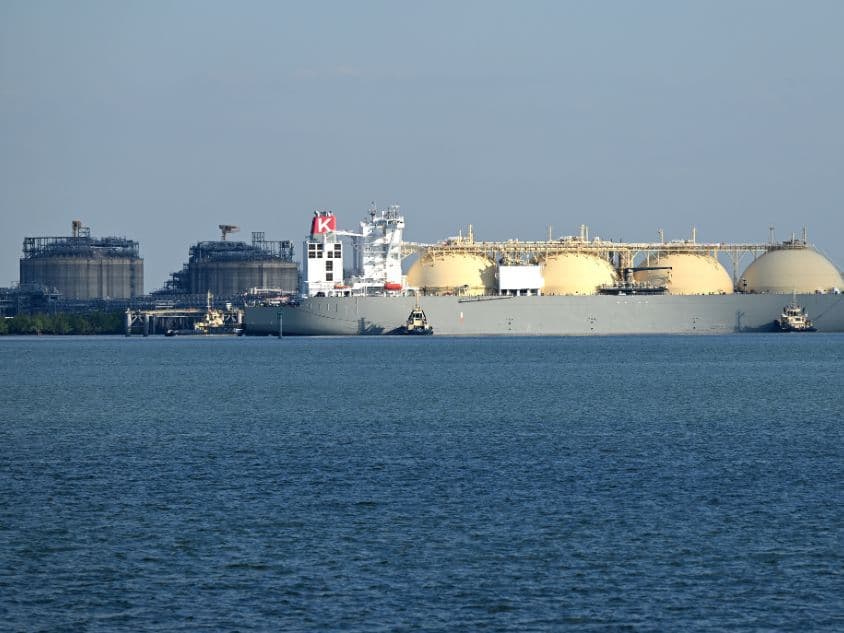
Photo: AAP Image/Darren England


Australia’s gas industry is harming communities across the Asia-Pacific, with new research warning its aggressive expansion is fuelling human rights violations, environmental destruction and health crises.
The Jubilee Australia Research Centre found the damage extended along the gas supply chain, from extraction sites in the Northern Territory and Papua New Guinea to heavy industrial facilities in Thailand and South Korea.
It said people living near gas projects reported severe health impacts, including increased rates of cancer and respiratory illnesses, while communities were often “left in the dark” about the risks to their land, wellbeing and livelihoods.
“The experiences of communities living on the frontline of gas expansion are startlingly similar across the Asia-Pacific,” said James Sherley, senior climate justice campaigner at the Jubilee Australia Research Centre.
“Gas corporations operate with a disregard for international law, as the rights of communities are frequently dismissed in an effort to expedite profits, with governments enabling the harms wrought by this industry.”
The Asia-Pacific is the world’s largest importer and exporter of liquefied natural gas, driven by what the report described as the “seismic expansion of gas production in Australia” and Japan’s continued role in financing and “greenwashing” gas projects across the region.
“While Japanese companies and financiers bloat the role of gas, communities around the Asia-Pacific are paying the price,” said Mia Watanabe, a campaigner at Oil Change International.
“Japan cannot call itself a partner in Asia’s energy transition while it is pitching more gas to a region that is dealing with worsening climate impacts and terminals running below capacity.”
The report examined five case studies spanning the regional supply chain, featuring communities that are resisting the industry’s push for expansion.
Community leaders reported they hadn’t received the promised economic benefits and that gas projects had damaged local businesses and livelihoods, and the surrounding environment.
“Gas expansion in the Arafura and Timor Seas poses serious threats to our marine environment, and to the health, wellbeing and culture of First Nations people who share our Sea Country. And we represent just one part of the supply chain,” said Sea of Nations executive director Antonia Burke.
“All over the region, communities are resisting the fossil fuel agenda imposed on us by corporations and governments seeking to benefit from the destruction of our country.”
The Australia Institute’s head of fossil fuel transition, Louise Morris, said Australia had no right to claim to be a good-faith partner in the region’s energy transition.
Quality research, analysis, explainers and factchecks from experts you can trust.
“It is shameful as an Australian to read this report when our governments sign up to a global transition away from fossil fuels commitment, while approving new coal and gas projects,” she said.
The Climate Council has counted 37 new, expanded or extended coal, oil and gas projects approved under the Albanese government, which Ms Morris said was “making a mockery” of its promise.
She argued that if Australia was serious about the transition, it would stop approving new projects, impose a 25 per cent gas export tax and develop a clear roadmap for a “fair and funded fossil fuel phase-out”.
“Using unlimited dodgy offsets to allow our top 200 polluters to keep increasing emissions while cooking the books and the planet – while still claiming net zero credentials is just gaslighting the people impacted by climate change – which is all of us,” she said.
“Words at climate summits mean nothing without a plan to back them up.
“Australia has no timeline to phase out gas and coal, no cap on new approvals or dodgy offsets, and no accountability for the harm our exports cause overseas.”
The report also found the gas industry was propped up by taxpayer subsidies, while many regions facing further gas expansion were already vulnerable to the effects of climate change.
“The climate crisis is an unfolding reality in the Asia-Pacific, as rising sea levels, severe coastal erosion, and extreme weather events actively displace whole communities, destroy traditional livelihoods, and threaten fragile marine and terrestrial ecosystems,” it stated.
“Despite urgent warnings from scientists and global institutions that avoiding catastrophic warming requires an immediate end to fossil fuel expansion, the global gas industry continues to expand aggressively.”
It comes as the first pilot gas fracked from the NT’s Beetaloo Basin began flowing at the start of September, amid concerns that the push to turn the territory into a global AI data-centre hub is creating an artificial market for further gas development.
The report warned the expansion carried far-reaching consequences.
“These political and corporate stakeholders behind the ‘gas empire’ are locking the Asia-Pacific into dangerous fossil fuel dependence, a vulnerability which has been exposed by the US-Israel war on Iran and the ensuing global energy crisis.”

