Artists, authors, musicians and other creatives have a huge impact on Australian culture, how Australians see themselves, and how the world sees Australians. Australia’s arts and culture cannot be produced overseas, and cannot be moved offshore. It can only be made here.
Thu 26 Mar 2026 01.00
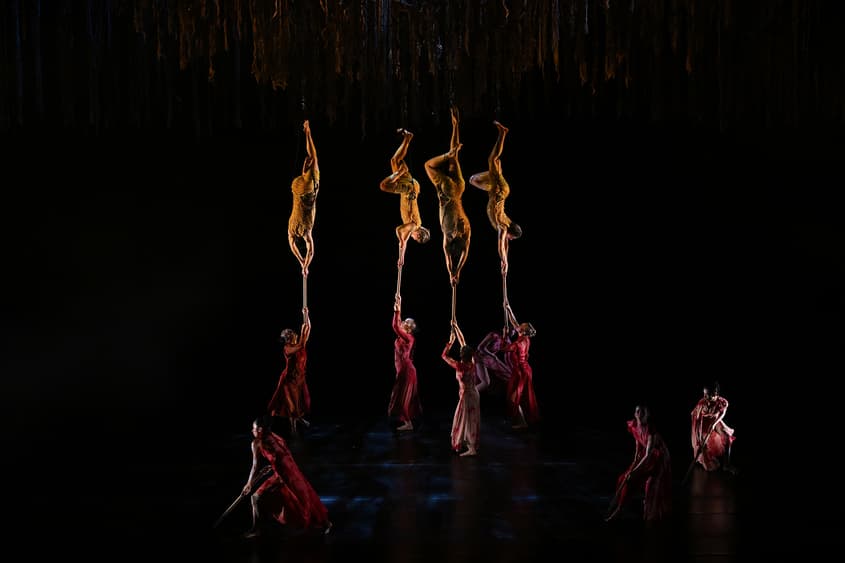
The Australian Ballet and Bangarra Dance Theatre perform during a media preview of Flora at the Regent Theatre in Melbourne, Wednesday, March 11, 2026. Photo: AAP Image/James Ross


Artists, authors, musicians and other creatives have a huge impact on Australian culture, how Australians see themselves, and how the world sees Australians. Australia’s arts and culture cannot be produced overseas, and cannot be moved offshore. It can only be made here.
But the sector is in a crisis, one far too big to solve without government intervention.
Employment in the arts and entertainment sector took almost five years to recover from the shock of COVID-19, three times as long as the rest of the Australian economy. Looking further back shows a sector with long-term struggles.
Australia-wide employment has more than doubled in the last 40 years, whereas employment in arts and entertainment has increased by just less than half that. Arts and entertainment employment has been either stagnant or in decline since 2008-09, while other sectors of the Australian economy have expanded.
The solution? According to the Federal Government, philanthropy. Labor’s special envoy for the arts, Susan Templeman, has called philanthropy “critical” for the arts in Australia and is chairing a new inquiry into arts and cultural philanthropy, which is having its second hearing today.
How important is philanthropy to the arts? While there’s no comprehensive figure, a total of $204 million ($238 when adjusted for inflation) was donated to organisations “advancing culture” in 2021, the latest year with data reported by the Australian Charities and Not-for-profits Commission
(ACNC).
While $238 million in private philanthropy may sound like a lot of money, it pales in comparison to other funding sources for the arts – “critical” is an adjective much better applied to the role Australian governments can play in keeping the arts sector afloat.
In 2023-24, the latest data, Australian state, territory, local and federal governments spent a combined $7 billion in recurrent funding for arts and culture – almost thirty times the size of philanthropy.
In real terms, that $7 billion is the lowest point for public arts funding in most of a decade, since 2017-18. Australian governments spent $551 million less in 2023-24 than they did in 2021-22 – that reduction alone is twice the size of philanthropy.
So even if measures to encourage philanthropy were wildly successful, charitable funding would pale in comparison to what governments are able to provide. Philanthropy is not and cannot ever be a solution to the wider issues of the arts sector.
While they wouldn’t significantly support the arts sector, measures to encourage philanthropy would have an impact elsewhere: on inequality. One of the most significant such policies currently in place, tax deductibility for gifts and donations, disproportionately benefits the rich.
Not only do the top 10% of income earners get over 80% of the benefit from tax-deductible gifts and donations, almost 70% of the benefit goes to those earning more than $1 million in taxable income per year.
Australian arts and culture should be accessible and available for everyone, not just the top 0.1% of income earners. But relying on philanthropy, which is disproportionately dished out by the uber-wealthy, has a profound impact on what gets funded, and how.
Philanthropy from the uber-rich is often directed towards the more prestigious forms of art. A study examining US$36 billion in American donations to the arts found that donors tend to fund institutions close to home, that they’ve donated to before, and that the more prestigious the art form, the more money it’s likely to get.
A billionaire’s name might adorn a gallery of fine art, or a chamber orchestra’s performance – but more rarely is the same true of a development program for young filmmakers and musicians in disadvantaged communities.
While Australia’s national ballet company “only exists … because of generous donors”, for example, organisations like Melbourne’s Blak Dot Gallery are primarily funded through government grants.
Similarly, overreliance on philanthropy dampens the ability of artists to comment on controversial or highly politicised issues.
In a 2025 column, Louise Adler, the former CEO of Melbourne University Publishing and director of Adelaide Writers’ Week, noted that increased reliance on philanthropic funding creates a hostile environment for art that provokes controversy or challenges the viewer. In particular, Adler pointed to the censorship of several artists who had “take[n] up the Palestinian call for an end to the occupation.”
Philanthropy is a minor funding source for the arts, and policies to encourage it will always disproportionately benefit the people who need financial support the least. Not only that, but institutions that over-rely on philanthropy risk compromising integrity when artists avoid controversy for fear of imperilling their ability to attract grants.
Australian governments, including the Commonwealth, have a duty to invest in the arts. It’s the only way to ensure that future generations can continue to enjoy Australian literature, music, performance, and art.
News has come out today that the Government’s submission to the Fair Work Commission for the annual wage review will recommend an “economically sustainable real wage increase” for the National Minimum Wage and the Modern Awards.
Advertisement

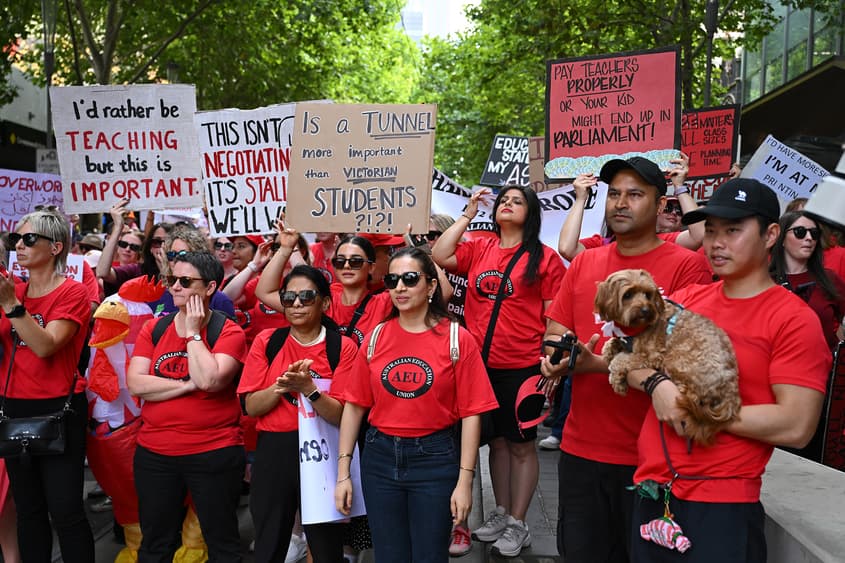
Most people have a nostalgic story to tell about their favourite teacher. We often invoke them when teachers are bargaining for better pay and conditions, or when another story of violence in schools reaches the headlines.
Australia’s population size is always a hot button political topic – perhaps more so now given the various conservative parties coming out strongly against further migration – but the reality is much calmer.