When fuel prices rise, who picks up the pieces?
Most Australians will notice higher fuel prices at the petrol station. Frontline community services will notice them in the growing number of people seeking help.
Australia’s youth mental health crisis is usually discussed as a healthcare problem (psychologists, psychiatrists, headspace centres). But an Australia Institute report released today suggests we should also look further upstream.
Mon 10 Aug 2026 14.12 AEST

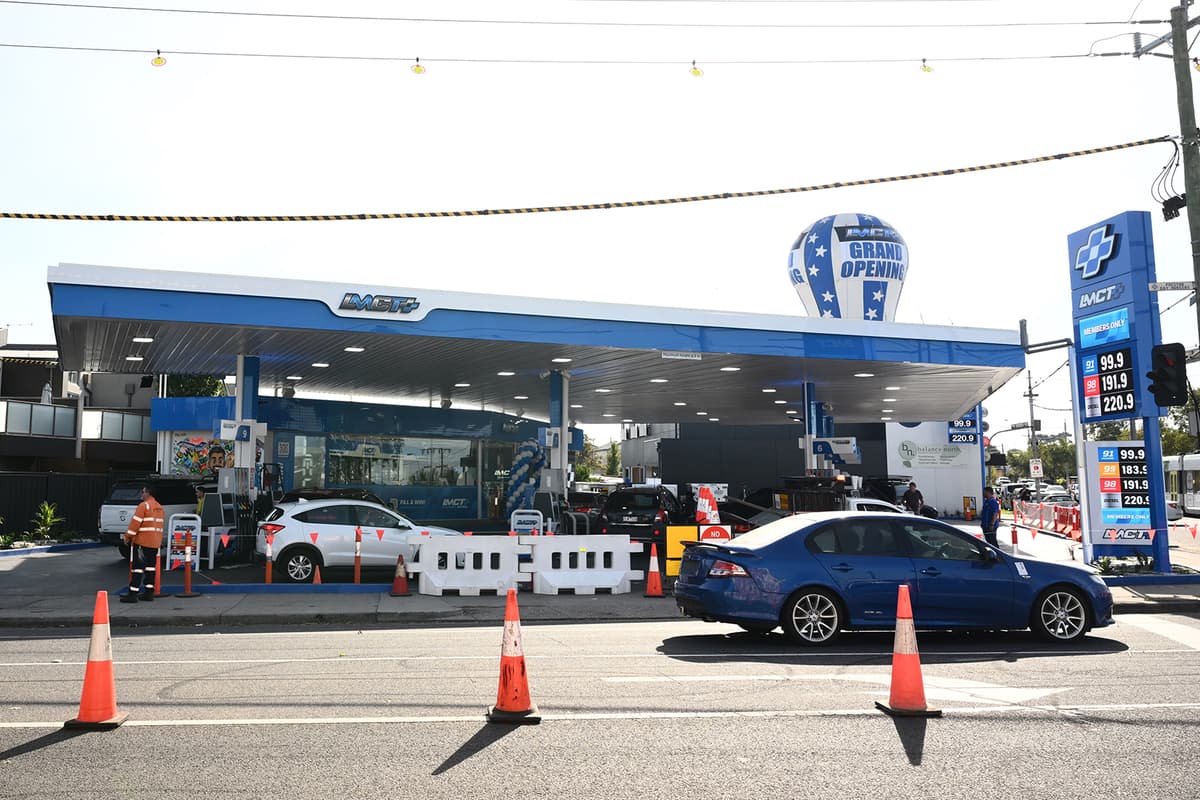
Photo: AAP Image/Dean Lewins
Australia’s youth mental health crisis is usually discussed as a healthcare problem (psychologists, psychiatrists, headspace centres).
But an Australia Institute report released today suggests we should also look further upstream.
The mental wellbeing among young Australians has deteriorated sharply compared to older cohorts. For example, self-reported mental health scores among 15–24-year-olds fell by 15% between 2008 and 2024. Scores reported by those aged 45 and over have remained fairly steady:
At the same time, the economics of being young have become considerably tougher.
Since 2001, tertiary education costs have increased by 150%. Rents and out-of-pocket health costs have roughly doubled. Yet the real minimum wage has risen just 19 per cent and Youth Allowance only 10 per cent:
Young people’s disposable incomes have grown more slowly than those of older Australians – doubling from 2004 to 2022 while that of those 55 and over grew 2.4-fold over the same period:
And young people now face the added indignity of paying more to access the mental healthcare they increasingly need. In 2024–25, their average out-of-pocket cost for a Medicare-subsidised mental health service was 34 per cent higher than for people aged 45–64.
None of this proves that high rents or HECS debts cause mental illness. Mental health is complicated, and the report is careful not to make that claim.
But financial stress, unemployment, underemployment and insecure work are all associated with poorer mental health – and we can’t expect the healthcare system to mop up all the damage created elsewhere.
Affordable housing, adequate income support, decent wages, and lower education and healthcare costs are mental health policies too.
Advertisement
Most Australians will notice higher fuel prices at the petrol station. Frontline community services will notice them in the growing number of people seeking help.
Parliament is being asked to make some of the most consequential changes to the scheme before the machinery that will determine who stays and who goes has even been completed. That should give everyone reason to call halt. There is a very real risk of creating a gap first and hoping another system eventually fills it.