Next Tuesday, the Reserve Bank seems certain to once again raise interest rates. But the 74 cent/litre increase in petrol prices since June has already worked to hit households as much as two rates rises would.
On Thursday, the unemployment figures for August showed that unemployment had risen 0.2%pts to 4.6%. In response, the likelihood of a rate rise next Tuesday… went up.
Yep. Before the figures were released, the market had an 88% chance of a rate rise; afterwards it was bumped up to a 90% chance:
If that sounds odd, you are clearly too smart to be on the RBA monetary policy board.
Indeed, looking back over the past month, the biggest change in the outlook came on September 2, when the June quarter GDP figures were released. They showed Australia’s economic growth slowed from 2.5% to 2.1%. That slowing again caused the market to become surer that the RBA would raise rates.
Why? Because the slowing was not as bad as expected!
Topsy-turvy stuff indeed.
After the last RBA meeting on August 11, the market was forecasting maybe one rate rise in the next 18 months, but that was it. Now it is predicting two by March next year and a better than 50:50 chance of three rates rises by this time next year:
And all that has happened since then is unemployment has risen, wage growth has slowed, and the overall economy has slowed.
Actually, that is not all.
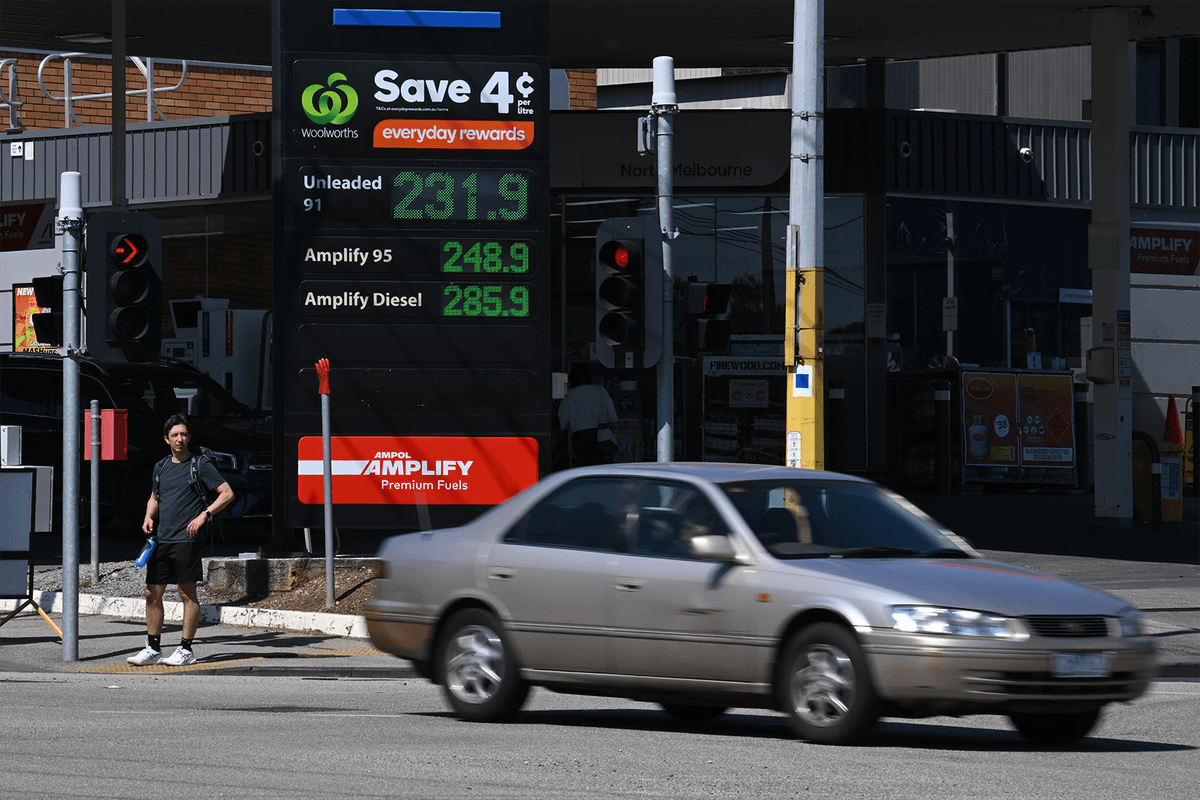
Since the RBA last met, petrol prices around Australia have risen by nearly 40 cents per litre:
Get our newsletter
Quality research, analysis, explainers and factchecks from experts you can trust.
Across the mainland, petrol prices have risen on average 18%:
Since the RBA met in June, the price rise has been even larger – nearly 74 cents per litre:
All of that makes for a huge impost on households.
In March, David Richardson and I calculated that given the level of variable interest housing loans and the amount of petrol consumed by households, a monthly 10c/l rise in petrol prices in a month was equivalent to a 7 basis points rise in interest rates.
Thus the 37 cents/litre rise in the 6 weeks since the last RBA meeting is equivalent to effectively one interest rate rise.
Worse still, the 73.9 cents/litre rise since the 16 June meeting is equivalent over that period to two rate rises.
Petrol expenditure is one of the closest things we have to the unavoidable impost of paying more for you mortgage due to a rate rise.
Most people are unable to avoid buying petrol and so when the price rises as sharply as it did in March and now since June. All that extra money spent on petrol means less money spent elsewhere on goods and services that actually drive the economy. That works to slow the economy in much the same way interest rate rises do.
The RBA will presumably suggest that the increase in prices has hurt but not enough and so they need to raise rates.
But for households feeling like they are already struggling enough, a rate rise next week will effectively feel like the third they have had since June.