The future as set out in the Paris Agreement has two stages as in Figure 1 below.
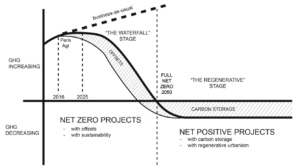
Figure 1 The fundamentals of the Paris Agreement. Source: Newman
We have rapidly begun the net zero transition, especially in cities. The dramatic data on the global adoption of solar, wind, batteries and EVs is happening in ways that is like a waterfall after the Paris Agreement.
Clean energy investment is projected by IEA to reach a record US$2.2 trillion in 2025, double the investment in fossil fuels and more than four times what it was just a decade ago. Solar and wind were 76% of world new electricity capacity in 2024 with nuclear almost zero, showing that the solar surge is the fastest energy transformation in history.
If such trends are projected, the world will use more renewables than fossil fuels in the late 2020’s. Cities and towns everywhere are adopting renewables with multiple innovations in how smart systems can integrate these technologies into every electric function. Thus around 80% of the net zero transition seems now to be unstoppable.
The only likely issue will be the lost momentum in R&D on the last 20% of decarbonization: industrial processing of minerals, concrete, aviation and shipping, which are still not commercial. Many of these industries are in regional areas, perhaps explaining the split in Australian politics.
Economic change has been driven by waves of innovation in five other periods of dramatic change like we are now seeing. The five major financial collapses have all been associated with a ‘creative destruction’ process, as described by Joseph Schumpeter . The old way goes and the new emerges, so everyone, especially political leaders, need to adapt and welcome it.
The creative destruction process is mostly happening now in the political and economic changes happening in our cities, where solar-electric systems are creatively working well. The hard changes, many depending on hydrogen becoming commercial, are likely to spread into regions in the next decade as suggested by IPCC.
Big changes are happening in all professions as we go into this ‘maelstrom’ of change, as Edgar Alan Poe described their changes in 1841 from the creative destruction of the first wave of industrial innovations.
Greenwashing is now emerging as a major factor for professionals in the transition. ASIC are showing that companies cannot continue their ‘creative accounting’. Politicians need to see how quickly Trump politics can collapse under such credibility issues.
There is much cause for hope on net zero. There is enough happening as we go over the waterfall to see a better future now emerging. It is hard to imagine how the politics of Trump and the cancel culture of the Australian Liberal and National parties, can prevent the net zero transition.
Peter Newman is Professor of Sustainability at Curtin University, and has been part of IPCC for the past 15 years. His new book Net Zero Cities with Sustainability: A Practitioner’s Approach, is from Edward Elgar.