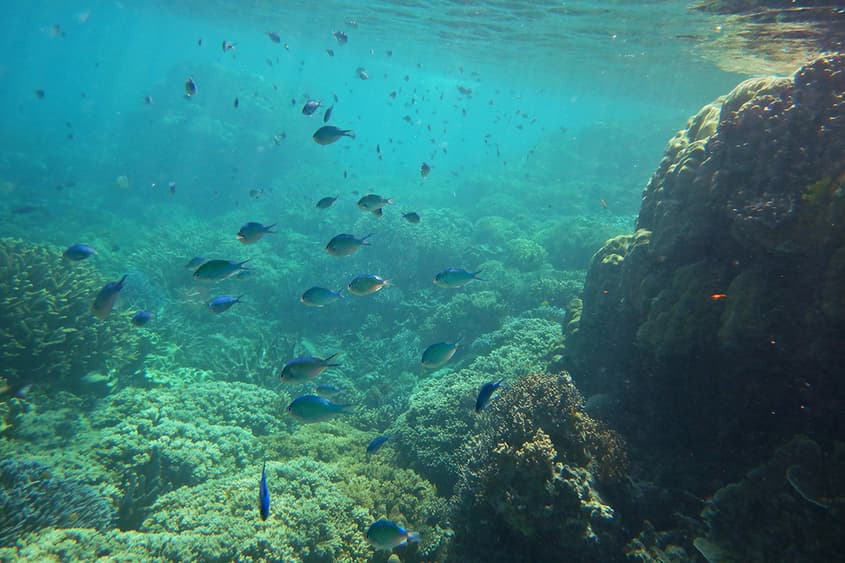
Across the globe, an amazing orchestra of animal life is playing out in wondrous, quirky detail, revealing the resilience and spectacle of nature.

Sat 6 Dec 2025 00.00
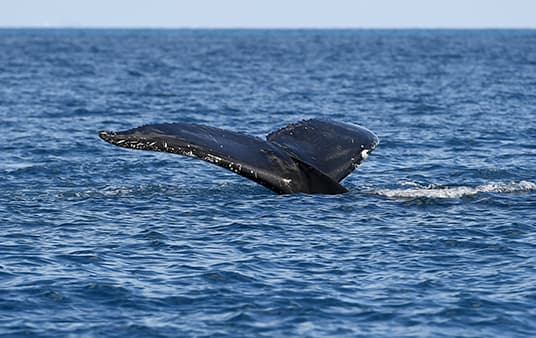
A humpback whale's tail is seen in waters off the coast of Hervey Bay, Queensland (AAP Image/Dan Peled)


The last great auk, it is said, was strangled unceremoniously in its sleep in 1844. Plump and penguin-like, the great auk had survived for thousands of years until humans discovered the utility of its soft down feathers, eggs and meat. Great auks mate for life, and it was on Eldey island in Iceland where the final pair on Earth met their fate at the hands of three fishermen who fell upon them.
“I took him by the neck and he flapped his wings. He made no cry. I strangled him,” said the man who killed the last of a species.
Extinction is rarely loud. It is a whisper, so quiet that you might just miss it.
The great auk wasn’t the first to fall to extinction at the hands of humanity, and it certainly wasn’t the last. The dodo, almost two centuries prior, became the symbol of human-induced extinction. Another flightless wonder, the dodo heralded the beginning of the modern extinction era. The dodo is, for all intents and purposes, an icon of extinction: it is and was the (futile) canary in the coalmine that sounded the alarm to what would become a tragic chapter in Earth’s 4.54 billion-year history, written in blood and wrought by humanity’s hand.
But the dodo’s demise did little to stem the rising tide of extinction that would plunge the world into an era where the force of humanity would rival the cataclysm that wiped out dinosaurs.
So many more extinctions were to come, most of them going quietly, slipping softly into the annals of obscure scientific journals. The smooth handfish. The Yangtze River dolphin. The quagga. The Pyrenean ibex. The Chiriqui harlequin frog. The Rocky Mountain locust.
This is the canvas upon which we etch our legacy today.
Welcome to the Anthropocene: the reign of the human.
Land and sea both bear the scars of humanity’s rule. Today, one million plant and animal species face extinction. Wild mammals make up less than 6 per cent of the total mammal biomass on Earth, dwarfed by humans and livestock. That is, by weight, humans and their food dominate and devour the globe. The children born today face the very real possibility of a world emptied of much of its wildlife. This is a catastrophic legacy.
The tales of human-driven wildlife extinction are of unfathomable horror: lands blackened with bodies of bygone species; birds falling from the skies, bodies slick with oil and sludge; great bears dancing raggedly in circuses; fish swollen with ingested plastics; wild apes prostituted; monkeys behind bars; insects disappearing from the skies; whales being cut, sliced, hauled and massacred off the back of ships; foxes lining coats and hats; koalas smouldering under blazing fires.
Don’t look away. Because it’s not over just yet.
Amidst the tragedy, a hidden world of curiosity and wonder still exists. And in this we can find glimmers of hope.
Across the globe, an amazing orchestra of animal life is playing out in wondrous, quirky detail, revealing the resilience and spectacle of nature.
In the freshwater lakes of Mexico, newly hatched axolotls are feasting on their siblings’ limbs and revolutionising our understanding of nature’s regeneration abilities. These small salamanders, resembling eels with stumpy legs, possess the extraordinary ability to regrow lost limbs.
Across the Atlantic, female great apes in Central Africa are delighting one another with an intimate bonding ritual, rubbing their clitorises together to strengthen their friendships and maintain peace within their communities.
In the oceans, an adult humpback whale takes on the role of “escort” as he glides alongside a mother and her calf, protecting the vulnerable pair as they navigate the seas together for the first time.
In the air, a monarch butterfly migration paints the sky with colour and wings as millions take flight on a 4000-kilometre journey across the Americas in one of the most impressive phenomena in the animal kingdom.
On land, the earth shudders as a thundering wildebeest migration pounds across the African plains in a spectacular blur of hooves, dirt and dust. As the 1.5 million–strong herd moves in search of fresh grazing pasture, it sets the stage for a breathtaking battle of survival, with lions, leopards, hyenas, zebras, gazelles and crocodiles joining the frenzied stampede.
There is so much more to our world story than loss.
Species once thought extinct are being rediscovered. Conservation efforts driven by passionate individuals and communities are restoring habitats and bringing endangered species back from the brink.
The California condor, once nearly wiped out, is now soaring through the skies again thanks to dedicated conservation programs. The Arabian oryx, extinct in the wild by the 1970s, has been reintroduced to its native habitat, where it now thrives. The black-footed ferret, the Hawaiian crow and the Amur leopard are all testaments to what can be achieved when humanity turns its efforts towards regeneration rather than destruction.
This hidden world, filled with the strange, the tragic, the beautiful, the profound and the delightfully odd, is shaping life on Earth and defining our individual lives.
Finding these moments of wonder, while increasingly difficult, is not impossible.
One of the pioneers of the modern environmental movement, Rachel Carson, once said, “The more clearly we can focus our attention on the wonders and realities of the universe about us, the less taste we shall have for destruction.”
Natalie Kyriacou OAM is an award-winning environmentalist, writer, professional public speaker and company director with a passion for harnessing curiosity to solve nature crises.
This is an edited extract from Nature’s Last Dance by Natalie Kyriacou (Affirm Press, RRP $36.99). Available in stores nationally.
Advertisement
Only six OECD nations lag behind Australia's public holiday count at the national level
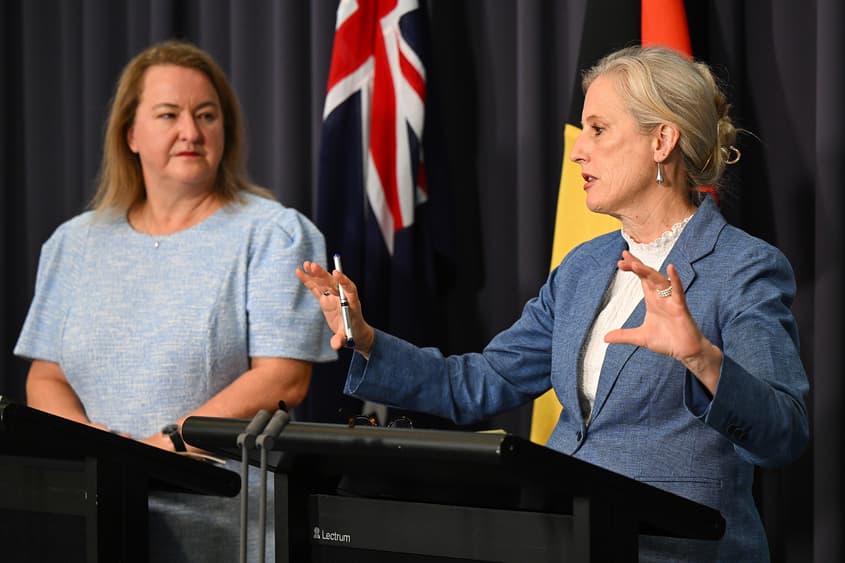
Earlier this week the Finance Minister and Minister for Women, Senator Katy Gallagher released the latest data of the gender pay gap by the Workplace Gender Equality Agency.
Amidst the high drama of parliament this past month, a quiet but historic moment is unfolding largely unnoticed. After two decades of campaigning, several years of treaty negotiations, and a few more drafting laws, legislation has finally been tabled for Australia to join the new High Seas Treaty. This is arguably the most significant global agreement on nature protection of our generation.