Amidst the high drama of parliament this past month, a quiet but historic moment is unfolding largely unnoticed. After two decades of campaigning, several years of treaty negotiations, and a few more drafting laws, legislation has finally been tabled for Australia to join the new High Seas Treaty. This is arguably the most significant global agreement on nature protection of our generation.


Fri 6 Mar 2026 01.00
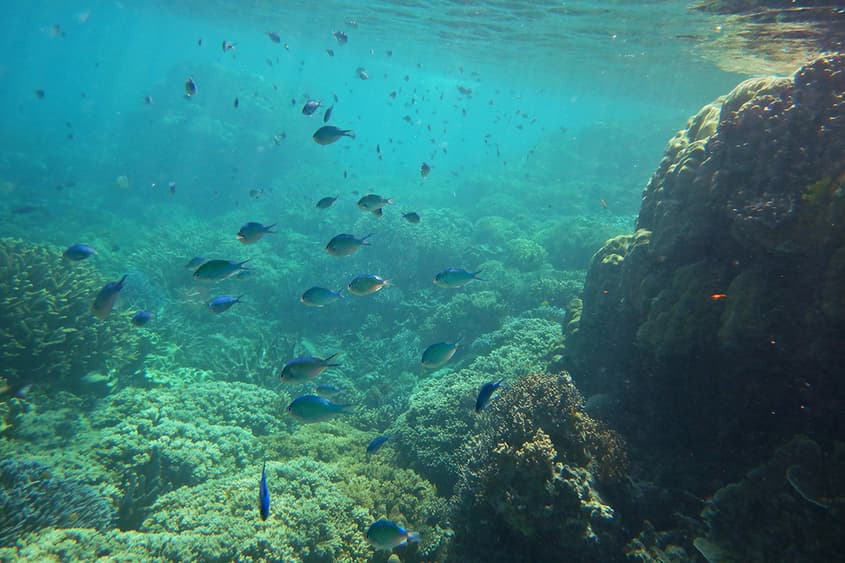
Photo: AAP Image/Dean Lewins


Amidst the high drama of parliament this past month, a quiet but historic moment is unfolding largely unnoticed. After two decades of campaigning, several years of treaty negotiations, and a few more drafting laws, legislation has finally been tabled for Australia to join the new High Seas Treaty. This is arguably the most significant global agreement on nature protection of our generation.
The historic UN High Seas Treaty (formally the Agreement on the Conservation and Sustainable Use of Marine Biological Diversity of Areas Beyond National Jurisdiction) became international law in January. For the first time, it provides a comprehensive framework for regulating and protecting international waters. Australia has signalled its intent to join the treaty regime but is only now completing the formal process to do so.
At the same time, the Australian Government has committed to a major review of Australia’s marine parks, with a view to expanding and strengthening protections nationally. These two processes offer an unprecedented opportunity for ocean conservation in Australian waters and far beyond.
In 2025, the Albanese Government committed to ensuring at least 30 per cent of Australia’s waters are designated as marine sanctuaries – areas managed for conservation and closed to extractive activities such as fishing and mining. To achieve this, they will need to formally review the management of five marine regions covering the majority of Commonwealth waters, which extend from five kilometres beyond the coastline out to 370 kilometres.
Only 24 per cent of Australia’s waters are currently protected in marine sanctuaries. Conservationists say this needs to increase to at least 30 per cent, and more in certain areas, to safeguard biodiversity, avoid fishery collapse and help to build ocean resistance to climate change.
Another 25 per cent are designated marine parks, but many of those still allow oil and gas exploration and extraction; seismic blasting; and industrial fishing. This includes bottom trawling, a hugely destructive practice exposed by groundbreaking footage in Sir David Attenborough’s recent Ocean film.
The government’s review will take several years. Scientific reviews need to be completed, along with several rounds of public and industry consultation. If this process prioritises scientific evidence about what ocean ecosystems and species need, Australia can achieve marine sanctuary coverage of more than a third of our national waters by 2028. This is an ambitious, achievable and important goal.
The adoption of the High Seas Treaty marked an historic milestone for global ocean governance and multilateral cooperation. The high seas cover half the planet, or two thirds of the global ocean, and until now they have been heavily exploited and impacted, with next to no protection. After 20 years of negotiations, 145 countries have signed the treaty and 85 countries have now ratified, triggering its entry into force earlier this year.
For the first time, this treaty establishes the legal framework to create Marine Protected Areas (MPAs) and requirements for comprehensive and transparent impact assessments of activities affecting the high seas. The agreement also ensures fair and equitable access to the benefits of marine genetic resources, marine technology and capacity building. It is the biggest improvement to global ocean governance in decades and a beacon of hope for multilateralism in a time rife with geopolitical challenges.
While the treaty is now international law, countries will continue negotiations on decision-making rules and committee formations at a preparatory meeting at United Nations Headquarters in March, ahead of the first ever BBNJ Conference of the Parties (COP). Parties at the COP will make critical decisions that will determine how effective, efficient, transparent and inclusive the treaty can be – but only countries that have ratified the treaty have a seat at that decision-making table.
Over the years, successive Australian governments engaged deeply in negotiations on the High Seas Treaty. Australia was quick to sign the treaty in 2023 but has been slow to complete the formal process to ratify. Legislation has now been introduced into parliament and is expected to pass with broad support. With much of these negotiations occurring during Coalition governments, Australia’s ratification could provide a rare moment of multipartisan agreement and ensure Australia can play an active role at the BBNJ COP.
While the review of Australia’s marine parks and the High Seas Treaty operate under different legal frameworks, their timing presents a rare opportunity for alignment. Marine species do not recognise political boundaries. Species such as whales, sharks and seabirds move freely between Australian waters and the high seas, meaning protection in one area is undermined if gaps remain in another.
For the very first time, the High Seas Treaty creates a pathway to establish marine protected areas in international waters. At the same time, Australia could strengthen protection within its own waters. Together, these processes make it possible to design marine sanctuaries that connect across borders and safeguard entire ocean ecosystems.
The Lord Howe Rise – a vast underwater volcanic plateau between Australia and Aotearoa/New Zealand – illustrates what this could look like: coordinated protection across national waters and the High Seas, grounded in science and cultural values and delivered through international cooperation.
With both processes now advancing, Australia has a chance to strengthen ocean protection at home and step up as a leader in international ocean conservation.
Rebecca Hubbard is the Director of the High Seas Alliance.
Kate Noble is Senior Manager of Oceans Policy at WWF-Australia.
When INPEX Australia admitted it had under-reported benzene and toluene emissions from its Ichthys LNG facility by orders of magnitude, Territorians were told we were “lucky” nothing worse happened.
Environmentalists have accused the Albanese Government of making a “mockery” of Australia’s new nature laws, saying they’re “gobsmacked” by its decision to greenlight the destruction of threatened bird habitat in the Northern Territory.
A permanent ban on fracking is back on the agenda in Tasmania with the Tasmanian Greens planning to introduce a bill to ban the harmful practice in the opening days of parliament.
A leading conservation organisation has sounded the alarm over the ongoing destruction of critical black cockatoo habitat in Western Australia.