Australia’s children deserve the truth about climate change. They deserve to learn science that is free from corporate spin, especially when it comes to industries driving the crisis that will shape the rest of their lives.

Mon 8 Dec 2025 06.00
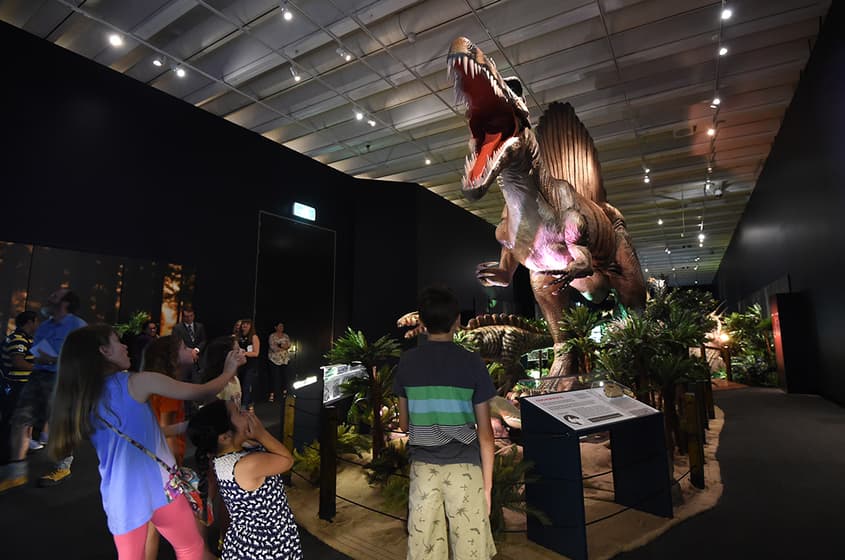
Photo: AAP Image/Dan Peled


Australia’s children deserve the truth about climate change. They deserve to learn science that is free from corporate spin, especially when it comes to industries driving the crisis that will shape the rest of their lives.
Yet right now, one of Queensland’s most trusted public institutions, Queensland Museum, is delivering Shell-branded educational materials to children across the state. And our new report shows those materials repeatedly distort or omit fundamental climate science.
This matters far beyond Queensland. It raises urgent questions about public trust, scientific integrity, and whether fossil fuel companies are being allowed to shape how the next generation understands the world.
Over the past decade, Shell – one of Australia’s largest polluters – has, through its QGC gas business, provided some $10.25 million to Queensland Museum. In exchange, Shell branding and messaging now appear across curriculum-aligned programs for children as young as ten. Public institutions often rely on philanthropy and corporate partnerships, and not all sponsorship is problematic. But when a major fossil fuel producer funds education programs about climate and energy, we cannot pretend that the interests involved are neutral.
Our investigation reviewed Shell-branded materials delivered under the Museum’s authority. What we found was deeply concerning. Key scientific facts were softened or omitted – most notably the central truth that burning fossil fuels is the primary cause of global warming and ocean acidification.
The lessons reframed gas as “future-facing,” promoted fossil fuel career pathways as climate solutions, and repeatedly shifted responsibility for pollution from industry to individuals: going so far as to ask kids to design their own carbon capture and storage projects! (If millions of misspent dollars and massive fossil fuel companies can’t figure it out, maybe the kids can?)
Against this backdrop, the omissions and distortions within Queensland Museum’s Shell-branded learning materials are not minor. They constitute a fundamental miscommunication of scientific reality.
This corporate tactic is not new.
It echoes those once used by Big Tobacco, which spent decades funding “educational” materials for schools that downplayed the harms of smoking and reframed responsibility as a matter of personal choice rather than corporate conduct. Fossil fuel companies learned from that playbook.
Today, they fund museums, science programs and curriculum-aligned resources that subtly reshape how young people understand the climate crisis, and who is responsible for causing it.
These revelations follow Monash University’s move to end its partnership with Woodside Energy, as well as concerns around Woodside’s relationship with the Western Australian Museum, and previous controversy over Santos’ involvement in a school science roadshow.By promoting major fossil fuel companies in these disconcerting ways, our institutions risk compromising both their scientific integrity and public trust.
As a parent, I would assume that when my child goes off on an excursion to a state museum, the materials they learn from are developed independently and reviewed for scientific accuracy – that there would be clear, even obvious, protections in place to prevent corporate spruiking to my child during this critical period of their development.
When that trust is broken, it affects more than the children in the classroom. It affects parents, educators, policymakers, and democratic debate itself.
Although this report focuses on Queensland Museum, it points to something larger: a growing, often hidden pattern of fossil fuel companies embedding themselves in schools, museums, cultural institutions and STEM programs across Australia.
These partnerships help fossil fuel companies secure social licence at the very moment the world needs to rapidly phase out coal, oil and gas, expose young children to one-sided narratives that downplay climate harm, and undercut governments’ own climate, education and public health commitments.
Taken together, they represent a shadow network of influence that quietly shapes how young Australians understand the causes of climate change, the urgency of the crisis, and the industries responsible. It is a pattern Australia can no longer afford to ignore.
This is not simply an education issue – it is a democratic one.
In a healthy democracy, people need access to clear, evidence-based information in order to make informed decisions. If an entire generation is taught that climate change is mainly about individual responsibility, or that gas is clean, or a “transition” fuel, those misconceptions ripple out into the political system.
What children learn today shapes how they vote, what policies they support, and how they hold power to account tomorrow.
Queensland Museum leadership has repeatedly claimed that Shell’s sponsorship does not influence educational content. Our findings suggest otherwise.
This is not about criticising teachers or Museum staff. Educators are doing their best under difficult conditions. The issue lies with governance: who gets to shape public knowledge, under what conditions, and with what safeguards.
Around the world, leading cultural institutions including major museums in the UK, US and Europe have already ended fossil fuel partnerships because they recognise the conflict of interest these sponsorships create. Here the national science museum, Questacon, broke ties with two long standing petroleum sponsors.
However Australia has no consistent national guidelines on ethical sponsorship for museums, and little transparency around how educational content is reviewed when private funding is involved.
Our public institutions must be independent. Our children’s education must be honest. And our democracy depends on people having access to information that is not filtered through the interests of industries whose profits rely on delaying climate action.
Queensland Museum, and others like it, now face a choice: continue defending a partnership that undermines public trust, or join the growing global movement of institutions that are putting integrity first.
For the sake of the children learning from these materials, and for the health of our democracy, the path forward should be obvious.
Lisa Wills is a Campaign Manager at Comms Declare.
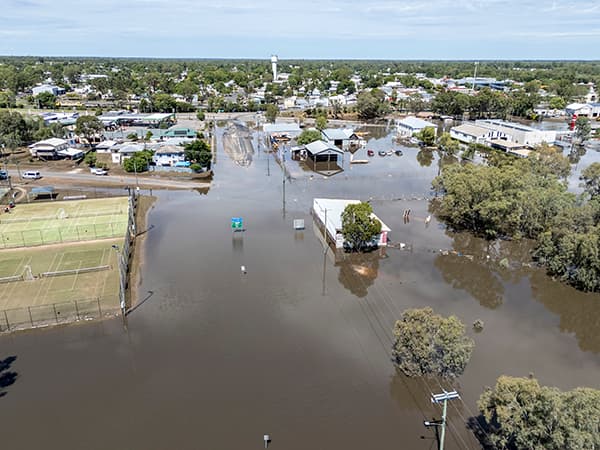
Whether we realise it or not, everyday Australians are already paying for the damage fossil fuel companies are causing to our climate though more frequent and extreme fires, floods, heatwaves and other disasters.
For the last decade, Australians have been continually told by the gas industry, media commentators and politicians we have a gas shortage. These claims are almost always used to pressure Australian governments to approve open new gas fields on the basis that the gas is needed to supply Australians and reduce gas prices.
A sharp rebuke of Australia’s gas industry was delivered in Parliament overnight, as Labor MP for Chifley, Ed Husic, accused major exporters of putting profits ahead of the public interest and called for a stronger national approach to managing the country’s gas resources.