We may never understand what motivated two terrorist gunmen to kill sixteen joyful people celebrating the Festival of Lights at Bondi on the afternoon of 14 December 2025 – Australia’s “Bloody Sunday”.

Sat 20 Dec 2025 06.00
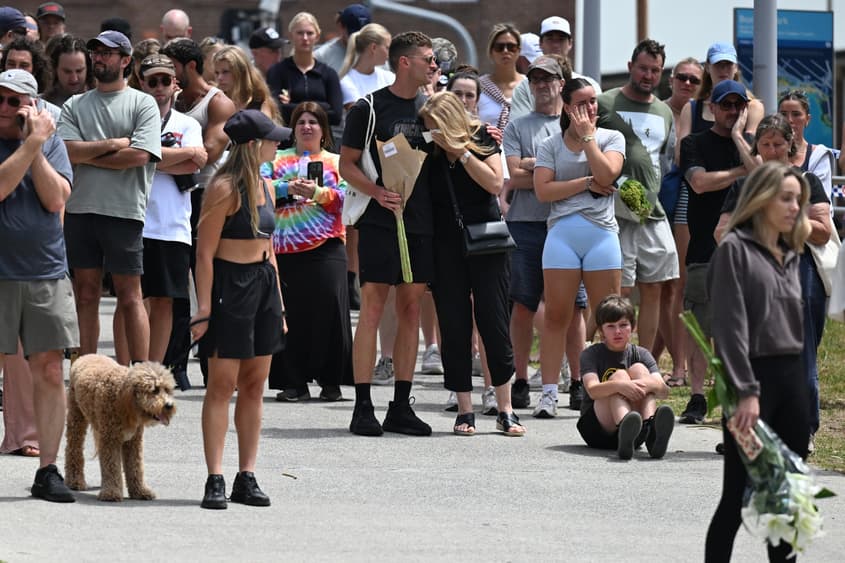
Photo: AAP Image/Dean Lewins


We may never understand what motivated two terrorist gunmen to kill sixteen joyful people celebrating the Festival of Lights at Bondi on the afternoon of 14 December 2025 – Australia’s “Bloody Sunday”. The attack on the Jewish community was more than antisemitic. It was fundamentally anti-human.
Radicalised Islamic splinter-groups may have influenced the perpetrators to copy the 7 October 2023 Nova Music Festival slaughter in Gaza – Israel’s “Black Saturday”. Or it may have been two alienated misfits playing out their delusions in an act of violence more locally random than externally directed. Or it may have been driven by other violent pathologies, intersecting in nihilist mayhem. Or it may be those and many other factors in combination.
Australia’s intelligence agencies will have their work cut out to fit the pieces together and establish whether the slaughter might have been prevented.
The revulsion and shock of such events, particularly in a part of the world unfamiliar with mass killings, is palpable. The last massacre we witnessed was in Christchurch in 2019 when an Australian white supremacist Islamophobe gunman killed 51 people in what Prime Minister Ardern described as “one of New Zealand’s darkest days”. Radicalised racism attacks the very core of what it means to be a human being.
Initial responses to such trauma are typically performative and transactional.
It is natural to turn immediately to the blame-game and recrimination to relieve the pressure of horror. Prime Minister Albanese has been denigrated and vilified. The planning and response of the NSW police has been challenged. ASIO’s competence has been questioned. There are calls for stronger gun laws, while the gun advocates chant “people, not guns, kill people”. More security legislation has been proposed, as have additional bans on hate speech, further restrictions on protest and harsher penalties on those who play in that particular cesspit.
At the same time, we have taken comfort from the actions of heroic people: Ahmed Al Ahmed and Boris and Sofia Gurman’s selfless bravery. Then there were those who stood in queues at hospitals to donate blood to the victims, the citizens who have laid wreaths and those in the Jewish community who have continued to celebrate Hanukkah, not in defiance but in solidarity.
Soon, the finger-pointing, name-calling, point-scoring and gesture-politics will give way to more considered and more embracing approaches to strengthening care, inclusion, resilience, respect and trust within our national community. And at the heart of that endeavour will be re-affirmation of and re-commitment to the rule of law as the core principle that defines our democracy and our national well-being.
The international community has been here before. We reeled from the desolation and destruction of WW2, its holocaust, its wanton slaughter of perhaps 80 million people that turned nations into rubble. We looked to the creation of a new dispensation, a new international order based on rules and agreements rather than capitulation.
And we found a new expression for what unites the peoples of the world: the dignity and value of each person by virtue of our shared humanity. The world’s leaders – and it should be remembered that Australia played a significant part in this enterprise – enacted the UN Charter, its preamble enshrining that basic principle. Human dignity is what underpins the rule of law. It is what underpins the mutuality of benefit and obligation. It is what underpins our democracy. It is what underpins our nation.
In a world where the rules are in abeyance and the principles that drive them are disavowed, the reconfirmation of the rule of law and its energising spirit is a significant task. But it is the critical one – a task that will define the quality of leadership at both the national and international levels.
From congregations to communities, from constituencies to the corridors of Parliament House, our leaders have no other option. They either step up, or they make way for others to do so.
Allan Behm is an advisor in the Australia Institute’s International and Security Affairs Program.
He was formerly responsible for coordinating national counter-terrorism arrangements.
Advertisement
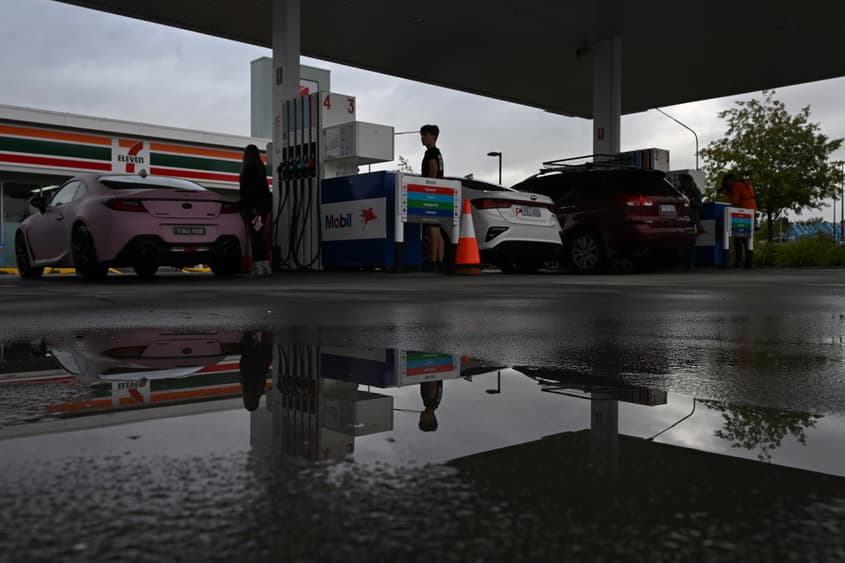
The oil crisis has not only caused petrol prices to soar, it has revealed just how little competition there is among the big oil companies. A couple weeks ago the ACCC announced that it would be looking into uncompetitive behaviour by petrol companies in the rural areas.
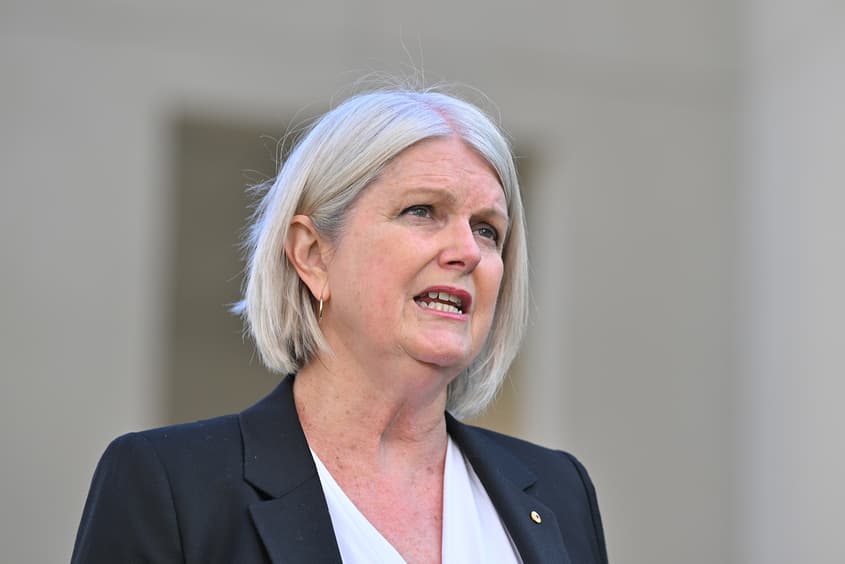
Australia’s shrinking local media landscape has fuelled growth in independent news outlets, with publishers gathering in rural South Australia to discuss the challenges facing community journalism. The Local and Independent News Association (LINA) summit in Murray Bridge comes amid growing concerns about the sustainability of regional news.

Combined with the 50 basis points rise in February and March in less than 2 months households are paying the equivalent of a 90 basis point rise in interest rates.