Anthony Albanese wants universal childcare to be his legacy. But, amidst the growing childcare crisis, many have questioned whether the sector is ready.

Sat 17 Jan 2026 06.00

Image: AAP/Dave Hunt


Anthony Albanese wants universal childcare to be his legacy. But, amidst the growing childcare crisis, many have questioned whether the sector is ready.
Labor and advocacy groups frame centre-based childcare as a child’s right (although the benefits for those under three are contested) and as a measure toward gender equality. But governments are more likely to advance the broader economic benefit.
Treasurer Jim Chalmers has said that investment in childcare is critical because increasing the participation of women in the paid workforce will improve productivity. In his 2022 budget speech, Anthony Albanese said that ‘the full and equal and respectful participation of women in our economy is our nation’s greatest untapped resource.’
It was an unfortunately extractivist metaphor, and one that is still being used in discussions about improving productivity by increasing maternal workforce participation. The reality is, though, that by doing most of the household labour and care work that underpins the functioning of the market economy, mothers are already participating in our economy. They just don’t get paid for it.
Talk of workforce participation and productivity irks many exhausted mothers – whether in paid work or not – who feel that their labour is already being exploited and recklessly mined. Parents, especially mothers, are increasingly dissatisfied and some are, alarmingly, seeking retreat in regressive ideals like the ‘tradwife’ trend.
The challenges that come with juggling unsustainable levels of paid work with household labour and care are vast, and the impacts on wellbeing are real. These issues are significantly stratified by factors like social and economic class, ethnicity, and age.
It’s time to talk about policy alternatives that would recognise and value maternal labour and care, rather than simply pushing mothers to work even more than they already are. A better way to meet the needs of mothers would be to compensate them for their caregiving and unpaid work.
This is not a new or conservative idea – and you might be surprised to learn that it has been done in Australia before.
Australian governments have provided some form of social welfare to parents since 1912, when a Labor government introduced the Maternity Allowance – a universal lump sum payment of £5 paid to mothers, regardless of marital status. In 1941, this was replaced by a national Child Endowment scheme, which paid all mothers five shillings per week for each child under the age of 16. Initially the scheme excluded first-born children, but in 1950 it was extended to include them too.
The Maternity Allowance and Child Endowment schemes were landmark policies. They reflected changing ideas about the state’s role in supporting families that recognised the public value of directly alleviating poverty. As a result, the living standards of many families were directly improved.
When Child Endowment was introduced in April 1941, Arthur Fadden (who was acting prime minister at the time) described it as ‘a major national advance in social betterment’ and as a ‘national investment in persons as compared with things.’ But today, family welfare reforms like universal childcare are motivated more by economic growth than the wellbeing of all Australians. Such policies do not meaningfully address the well-documented and entrenched ‘motherhood penalty’.
The Maternity Allowance and Child Endowment were in fact the product of decades of feminist advocacy and negotiation amidst broader tensions between conservatism and socialist reform.
Feminist advocates – including members of the Communist Party of Australia, the Australian Labor Party, the National Council of Women, and the Union of Australian Women – had originally pushed for motherhood endowment. They argued that mothers should be given direct payments to alleviate their financial dependence on their husbands, and to provide remuneration for the necessary and valuable work and care they did in the home.
This work was performed outside of (and therefore could not be remunerated by) the market economy. So feminists reasoned that the state should recognise it as a public good and fund it like it would in other market failures – just like public health or education.
Child Endowment was replaced by the Family Allowance in 1976, and parenting payments have since been subject to continuous reform. In 2026, parents face much stricter eligibility tests for the parenting payments that are available. Direct payments for primary carers are now means tested against both individual and partner income. In this way, the current model reinforces the notion of the male breadwinner household in heterosexual two-parent families. (There is a push by disability advocates to remove the partner income test from government payments because it enforces economic dependence.) Meanwhile, living standards for single-parent families are declining.
But historical examples like advocacy for motherhood endowment – as well as the 1970s Marxist-feminist ‘Wages for Housework’ movement – show there are progressive alternatives. And elsewhere in the world, governments are experimenting with these kinds of policies today, with the introduction of ‘care blocks’ in Bogotá and cash transfers for women in India.
If we’re serious about redressing the motherhood penalty, governments need to offer mothers more than universal childcare. We need to also recognise the social and economic value of household labour and care – and offer meaningful financial support to those who do it.
Dr Belinda Eslick is a researcher in feminist philosophy and gender studies at The University of Queensland. Her current research deals with feminist perspectives on the home, reproductive labour and care, and mothering, and is especially concerned with redressing maternal economic injustice.
Advertisement

If you live in Sydney, do you know how many guns are being stockpiled just down the road?

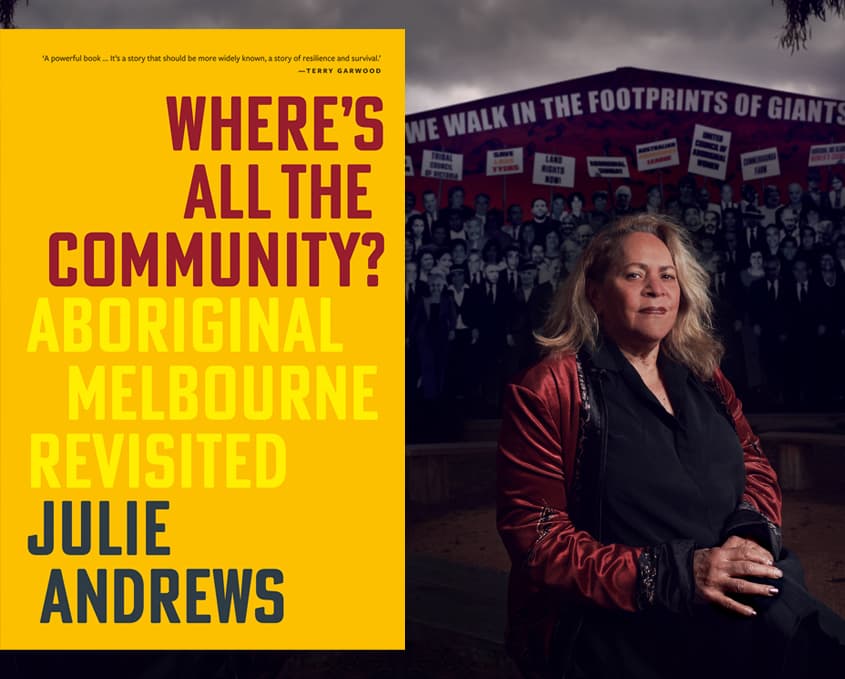
An edited extract of Where's All the Community?: Aboriginal Melbourne Revisited by Julie Andrews, published 3 March and available at all good bookstores and online.
The Four Corners program aired on Monday night detailed how Melbourne gynaecologist Simon Gordon performed surgeries to remove the ovaries and uteruses of dozens of young women who did not need these highly invasive and life-changing procedures. But beyond these shocking examples, Australia has a widespread problem with unnecessary and inappropriate medical interventions.