Four Corners case highlights a deeper problem in Australian healthcare
Fri 27 Feb 2026 01.00
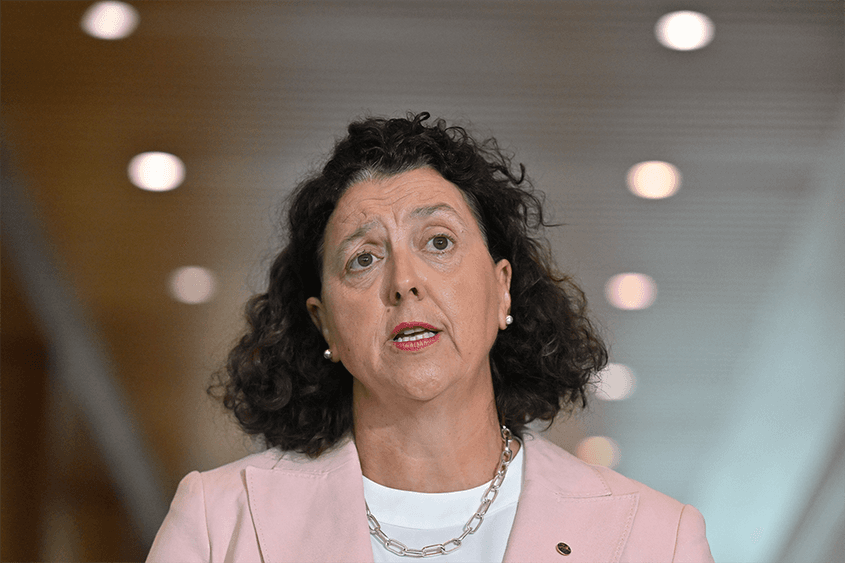
Photo: AAP Image/Joel Carrett


The Four Corners program aired on Monday night detailed how Melbourne gynaecologist Simon Gordon performed surgeries to remove the ovaries and uteruses of dozens of young women who did not need these highly invasive and life-changing procedures.
This is the latest in a series of infamous cases that include Jayant Patel, Graeme Reeves (the ‘Butcher of Bega’), Emil Gayed and the pelvic mesh scandal.
But beyond these shocking examples, Australia has a widespread problem with unnecessary and inappropriate medical interventions.
Any medical treatment – from prescribing an antibiotic to a triple bypass – is inappropriate if not performed in accordance with clinical guidelines or standards. Australian research conducted about a decade ago showed that compliance with recommended guidelines for common conditions such as heart disease, low back pain, asthma and tonsilitis was 57% in adult patients, 60% in children, and 53% in aged care residents.
It’s possible that the situation has improved since these studies were published. But the fact is, adherence to standards and guidelines isn’t mandatory and is rarely audited. Moreover, the outcomes and consequences of care on patients’ quality of life are not collected or reported routinely.
Unnecessary care is costly, harmful … and not uncommon
The problem of unnecessary and inappropriate care is more evident in the private sector.
For example, coronary angiography – an invasive diagnostic procedure where a hollow plastic tube is inserted through the groin or wrist to look for blockages in the blood vessels of the heart. It’s performed by a cardiologist and is expensive, with the typical cost exceeding $6,000 ($1,900 charged by the specialist fee and $4,600 by the hospital). Angiography is meant for people with cardiovascular disease.
However, an Australian study showed that your chances of undergoing one of these procedures has more to do with going to a private hospital than with having heart disease. This suggeststhat many private hospital patients are receiving angiography unnecessarily, while people who need angiography might not be getting them. Both represent care that’s inappropriate.
But if there’s no harm to the patient, and it might help improve their symptoms, what’s the problem?
Well, every intervention involves risk of harm (and let’s not forget that the first principle of medicine is to do no harm). Every incision can lead to infection and sepsis. Every prescribed medication entails a risk of an adverse reaction.
CT scans – cross-sectional imaging of bones and soft tissue to diagnose a range of problems – are another good example of our nation’s overzealous use of certain practices. CT scans can deliver the same amount of radiation as eight hundred X-Rays. They have been linked to increased risk of cancer, and limiting their use is recommended especially in children and adolescents.
But as the chart below shows, Australia has the second-highest number of CT scanners in the developed world. About 70% of these reside in the private sector, where the number of scans per capita increased by 211% from 2001 to 2019. About 80,000 scans are done on Australian children each year, although we don’t have good data on how many of these are inappropriate. A CT scan of the lower back typically costs $400.
Another example is surgical fusion of the lumbar spine. This procedure is used to treat cases involving trauma, cancer, infection and deformity but is considered inappropriate in patients with chronic lower back pain. Yet available data suggest that every year about 4,000 Australians with back problems that should be managed in less invasive ways may nevertheless undergo this procedure – 83% of them in private hospitals.
The total cost of a lumbar fusion in a private hospital is approximately $80,000. This would put the total nationwide cost of the 4,000 questionable fusions at around $320 million every year. That’s a lot of money (and surgical time) wasted on a procedure that is unlikely to improve the patient’s symptoms, but puts them at risk of infection or nerve damage.
In fact, WorkSafe and the Transport Accident Commission recently banned surgeons from performing private procedures in Victorian public hospitals after revelations that some doctors were allegedly rorting millions of dollars that included performing unnecessary procedures from the two insurance schemes.
Follow the money
The main reasons why unnecessary, expensive surgeries occur in Australia are the way we fund private health services, and poor governance.
Having worked with many doctors, I can say that the vast majority do their best to provide the right care. When doctors do provide inappropriate services, it’s unlikely that they do so deliberately.
But humans make mistakes and all of us – even doctors – are prone to cognitive bias. And evidence shows that how we pay doctors influences their practice.
Doctors in the private system make their money on a ‘fee-for-service’ basis. Every time they provide a service, whether it be a consultation or a surgery, they charge a fee, which is then paid by Medicare, health insurers or, increasingly, patients themselves. The more expensive the procedure, the more the specialist and the hospital earns.
This means that practitioners have a financial incentive to perform the services that will net them the highest fee, even if a simpler, cheaper option might be just as effective.
One of the interviewees in the Four Corners program knows of surgeons whose entire practices (she used the term “businesses”) are built entirely around performing the laparoscopic procedure featured in the Four Corners program. She said that for them to adopt evidence-based practice — thus performing fewer of these operations — would jeopardise their “mortgage payments and private school fees”.
It’s not just individuals that are incentivised to provide expensive or unnecessary services. Private hospitals also profit from interventions, so it’s not hard to understand why not all hospital management crack down on questionable clinical practice.
And while public hospitals face challenges, overtreatment and inappropriate care isn’t among them. There are several reasons for that, but a key factor is that doctors in the public system are paid a salary, and therefore have no financial incentive to recommend and perform high-fee procedures.
Stronger oversight and governance
Fee-for-service in the private sector isn’t going anywhere. The medical lobby won’t allow that. If we must have it, it has to be accompanied by stronger oversight. Patient welfare can’t be compromised.
Clinical autonomy and the doctor-patient relationship are important but can’t be exempt from appropriate oversight and quality assurance. The implicit trust and licence afforded to the medical profession demand it.
Mandatory second opinions may be needed, particularly for high-risk, expensive procedures. Where possible, initiating high-risk procedures could be conditional on certain diagnostic test results. Routine collection of outcome metrics could be implemented.
And procedures that show no benefit at all could be removed from the Medicare schedule – as was done in 2018 for knee arthroscopy in patients with degenerative changes in the knee joint. This helped to bring about a 58% reduction in this unnecessary procedure.
To complement policy changes, it’s important that the medical profession examines the prevailing culture in some specialties. It’s unacceptable that, in 2026, practitioners fear “career-ending” consequences for drawing attention to a peer’s harmful practices.
Without greater oversight in the private sector, more investment in prevention and the public system, and a fundamental change to medical culture, we will continue to waste money and ensure it’s just a matter of time before the next grisly case comes to light.
Advertisement

Related Articles
Factcheck: Do Australians 'overwhelmingly support' gun control? Yes they do.
Yes, they do. Polling surveys consistently show that Australians support strengthened gun control.