How much does an abortion cost in Australia? And why are these costs – for essential healthcare – paid by individuals rather than by our public health system?
Wed 28 Jan 2026 01.00
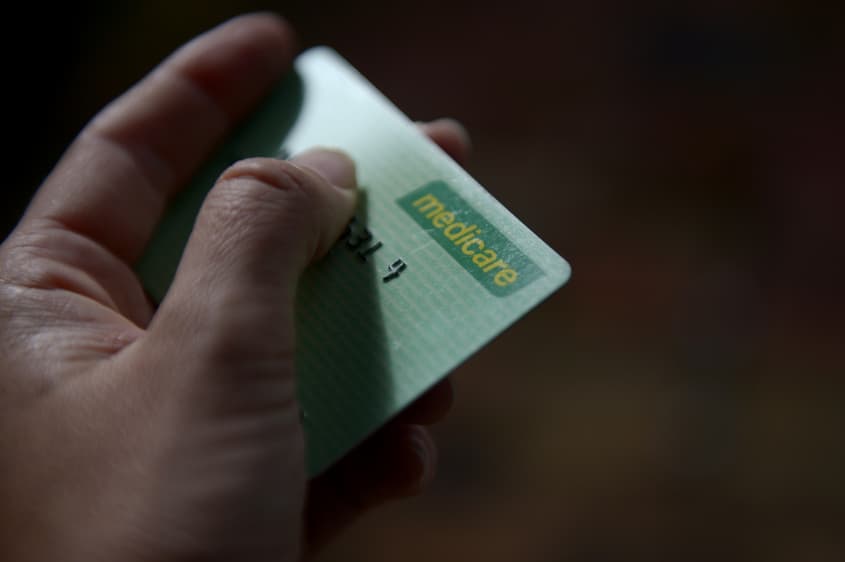
Image: AAP/Tracey Nearmy


How much does an abortion cost in Australia? And why are these costs – for essential healthcare – paid by individuals rather than by our public health system?
For someone earning the minimum wage, an abortion could cost the equivalent of between three and a half days and eight weeks of salary.
The Federal Government has, rightfully so, committed a significant amount of money – $573 million – to improving women’s healthcare in Australia over the last year. This has included the addition of new contraceptives to the pharmaceutical benefits scheme, improved access to long-term contraceptives, more support for menopause health assessments and therapies and the opening of endometriosis and pelvic pain clinics across the country. There is no question that these are good things the Government should be funding; they are even providing free period products to remote First Nations communities.
Yet – nothing is being done to protect one of the most vital parts of women’s healthcare in Australia: access to abortion.
Attacks on abortion rights and access have proliferated globally over the last decade, especially following the overturning of Roe v Wade in the US Supreme Court in 2022 – which made it possible for individual US states to ban or significantly restrict access to abortion care. In 2021, three in four Australians supported access to abortion, with more than half supporting access whenever a woman decides she wants one. Still, before the fall of Roe, most Americans supported access to abortion too.
Australia has not been immune, with legislative attacks on abortion rights happening in South Australia and Queensland, and escalating anti-abortion politics and protests across the country. While attacks on our rights to receive abortion care when needed are serious, the real barrier to access is cost.
In Australia, abortions are governed at the state and territory level, rather than by the Federal Government. However, as with all essential healthcare, the Government does set some of the parameters of access – through Medicare rebate rates, public hospital funding, data prioritisation and national health strategies.
Abortion has only been legal throughout Australia since 2023, when Western Australia became the last state to decriminalise it. While legal, access to care is deeply uneven, with some people living in “abortion deserts”. In some parts of the country, abortions are primarily provided through the public system, in others, private providers are the only option.
Unsurprisingly, people in lower socio-economic areas are often further from public abortion services and must rely more heavily on expensive private services or miss out altogether. Reliance on private services is risky; just this week the Gold Coast Private Hospital was purchased by Catholic Church-run Mater Miscordiae who do not provide abortions, vasectomies, hysterectomies and any other contraceptive procedures.
A 2023 Senate inquiry described access to abortion care in Australia as a “lottery”. And like the lottery – ‘winning’ depends on how much money you can afford to hand over.
It is almost impossible to predict how much an abortion will cost in Australia because it depends so heavily on where the service is and what kind of abortion you need.
There are two types of abortion care:
The costs for these different types of services vary wildly. For example, private abortion provider Marie Stopes International (MSI) – who provide just under half the abortions in Australia – estimate the cost of a medical abortion in NSW to be approximately $645, with a potential Medicare rebate between $40-$90. They estimate that the lowest possible cost for a surgical abortion is $805, but can be as high as $3,850 without Medicare. Clinic66, another private provider, estimates that surgical abortion in NSW could cost upward of $8,500.
In the ACT, abortion services are free for residents, but My Pregnancy Options estimates that you could pay up to $7,000 for an abortion over 20 weeks gestation if you need to travel outside the ACT to receive the service. Whether or not you can receive the service in the ACT is at the discretion of Canberra Health Services.
We know very little about who bears these costs. A 2017 Australian study found that more than two in three people receiving abortion procedures needed financial assistance. The same study found that people who travelled more than four hours to receive an abortion, were experiencing financial insecurity, or were Aboriginal or Torres Strait Islander, were more likely to receive abortions at later gestations and face significantly higher costs.
The actual costs are only part – albeit a large part – of the problem. The other part of the problem is a lack of transparency. Estimates of these costs are hard to track or verify. In most cases, they are provided by not-for-profit organisations, rather than listed on official government websites.
Australia cannot continue to treat abortion as essential healthcare in principle but optional healthcare in practice. When people are forced to travel hundreds of kilometres, pay thousands of dollars, or delay care because they cannot find or afford a service, we do not have a functioning universal health system. The Federal Government has already shown that it can act decisively to improve women’s health. It must now extend that leadership to abortion care: by increasing Medicare rebates, mandating public hospital provision, and investing in national data collection and oversight.
Dr Gemma Killen is the Executive Director of the Working with Women Alliance. The Working with Women Alliance is funded by the Commonwealth Office for Women to provide evidence based, intersectional advice and civil society expertise on gender equality and women’s safety.
Advertisement
The idea that there’s only so much money to go around makes a bastard kind of sense to the poor. If impossible decisions abound in their lives, it must be true of governments, too. Certainly, that’s how federal budgets are framed. But beyond impressionism, we know the household budget is not analogous to state budgets in any meaningful way.


AI deepfakes used in online fraud are a global problem. In Australia, Hong Kong, Taiwan, the United States, the EU, and Southeast Asia, scammers often use deepfake images of public figures to trick people into handing over money. But Australia has been at the forefront of many of the regulation discussions.

Economists are warning the Albanese Government must act immediately to end “Australia’s enormous gas giveaway” as households begin to see – and feel – the economic fallout of war in the Middle East.