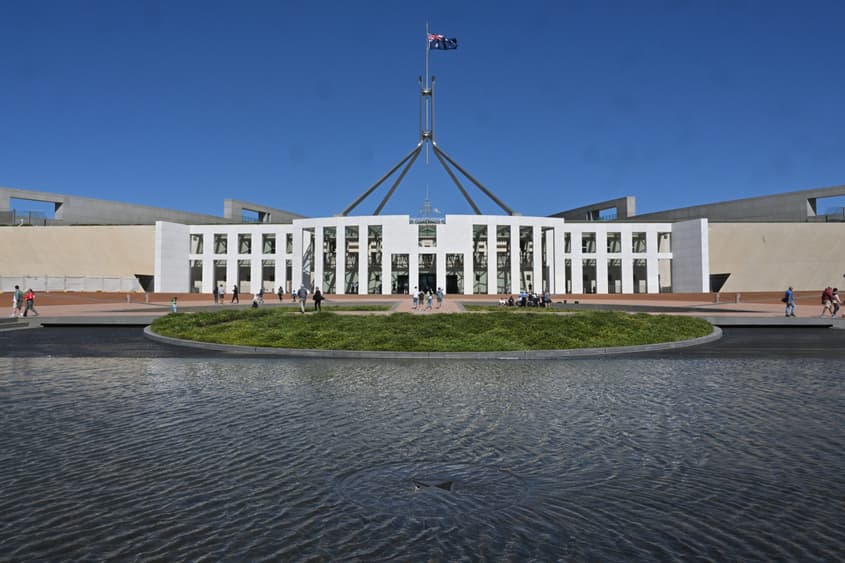
Leaving aside the fact that it was John Howard who buried so many of the landmines blowing up the Modern Liberals' backyard, he was right about a few things, including his observation that ‘politics is governed by the iron law of arithmetic’. So, let’s count some votes.

Tue 3 Feb 2026 01.00
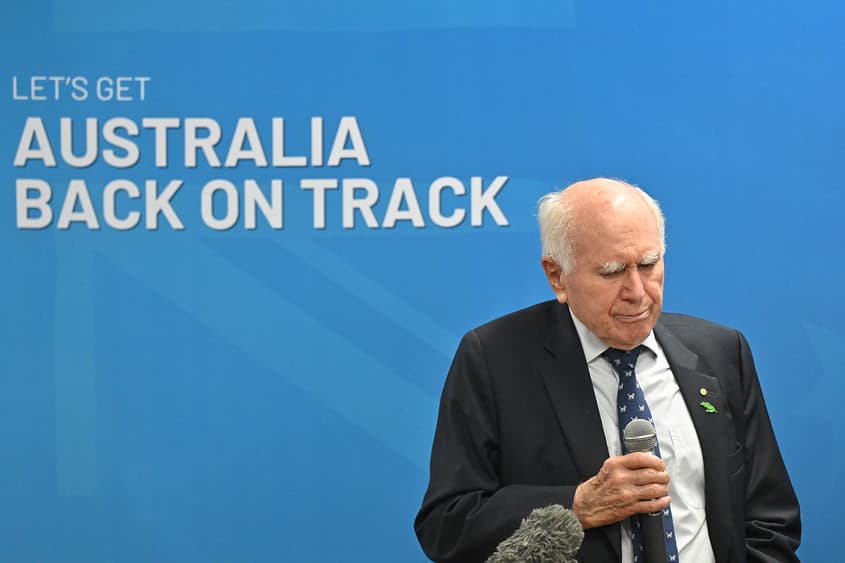
Former prime minister John Howard at a campaign rally in Mona Vale, Sydney on day 30 of his 2025 Federal Election Campaign in the seat of Mackellar, Sunday, April 27, 2025. (AAP Image/Mick Tsikas)


Before he died, I had multiple meetings with Malcolm Fraser about the new political party he was trying to build.
My advice to him was the same advice I offer to anyone: there’s no such thing as the ‘centre right’ and successful political parties need to focus on what voters want from candidates, not what candidates want to sell to voters. And Malcolm Fraser saw that more clearly than most of today’s political columnists.
Most of the ‘Australia needs a new centre right party’ brigade hark back to the genius of John Howard. But leaving aside the fact that it was Howard who buried so many of the landmines blowing up the Modern Liberals’ backyard, he was right about a few things, including his observation that ‘politics is governed by the iron law of arithmetic’. So, let’s count some votes.
After the 2025 election Labor hold 94 of the 150 lower house seats. Because 76 seats deliver a majority, the Liberals, Nationals, One Nation and/or any new centre right party would need to win at least 18 seats off the Labor Party to form government.
Howard’s iron law highlights the irrelevance of how many seats One Nation, the Nationals, Liberals or a new ‘centre right’ party win off each other. Unless they can win a lot of seats off Labor, they are irrelevant. Their fight with each other isn’t over the direction of Australia, but which populist leader gets to ride in a taxpayer-funded VIP jet from time to time.
The idea that if ‘centre right’ candidates can say ‘productivity growth’ and ‘company tax cut’ often enough they’ll sweep to power is as bizarre as it is amusing. It’s true that John Howard succeeded in selling the myth of trickle-down economics, but his wannabe successors have failed to notice that Howard completely failed to deliver any of the benefits he promised. Young voters in particular, just aren’t falling for that BS anymore.
Howard sold magic pudding to a gullible public via a willing media. He argued that cutting taxes for property investors and IR reforms for big business would create cheap housing and higher wages. He promised that privatisation and outsourcing would deliver cheaper, better public services and dismissed the urgency of climate change.
But as Peter Costello knew better than most, promises from ‘Honest John’ Howard weren’t worth the paper they were written on.
Howard’s ‘reform era’ set us up for decades of rising house prices, inequality, temperatures, and insurance bills, while the productivity growth he promised was as illusory as his promise to make us ‘relaxed and comfortable’.
Howard didn’t win elections because he fixed big problems, he won elections because he spent a fortune buying votes with tax cuts the country couldn’t afford and left office before the bills became due. If self-described centre-right candidates want to dust off his playbook and try telling young people that the solution to the housing crisis is to give Gen X and boomers more tax breaks for their investment properties, I’m not going to stop them.
The Liberal Party vote is yet to bottom out, with latest polls showing that it now starts with a 1-. The idea that a conservative, anti-abortion bloke rolling the Liberal Party’s first female federal party leader will inevitably bring a poll bounce is just delusional. Perhaps what’s more important is that while SkyNews tells the Coalition to fear One Nation, in 2025 it was progressive independents who came second behind Liberal/National MPs in 12 seats with contests like Goldstein (88 votes) and Forrest (380 votes) among the most marginal in the country. But if the Coalition are determined to ignore the threat from climate action focussed candidates, that’s a ‘them problem’.
What should be of more concern to the commentariat, progressive voters, and Labor MPs is how vulnerable Labor now is on its climate and integrity flank. Sure they won lots of seats at the last election, but the big lesson of the last election is there’s no such thing as a safe seat any more.
Labor knows they wouldn’t have won Melbourne or Griffith from the Greens if they had approved Woodside’s massive North West Shelf gas project before the election, rather than after. Likewise, it would be foolish not to think that Labor would have lost the WA seat of Fremantle, and the ACT seat of Bean had they been as proud of their support for massive fossil fuel projects before the election as they were straight after.
As Simon Holmes à Court observed, there were 10 independent candidates who were closer to winning their seats in the 2025 election than the victorious Nicolette Boele was back in 2022. Boele famously went on to campaign for another three years to win by a whisker in 2025. Like the Liberals and Nationals, Labor are more likely to lose seats to independents focused on banning new gas, coal and online gambling than to centre-right candidates promising gifts of more tax cuts to those very same gas, coal and online gaming corporations.
In my conversations with Malcolm Fraser he wasn’t trying to build a ‘centre right’ party that could be placed by journalists on some imaginary left-right political spectrum. On the contrary, it seemed to me he was trying to build a party around a cohesive set of values that could be applied to the full range of problems he knew future parliaments would need to deal with.
Arbitrary categories like ‘left’ and ‘right’ might make it easy for the ABC to declare they are ‘balanced’, but Malcolm Fraser knew climate change was a question of atmospheric science, not political science. Likewise, he knew that banning protest and free speech was a dangerous road to go down, not a legislative mechanism to avoid public debate. Most big problems and principles simply don’t fit the left-right categories beloved of the media.
It’s obvious why a bunch of failed Liberals and wannabe politicians would try to build a new ‘centre right’ party from which to shout, ‘tax cuts for the rich’. It’s just not obvious that anyone outside the press gallery will care. Time to get the popcorn.
Richard Denniss is the co-chief executive of the Australia Institute. Richard Denniss’ latest Vantage Point essay, Dead Centre: How political pragmatism is killing us, is out now.
Advertisement
Behind the closed doors of a consultation room, or concealed by impenetrable medical jargon, wrongdoing in the healthcare sector impacts the lives of every Australian.

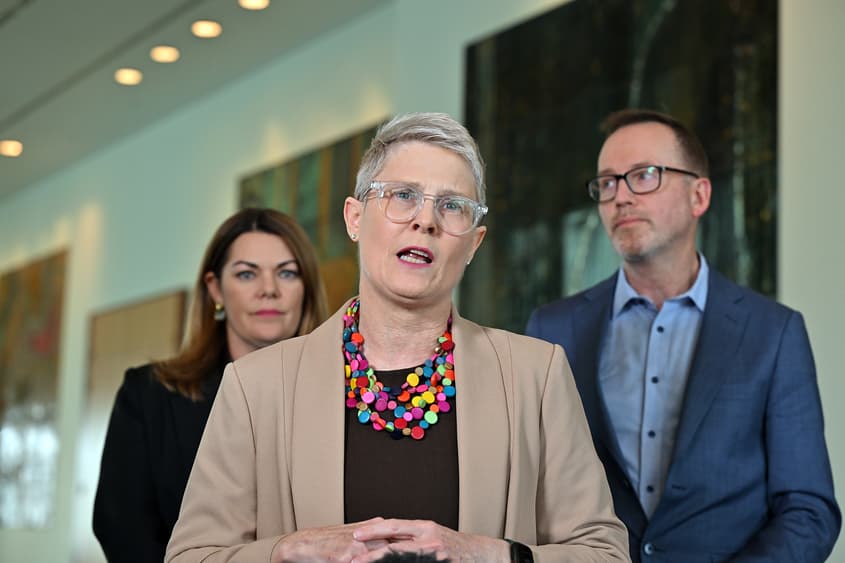
Independent MP Sophie Scamps has questioned Prime Minister Anthony Albanese about reports that he offered his Liberal–National Coalition rivals extra staff in exchange for their support for the Labor Government’s crackdown on freedom of information rights. To her credit, then Opposition Leader Sussan Ley turned him down on this offer.
The stereotypes of democratic decline are rigged elections or daily street chaos. However, Australia’s democratic decline is happening much more quietly, with weakening whistleblower protections and the steady expansion of laws over several years that have made protest riskier than ever.