Tue 31 Mar 2026 12.30
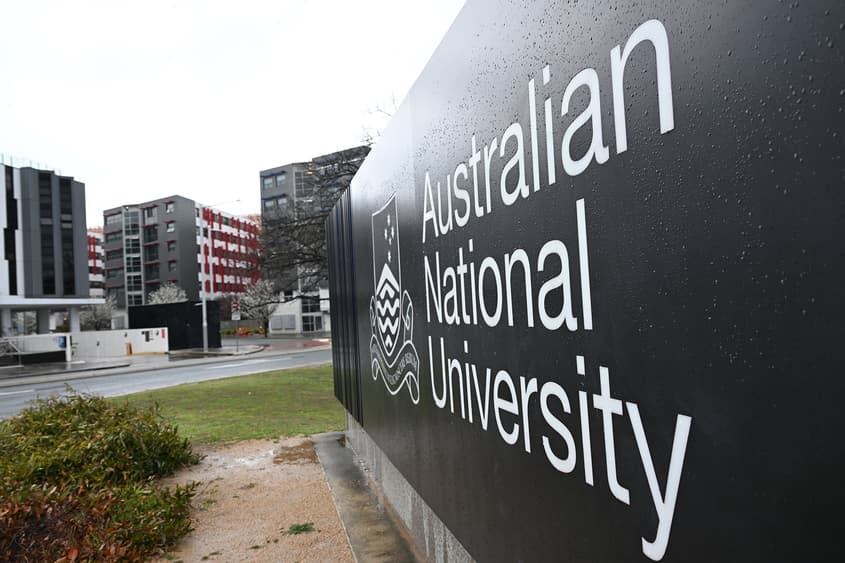
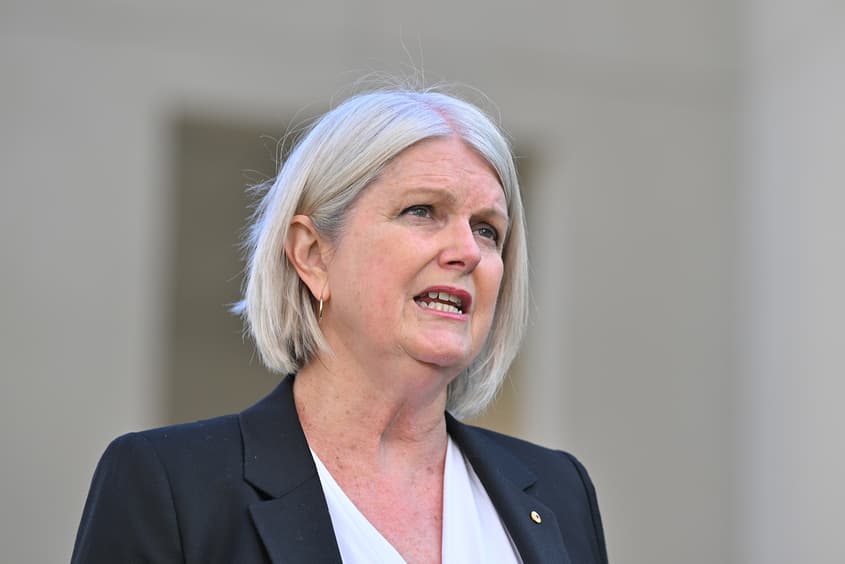
Photo: AAP Image/Lukas Coch


The Australian National University (ANU) has spent the past eighteen months in a state of rolling crisis.
The headline issues are now familiar. In October 2024, a large projected deficit was announced to staff. This was followed in 2025 by ‘Renew ANU’, a sweeping cost-cutting program that has reportedly seen over 1,000 staff leave the University. Staff calls for transparency went unheeded. Sustained public concerns about spending priorities emerged — millions on consultants, travel, and marketing even as staff were told cuts were unavoidable. Public scrutiny has been intense, with ANU leadership becoming a regular fixture at Senate estimates, amid accusations that management misled parliament. Allegations of bullying and mishandled complaints at the most senior levels moved internal grievance processes into special investigations and onto the pages of newspapers. Allegations of poor behaviour in Council continue to be aired.
The institutional consequences have been severe. A ballot of union members found that 95% had no confidence in leadership. Staff surveys and independent research indicate a workplace characterised by extreme psychosocial risk. In September 2025, a Cease Work Order was placed on part of the university. The resignation of vice-chancellor Genevieve Bell after months of turmoil saw her replacement announce the end of forced redundancies — a change that left many wondering why the redundancies had been pursued at all if they were not a financial necessity.
In the coming weeks, the Auditor-General may provide an answer to that question, when their report into the financial basis of Renew ANU is tabled in parliament. Two further serious investigations — one into governance, leadership and culture, the other into allegations of bullying — are currently underway. The regulator has instructed the ANU Council to “contemplate a range of outcomes… [including] finding that there are extreme problems of governance that would necessitate a complete changeover of the council.”
It is tempting to treat this as just a story about ANU, but the pattern is now familiar across the sector. Financial stress is followed by managerial restructuring. Restructuring drives stress and inefficiencies for staff and students. Those inefficiencies expose deeper concerns about transparency, decision-making, and accountability. Each episode prompts the same question: how does this keep happening in institutions that receive billions in public funding?
The usual explanations focus on external pressures — changes to international student markets, shifting government policy, rising costs. These real factors do not explain why governance failures are so consistent across institutions facing different financial conditions. The deeper problem lies in the structure of university governance itself.
Universities operate by delegating power from Councils to Vice Chancellors and down through management. Councils are formally responsible for oversight, while the executive leadership controls information and day-to-day decision-making.
Yet accountability is often weak. Councils are small, dominated by external appointees, and largely self-perpetuating — Chancellors regularly fill vacancies with hand-picked appointees, and those appointees select the next Chancellor. Members are frequently selected through processes that prioritise financial or commercial experience rather than knowledge of higher education. And they are too often disconnected from realities on campus.
Evidence from ANU illustrates the consequences. Testimony to the Senate inquiry described a “careful curation and manipulation of information presented to council.” If accurate, this points to a breakdown in the basic conditions for effective oversight. Councils cannot act on risks they cannot see, nor can they test executive claims without independent sources of information.
External regulation alone cannot resolve this problem. The Commonwealth’s current response — strengthening the regulator, and revising governance standards — signals political attention and is in many respects overdue. But it only addresses one point in the governance cycle, intervening after failures have occurred and problems have escalated into visible crises.
More stringent reporting requirements will produce formal compliance documents. But they will not restart robust information flows, institutionalise strong lines of accountability, or reverse the tokenistic participation of academics in university governance. By changing only external regulatory requirements, the Commonwealth risks producing the appearance of accountability without substance. Councils will continue to rely on information filtered through the executive, and accountability will remain weak.
What is missing is an institutional mechanism that sits within the university but outside the executive chain of command — a body with both the knowledge of the institution and the formal authority to scrutinise and advise those who govern it. Numerous leading universities internationally have such structures. Many Scottish universities, for instance, have a General Council, composed of staff and alumni, which advises the governing body on important matters. Australian universities do not. This reflects deliberate policy choices over several decades to prioritise smaller, more managerial governance structures without replacing long-since abolished mechanisms for collegial decision-making.
Governance will continue to fail unless staff and students have a more active role in governance. Information flows will remain poor, councils will continue to lack the sector-specific knowledge needed to scrutinise management properly, and executives will continue to make decisions whose costs are borne mainly by students and staff rather than by those who make them.
New, legislated, accountability bodies at Australian universities would address this gap. Without governance reforms that enable academic oversight of decision-making, further scandals and crises will inevitably occur. The question is whether government has the resolve to do more than tighten external rules, and instead force universities to create internal institutions strong enough to prevent failures before they occur.
Dr Marija Taflaga is Senior Lecturer in the School of Politics and International Relations and Director of the Centre for the Study of Australian Politics at the Australian National University (ANU).
Dr Francis Markham is a Fellow at POLIS: The Centre for Social Policy Research at the ANU, and a former elected staff representative on the ANU University Council.
Keith Dowding is Distinguished Professor of Political Science and Political Philosophy at the ANU, and the author of many books and articles on government, governing and governance.
Advertisement
On March 25th, 2026, a Los Angeles jury handed down a world-first decision, holding Meta, (who own Instagram and Facebook), and YouTube (owned by Google), liable for intentionally building addictive social media platforms.


The oil crisis has not only caused petrol prices to soar, it has revealed just how little competition there is among the big oil companies. A couple weeks ago the ACCC announced that it would be looking into uncompetitive behaviour by petrol companies in the rural areas.

Australia’s peak council for community services ACOSS has joined the torrent of support including the Greens and independent members of parliament for a 25% levy on gas exports, originally proposed by the ACTU.