Australian universities face a governance crisis - and their communities are already building solutions
Wed 1 Apr 2026 00.00
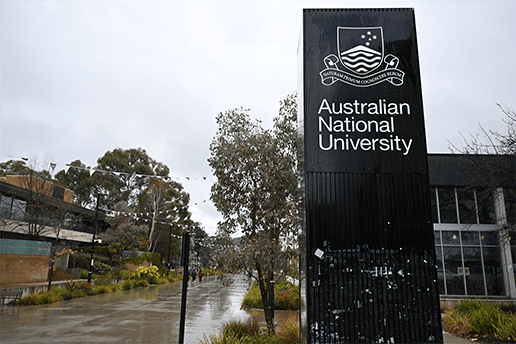
Photo: AAP Image/Lukas Coch


Concerns about unaccountable governance, limited transparency, high executive pay, and poor outcomes for staff wellbeing and student safety have put the Australian university sector under unprecedented scrutiny. Historian Hannah Forsyth argued that the solution is to “better connect universities to community, with more democratic internal decision-making systems”. The question is: how?
The answer is already emerging from within universities themselves.
Disconnected Decision-making
Repeated reviews into Australian university governance have found that decision-making power has been increasingly centralised, with reduced representation of, and accountability to, university communities. As a result, critical information fails to flow upwards – contrary to the principles of good corporate governance. Some blockages are bureaucratic, frustrating both university leaders and university communities. Detailed budget information, essential for informed decision-making, is rarely available beyond the executive. Australian universities lack systematic and sufficiently empowered mechanisms for staff, students, alumni, and broader stakeholders, to participate in strategic decision-making. This contributes to a growing disconnect between governing bodies and the communities they serve, and to an erosion of public trust and social licence.
Addressing this requires working directly with communities, but corporate systems are poorly placed to do so. The inclination has been to turn to consultants or to frame deep and systemic problems as a lack of understanding of governance, leading to further investment in one-way, downward communication.
Collaborating to find solutions
At the ANU and UTS Governance Projects, staff, students, alumni, and stakeholders have been collaboratively designing solutions to university governance. Led by volunteers, we developed community ‘deep listening’ processes, drawing on expertise at our universities, and engaging our wider networks. We hung posters, met in classrooms, cafes, and online, and consulted experts and alumni.
We asked our community not only about their experience of university governance, but to propose reforms, through online surveys, small group ‘kitchen table’ conversations, direct dialogue, and workshops with representative participation from across campus.
Within 48 hours of the ANU Project’s launch in August 2025, over 100 staff, students, alumni, and community stakeholders had submitted ideas. Following its launch in October 2025, the UTS Project elicited a similarly strong response. By the time both projects’ listening processes closed, over 1000 members of the ANU and UTS communities had participated.
In the months that followed, we collated these ideas into draft reports, shared them publicly for feedback, and engaged with university leaders, policymakers, and regulators on pathways to implementation. The ANU Project’s Final Report, released in November 2025, set out 30 recommendations for governance reform. The UTS Project released a draft report in December 2025 for community feedback, with a final report due in April 2026. Throughout 2026, we have continued dialogue with university leaderships and external stakeholders on reform.
University communities want to be part of the solution and offer practical ways forward for a sector under sustained pressure. Below we highlight just a few of the solutions our 1000 participants proposed.
Inclusive decision-making
Corporations are accountable to shareholders; politicians are accountable to voters. By contrast, university governing councils largely appoint themselves, in what has been termed a ‘broken accountability loop’. This reflects specific policy choices, and it can be reformed.
We can build systems of accountability that bring universities closer to their communities – staff, students, alumni, and the broader public – while also preserving academic independence. University communities can draw on their international experience to design a new standard for Australian university governance. At the University of California, for example, community and political representatives serve alongside academics in a shared governance system. At Harvard University, the Board of Overseers, comprised of elected alumni, is tasked with ensuring the university “remains true to its charter as a place of learning”.
Our participants recommended reform across multiple levels. Increasing elected representation of staff and students in university councils can strengthen representation, accountability and decision-making. While some universities have a governing ‘Senate’ (effectively a council by another name), our communities recommended the establishment of a more democratic University Senate, comprising elected staff, students, alumni, and community representatives. The University Senate would be empowered as an accountability body to balance against university councils and provide systematic community input into decision-making. At a time when universities need strong external advocates, this would establish a clear mechanism for protecting universities’ core educational purpose.
Transparency
Improvements to transparency can also draw on international examples where governing bodies live-stream their meetings, publish minutes and detailed budgets (including forward estimates), and conduct more frequent independent external audits. Implementing similar standards in Australia would enable scrutiny, build trust, and strengthen accountability to the societies that fund and rely on universities.
Path forward
There are new experiments in surfacing solutions from across university communities that suggest governance cultures may be shifting, particularly at the ANU. Working groups have been set up in some Colleges to develop local strategies to restore trust and address staff wellbeing. School directors are running consultations with junior researchers to inform budget priorities. The community has been invited to contribute to the design of the next ANU five-year Strategic Plan. And, in February 2026, for the first time in its history, ANU Council live-streamed a portion of its meeting to staff and students. These are positive first steps – but such practices remain ad hoc and are not yet institutionalised; core decision-making bodies have not been structurally reformed. Meanwhile, at UTS, dialogue on university governance has only recently commenced, and it remains uncertain how far meaningful changes will extend.
Working through the politics of bureaucratic inertia is slow, but critical work. Community inclusion in decision-making is both feasible and necessary. Embedding participation, transparency, accountability, and co-design into governance structures is critical to restoring trust, strengthening institutional effectiveness, and ensuring the resilience of Australia’s university sector and its sovereign capability in research and education.
The ANU Governance Project is an independent, community-led initiative advancing evidence-based proposals for governance reform at the Australian National University and the broader higher education sector.
The UTS Governance Project is an independent, community-led initiative involving contributions from staff, students, alumni, and other stakeholders, that is focused on experiences and perceptions of, as well as ideas for reform of governance that will ensure a thriving future for our university and its staff, students, and public stakeholders.
Advertisement
Related Articles
The Ruin of Magic
This is an edited extract from "The Ruin of Magic" by Kate Holden, published by Black Inc.

See What You Made Me Do: Foreword
This is the new foreword, written by Clare Wright, for the new updated edition of 'See What You Made Do' by Jess Hill