Australia's gun laws need reform: tightening the "genuine reason" requirement
Recent Australia Institute research showing that perhaps 200,000 people in NSW have gun licences that they don’t need highlights a key aspect of Australia’s gun laws that has not been well implemented. To own a gun here, you need a genuine reason to. Post-Bondi, Australia’s gun laws are in the spotlight and understanding their details and history will be important if they are to be strengthened effectively.

Wed 8 Apr 2026 00.00
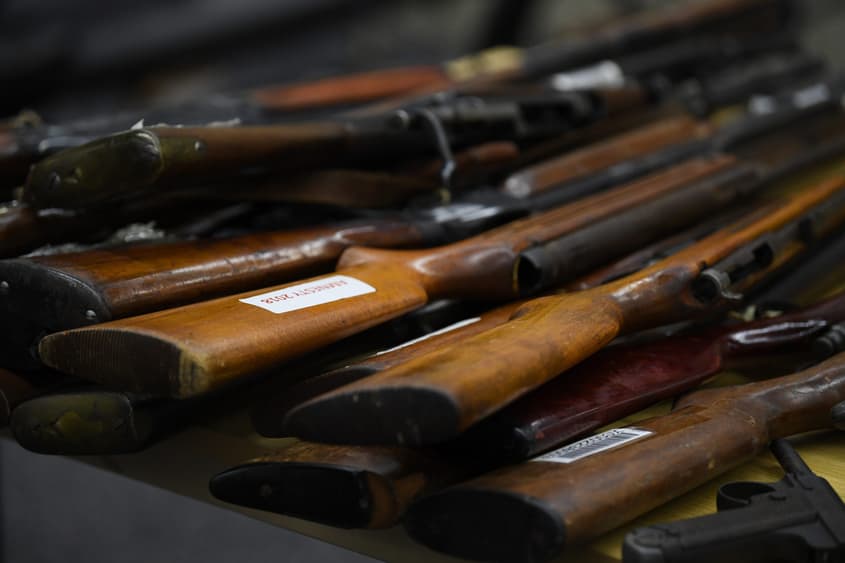
Photo: AAP Image/Dean Lewins


Recent Australia Institute research showing that perhaps 200,000 people in NSW have gun licences that they don’t need highlights a key aspect of Australia’s gun laws that has not been well implemented. To own a gun here, you need a genuine reason to.
Post-Bondi, Australia’s gun laws are in the spotlight and understanding their details and history will be important if they are to be strengthened effectively.
As recently as the mid-1980s, no Australian jurisdiction required a person to have a good reason for obtaining a licence to use or possess a rifle or shotgun. One exception was in Western Australia, where if a person lacked a good reason, police could refuse a licence. At that time, there was no identification as to what a good enough reason was.
In 1987, two public mass shootings occurred in Melbourne. The first was on Hoddle Street in Melbourne’s inner north, with seven people killed, and another some months later in Queen Street, when nine people were killed in a CBD office building. These killings led to extreme alarm in the Australian community at the prevalence of firearms, and the apparent ease of accessing them (especially rapid-fire rifles and military-style rifles).
This saw, in December 1987, the Prime Minister, Premiers, and Chief Ministers, agreeing to establish the National Committee on Violence (commenced in October 1988). The Committee was represented by each jurisdiction, was run out of the Australian Institute of Criminology, and conducted hearings throughout Australia. Its terms of reference did not specifically refer to firearms, but guns were front and centre in the requirement of the National Committee to consider strategies to prevent violence, and in being required to examine the contemporary state of violent crime in Australia.
In its 1990 Report titled “Violence – Directions for Australia”, the Committee recommended two prerequisites to having a shooter’s licence; the applicant was to be a fit and proper person and had a good reason to obtain a gun licence (Recommendation 57.5).
Six years later, a mass shooting occurred at Port Arthur, southeast of Hobart. 35 people were killed and 18 people were injured by a person wielding two semi-automatic high-powered military-type rifles. The national response was swift, with the Australasian Police Ministers Council agreeing in May 1996 that Australia was to have a uniform set of minimum standards for firearms access and use, and that these were to be enshrined in legislation at a State and Territory level. One of these standards was that a person had to have a genuine reason for owning, possessing or using a firearm anywhere in Australia. Importantly, personal protection was not to be regarded as a genuine reason.
The National Firearms Agreement went further, identifying classifications to define a “genuine reason”. This included occupational shooters, bona fide collectors of firearms, farmers, target shooters, and recreational shooters.
This answered a question that had previously never been dealt with: if you don’t have a good reason for having a gun, why should you be allowed to use or possess one?
The “genuine reason” requirement did not stand alone. A separate permit to acquire every firearm was a necessary precondition to the purchase of a firearm and the applicant needed to justify the acquisition of each firearm after the first firearm, by reference to their good reason.
This was an example of a very good policy that, regrettably, fell short in its implementation around Australia.
For example, establishing a good reason to use or possess a gun was achievable by simply producing a letter from a landholder permitting the firearm applicant to shoot on their land. This effectively allowed anybody to obtain a firearm and opened the gates for people to claim to be a recreational shooter or hunter. The letter was all that was required. We have recently seen Western Australia now actively working to regularise this system, following evidence that the system has been widely flouted by landholders and shooters alike. Western Australia is not alone in facing this problem.
Further, we have seen New South Wales – under pressure from the Shooters Party and other gun lobby groups – weaken its scrutiny of applications for gun licences over the last decade or so. This included abandoning the mandatory 28-day cooling off period for the purchase of every firearm after the first. Getting a gun licence in NSW – and then acquiring one or more guns – became relatively easy. There was no limit to the number of guns any shooter could own. The shootings at Bondi on 14 December 2025 came about in circumstances where a person living in suburban Sydney had six firearms, all held by him under the guise of being a recreational hunter. There appears to have been no effective scrutiny given to any “genuine reason” that that person offered as being a justification for the acquisition of any of those six firearms.
Australia is now moving to review gun laws, jurisdiction by jurisdiction. The “genuine reason” requirement remains very good public policy. What is needed is refinement in the evidence necessary to satisfy the firearms registration authority as to the bona fides of the applicant, and to ensure that each firearm that is acquired can equally satisfy the registering authority as being for good reason.
If this is achieved, it will further enhance public safety, especially in combination with a series of other reforms that are coming down the line throughout Australia. If not, the number of unnecessary guns in the community will continue to increase, along with the risk to public safety.
Roland Browne is the vice chair of Gun Control Australia and a lawyer working in civil and criminal areas, including administrative review, personal injury, anti-discrimination, environment and planning and crime.
Advertisement
Related Articles
Newcastle Uni shows how university governance is rotten in regional universities too
As a regional university, we so often escape the scrutiny applied to our metropolitan or more prestigious cousins like UTS and ANU. But the governance failures and mismanagement at the University of Newcastle (UoN) are as acute as those making the national news.

See What You Made Me Do: Foreword
This is the new foreword, written by Clare Wright, for the new updated edition of 'See What You Made Do' by Jess Hill