Newcastle Uni shows how university governance is rotten in regional universities too
Wed 8 Apr 2026 00.00
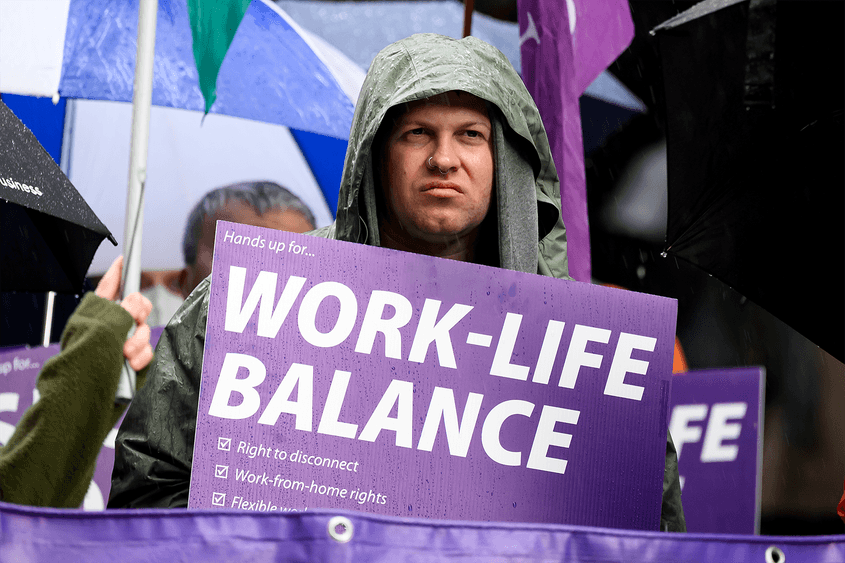
Photo: AAP Image/Bianca De Marchi


There is a rot at the top of our universities. The higher education system in Australia is broken. That much is clear from the recent Senate inquiry into the quality of governance at Australian higher education providers, and from the evidence given to date at the NSW Parliamentary inquiry into the NSW university sector.
As a regional university, we so often escape the scrutiny applied to our metropolitan or more prestigious cousins like UTS and ANU. But the governance failures and mismanagement at the University of Newcastle (UoN) are as acute as those making the national news.
Staff wellbeing in crisis
Did you know, for instance, that the UoN ranked last of all public universities in the country for the psychosocial safety climate of our staff on the recent Australian Universities Census on Staff Wellbeing?
Not so, said UoN management in response. Rather, according to its Chief People and Culture Officer, UoN’s internal surveys show that 57 per cent of staff report positive wellbeing. However, this claim collapses under further scrutiny, with one of the three University Colleges reporting a Wellbeing Index for academics of just 30 per cent. Despite pointing to this data to defend its position on staff wellbeing, the University has so far refused to publicly release the detailed results.
Unjustified cuts and restructures
There are several interrelated reasons staff wellbeing is so low at UoN, including a horrific program of job cuts, the disastrous roll-out of a new academic calendar, and untenable staff workloads. Each of these issues are rooted in the failures of our governance structures and accountability measures, as well as the deliberate actions of the consultant class corporate raiders who sit atop our institutional hierarchy.
In 2025, like many Australian universities, UoN embarked on a major program of restructures and redundancies, euphemistically called the ‘Business Improvement Program’.
Despite posting an impressive $60M surplus in its 2024 annual report — one of only four NSW universities to do so — UoN management claimed it had suffered an “adjusted operating deficit” of $16M. This result was achieved by removing external research funding, philanthropic grants, and commercial income from its revenue streams without removing any of the associated costs.
The Australia Institute found this accounting approach to be shonky, and its analysis shows that UoN is in robust financial health. In response to the Australia Institute analysis, the VC stated UoN’s financial statements are audited by the NSW Audit Office, and this is true. However, the “adjusted operating result” is not in the financial statements but rather presented as a table in the page of commentary – prior to the audited results.
It is nothing more than corporate spin. In what should be a horrendous self-own, the narrative presented is that UoN has suffered six of these adjusted deficits in the past eight years. Seven of those years, the current VC has presided. And yet, in a recent communique, the University’s governing council applauded the VC for meeting last year’s KPIs — a year in which hundreds of staff lost their jobs in a “Hunger Games” style restructuring process which the NTEU is currently fighting through the Fair Work Commission.
Broken governance structures
Accountability mechanisms at our university and in the sector generally are broken. Our University Council is toothless. Staff voices at the table are minimised in favour of external business and corporate board members. Just 6 of the 17 members of Council are elected by staff and students. Our Academic Senate is largely a rubber stamp with no power to influence or veto harmful policies enacted by management.
This same Council in 2024 extended the VC’s term until 2028, only two and a half years into a new five-year term granted in 2021. This extension granted pay increases, taking his remuneration to well over $1M. Unlike the Corporations Act which contains provisions to spill a board if a company’s remuneration report reviews two consecutive “no” votes, there are no mechanisms to influence or change the unelected representatives on Council.
The VC himself has dodged several calls to explain the university’s financial health at NSW Budget Estimates, despite being one of the highest paid executives in a public institution: overseeing billions in public funds, and the future of education and research in our region. The NSW parliamentary inquiry is yet to call on him to give testimony, but it would be remiss of them not to.
Calls for change
Recently, professors across UON have written to the University’s Council urging an intervention into workloads and wellbeing. It is hard to convey what a big deal it is for the professoriate to publicly state their concerns with the status quo. This recent outcry is the equivalent of a full-blown revolt. Tellingly, losing the confidence of the professoriate was one of the last dominoes to fall and push former ANU VC Genevieve Bell out the door.
The University of Newcastle has proud working-class traditions. The workers of our region pooled together their scant resources and their loud advocacy to ensure young people in the Hunter, particularly those from working class and disadvantaged backgrounds, had the opportunity to attend university. It is a symbiotic relationship we have with our community — we thrive together. There must be change, or that is all at risk.
Associate Professor Terry Summers is president of the Newcastle Branch of the National Tertiary Education Union.
Advertisement
Related Articles
Australia's gun laws need reform: tightening the "genuine reason" requirement
Recent Australia Institute research showing that perhaps 200,000 people in NSW have gun licences that they don’t need highlights a key aspect of Australia’s gun laws that has not been well implemented. To own a gun here, you need a genuine reason to. Post-Bondi, Australia’s gun laws are in the spotlight and understanding their details and history will be important if they are to be strengthened effectively.