Countries are walking away from dog racing and Australia may finally be next
When former NSW Premier Mike Baird was pressured to reverse his 2016 ban on greyhound racing in NSW, the practice became politically untouchable - not because the evidence changed, but because political power prevailed. A decade on, with cruelty still defining dog racing, that calculation is shifting in Australia and around the world.

Tue 14 Apr 2026 01.00
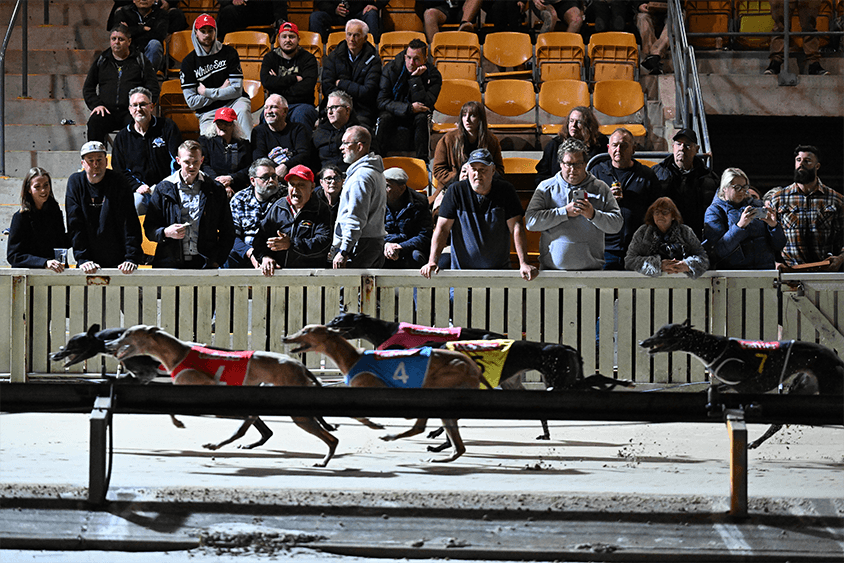
Photo: AAP Image/Dean Lewins


Greyhound racing in Australia has survived scandals, inquiries, and a bruising encounter with a former Premier, but what it faces now may be harder to shake.
That is an inevitable economic death spiral.
It is a decade since the former NSW Premier, Mike Baird, announced the state would end greyhound racing, after an inquiry found overwhelming evidence of systemic animal cruelty, including mass dog killings and live baiting.
The greyhound racing lobby mounted an intense, well-funded rearguard action that was, regrettably, victorious. Baird backed down.
While the facts haven’t changed, the mood for reform is now undeniable.
The dogs are still forced to race, and they’re still suffering. Every year on racetracks across the country, thousands of greyhounds are injured, and dozens die. The dogs live a life of extremes – pushed hard on the track and locked in pens for most of their time off track.
When they stop winning or are too broken to continue racing, dogs face an uncertain future, with their need for forever homes far outstripping community capacity.
It’s not just dogs that continue to pay the price. Tens of millions of taxpayer dollars are lost every year through government support in what amounts to an effective subsidy of problem gambling and animal cruelty.
During a housing and cost-of-living crisis, this money could be housing families, funding schools and staffing hospitals. Current racing tracks could be homes or green space for the community.
The greyhound racing code is still writing its own report card, remaining largely self-regulated, opaque, and unaccountable.
Since Baird’s pressured backdown, the cruelty, cover-ups and costs to the community have continued. So has the pressure to end it.
The world is walking away from dog racing, and the domestic dominoes in Australia are on the verge of falling.
Australia is the world’s largest greyhound racing nation. By mid-year, we will be one of a handful of countries – alongside the United Kingdom, United States and Ireland – where greyhound racing is legal and operates commercially.
From July 31, greyhound racing will be outlawed across the ditch in New Zealand.
In March, Wales and Scotland announced they will prohibit dog racing – the first UK nations to do so.
In Australia, momentum for an end to dog racing is building state by state, as a practice that was once considered politically untouchable is increasingly recognised as intolerably cruel.
This week, Tasmania’s upper house is expected to vote on whether to phase out greyhound racing, which would make it the second Australian jurisdiction, after the ACT, to do so.
Western Australia has begun its parliamentary inquiry into the animal welfare governance arrangements and post-racing care of greyhounds.
These decisions aren’t being made in a vacuum – they are driven by voters. The WA government announced its inquiry following a petition of 26,000 signatures calling for a phase-out of dog racing.
Independent polling released by the RSPCA shows two in three Australians are concerned about the treatment of racing greyhounds, with sentiment consistent across metro, regional and rural areas.
Separate polls also show three in four Tasmanians support a phase-out, while three in five WA voters support a parliamentary vote on one.
Attendance, participation and employment are also dwindling. In NSW alone, nearly half of all racetracks, including Muswellbrook and Broken Hill, are set to close by June this year, reflecting the decline.
The greyhound racing code delivers a net loss in economic value. Independent economic analysis shows that for every dollar spent on greyhound racing in WA, 21 cents of economic value is lost once costs are taken into account.
Separate analysis for Tasmania found taxpayer funding for greyhound racing is rising faster than for education, and returns are “diminishing”. In Victoria, PBO estimates show the state could save nearly $500 million over 10 years by ending greyhound racing.
Strip away the gambling revenue and government subsidies, and greyhound racing would struggle to exist. Governments across the country are treating a gambling product that’s in structural decline as if it were a public institution worth preserving at any cost.
Greyhounds have been raced in Australia for nearly a century. But there are many outdated practices that the community has ceased over the past 100 years because the costs they impose on our society outweigh the benefits – be it smoking on planes, not wearing seatbelts or building homes with asbestos.
A compassionate, modern Australia does not race dogs to horrific injuries, risking death and disposal, and it does not ask taxpayers to fund it. Tasmania and Western Australia have the opportunity to join the ACT and lead the way to make this a reality.
We cannot wait another decade for politics to catch up to our values. We cannot permit this inherently cruel and outdated practice to continue, knowing what it costs the dogs and our community.
But we can and must join the rest of the world in cutting greyhounds loose from racing and creating a kinder and more compassionate world.
Glenys Oogjes is the CEO of Animals Australia
Advertisement

Related Articles
Private health isn’t delivering on value. Here are three practical steps for reform
This is the second of three articles examining the value private health insurance and private healthcare bring to the Australian health system.