Private health isn’t delivering on value. Here are three practical steps for reform
This is the second of three articles examining the value private health insurance and private healthcare bring to the Australian health system.
Tue 14 Apr 2026 01.00

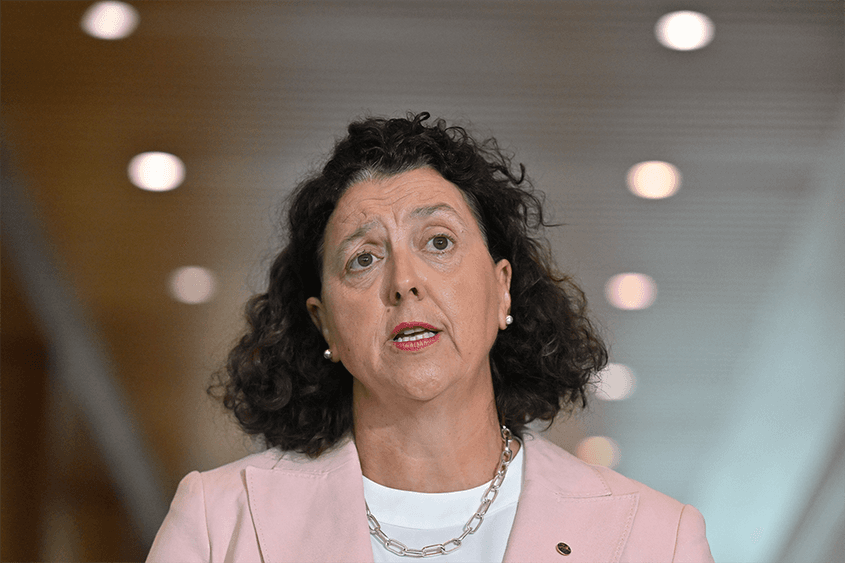
Photo: AAP Image/Joel Carrett


The private healthcare sector is meant to support universal access for all Australians and enhance the value of the entire system.
But, despite generous taxpayer subsidies, it’s not clear that it does.
Instead, we have a two-tier system where access is determined not by medical need but by ability to pay. And it underperforms on the most important metric: keeping people healthy for longer.
Rectifying this requires a policy shift.
Three adjustments would move us in the right direction – and help invest our scarce resources where they can generate the most benefit.
Measuring what matters
Imagine having surgery and being asked a simple question a few months later: are you better? Is the pain reduced? Can you move more easily?
One of the most striking gaps in Australian healthcare is how little we systematically measure these outcomes, which really matter to patients. While we count the number of procedures, hospital stays, and what they cost, we’re far less consistent in measuring whether patients feel better after an intervention – whether their pain improves, their mobility returns, or their quality –of life improves.
Patient-reported outcome measures (PROMs) capture exactly this – the patient’s own assessment of their symptoms before and after treatment.
Measuring these outcomes creates a powerful feedback loop: future patients can make more informed choices, clinicians can benchmark their performance, and we can begin to identify which care delivers value and which doesn’t.
But, in Australia, use of PROMs remains limited and largely voluntary.
The Commonwealth and health insurers are well placed to change this. They fund all private elective care – precisely the area where outcomes vary most and where unnecessary procedures are most common. States and territories could implement PROMs in public hospitals.
To promote compliance, payers could make a proportion of fees or benefits paid for relevant interventions conditional on submitting PROMs data.
The Independent Hospital and Healthcare Pricing Authority could develop a funding adjustment to reflect this – like existing adjustments for avoidable complications and readmissions. Insurers could develop their own versions. The Australian Institute of Health and Welfare is well-equipped to house and manage the data.
If the private sector is meant to enhance value, it should be able to demonstrate that the care it provides actually improves people’s health.
Getting serious about inappropriate care
We see too much low-value and unnecessary care in our healthcare system. Addressing this is essential – not just to reduce costs, but to improve patient outcomes and free up scarce capacity.
At present, oversight of clinical governance is fragmented. Regulators, professional bodies and insurers all play a role, but no one is clearly accountable for reducing low-value care.
Recent allegations about the lack of clinical governance at Epworth Private Hospital – and the private sector more broadly – highlight the need for stronger oversight and a more active role for payers.
The Commonwealth and the insurers can play a more active role. With the right policy settings, they could be empowered to:
- investigate unusually high (and low) local rates of specific procedures
- introduce advice, guidance and second-opinion requirements
- help general practitioners direct patients towards providers with better outcomes.
Closer integration between insurers and healthcare providers would go a step further. Under this approach, insurers and providers would co-own services. This model has a strong track record internationally of delivering more coordinated, higher-value care, especially when it spans prevention, primary care, and hospital services.
For patients, this means fewer unnecessary procedures, fewer complications, and a better chance of receiving care that improves their health.
Integration shouldn’t be dismissed as “US-style managed care”. It isn’t about denying services – although Australians who can’t afford private health are already denied many services. It’s about ensuring that care is evidence-based and appropriate – and that scarce resources aren’t tied up doing things that don’t contribute to our health.
We’re already importing the worst of US health care: high costs, fragmentation and inequity. Why not import something that works?
If private health is to justify its public subsidies, it should be reducing low-value care – not funding more of it.
Investing in prevention
Australia’s health system remains heavily oriented towards hospital care at the expense of prevention and early management. Avoiding unnecessary hospitalisation could potentially save the country $7.7 billion a year – 8.5% of what we’re spending on hospital care.
If private health insurance is meant to support universal access and system value, it should not just pay for hospital care. It should help keep people well in the first place.
Private health insurers have an interest in keeping their members healthy and out of hospital because reducing the rates of expensive, acute interventions would take pressure off premiums and improve perceived consumer value.
Despite notable examples, investment in prevention and early intervention remains limited.
One way to change this would be to introduce a simple requirement: that insurers allocate a small share of their operating profits – e.g. 1 to 2% – to health promotion research and programs.
This could include funding community-based prevention initiatives, supporting research into effective interventions, and piloting new models of chronic disease management.
Prevention is highly cost-effective. Such a requirement would be modest in financial terms, but significant in impact. It would create a dedicated funding stream for an area that is underinvested.
For patients, this means fewer hospital visits, better management of chronic conditions, and more years lived in good health.
From passive payers to active stewards
Protecting universal healthcare access and value will require some policy adjustments. Without these changes, the system will continue to serve those who can afford it rather than improving health for all Australians.
Instead of acting as passive payers, the Commonwealth and insurers would become more active stewards of value: measuring outcomes, improving appropriateness of care, and investing in keeping people well.
This would not solve every problem. Australia’s split funding model, workforce constraints and powerful interests will continue to shape the system.
But it would be a meaningful shift to help the entire system work better.
Another option is to redesign the system’s funding and provision entirely. This will be explored in Part 3.
Related Articles
Countries are walking away from dog racing and Australia may finally be next
When former NSW Premier Mike Baird was pressured to reverse his 2016 ban on greyhound racing in NSW, the practice became politically untouchable - not because the evidence changed, but because political power prevailed. A decade on, with cruelty still defining dog racing, that calculation is shifting in Australia and around the world.