His ventilator cut off.
They fell down the stairs.
I couldn’t turn off the lights.
I ended up in hospital.
These events are not rare. They are snapshots of everyday life for NDIS participants who have had their supports cut.
Let us be clear. Supports are being cut.
Not for holidays. Not for luxuries. Not for comfort.
For the basics. To breathe. To eat. To get out of bed. To go to work. To hold our children. To live as much of life as possible before it is too late.
The NDIS is essential social infrastructure. Something Australians believed in. A system that ensures people with disability can live, work and participate in our communities.
Now, trust in the NDIS is being eroded. Not because people don’t understand why it matters when it’s explained. Most do. They understand it funds reasonable and necessary supports. They understand how hard it is to access the scheme. They understand how much energy it takes just to hold onto the supports you need to live an ordinary life and get through the day.
Trust is being eroded because of what our politics has done to the NDIS.
We have been reduced to line items in a budget.
To “unsustainable growth”.
To insinuations that people with disability are exploiting the system.
But the NDIS is not money in our pockets.
It pays for basic supports and support workers. Most of them are small business operators who pay taxes and contribute to local economies. It returns $2.25 for every dollar spent. It funds the care that allows parents, partners and loved ones to stay in the workforce, instead of being forced out to provide unpaid, often unmanageable care.
It exists because not everyone has someone who can help them.
And even when they do, that support has limits. Like the 84-year-old mother who can no longer safely lift her adult son to help him go to the toilet.
This is what the NDIS was built for.
Without it, we cannot live ordinary lives.
And yes, it was always going to grow.
It grows because the population grows. Because the cost of supports and equipment rise. Because more people are finally getting access to support that was denied to them for decades. Because there are no other options. And because state and territory governments gutted or stopped offering any disability support services when the NDIS began.
Calling that growth a problem and capping it is not a neutral budget decision.
It is a cut.
A cut to supports. A cut to jobs in the care economy. A cut that pushes pressure onto already stretched systems such as hospitals, aged care, crisis systems, schools and families that cannot absorb it.
We are already seeing the consequences of previous growth reductions.
People ending up in hospital not because they need to be there, but because the supports that would allow them to live safely at home are denied or delayed.
People like People with Disability Australia (PWDA) President Jeramy Hope, who spent 60 days in hospital after falling 167 times in just one month, having waited 2.5 years for approval of basic home modifications. Now months on, he is home but still showering with a hose.
Jeramy’s is just one example of the cost of people fighting for or losing support.
-
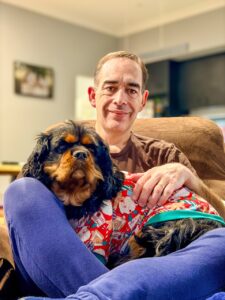
Photo: supplied by PWDA Image of Jeramy Hope, President of PWDA
We are already seeing deterioration, injury, and deaths like Noah Johnston’s, whose ventilator cut off in the night because a support worker was not there to reconnect it.
Growth cuts will only make these experiences more common.
If the government is serious about making the NDIS sustainable, there are savings to be found.
But they are not in cutting, capping or restricting essential supports.
They are in fixing the system itself. Reducing administrative waste. Addressing failed and costly administrative rollouts like Salesforce and PACE. Stopping the millions spent fighting people at the Administrative Review Tribunal instead of funding their supports. Making sure decisions are transparent, accountable and grounded in real human need.
Instead, we are being asked to trust algorithms. Tools that promise to assess complex human lives without human judgment. With fewer safeguards and fewer avenues to challenge decisions. We have seen where this leads, from Robodebt to failures in aged care assessment systems. We need to learn from these mistakes.
We must not let the NDIS stop working for the ordinary lives it was built for.
That is why People with Disability Australia has launched the “Reasonable. Necessary. Ordinary.” campaign.
Because what the NDIS funds is not extraordinary.
NDIS funds the reasonable and necessary supports we need to live ordinary lives.
To get out of bed. Go to work. Hold our children. Eat. Breathe.
When we cut the growth of the NDIS without a fully developed and co-designed plan and without appropriate safeguards, we are not trimming excess.
We are cutting into ordinary lives.
Lives that depend on these supports to thrive and sometimes exist at all. And once those cuts are made, the consequences do not stay contained. They show up in hospitals, in crisis systems, in families, and in lives cut short.
And we cannot afford that.
Megan Spindler-Smith is the Acting CEO of People with Disability Australia (PWDA).
PWDA is the national advocacy and representative organisation led by, and for, people with disability.