There is a deeper discontent in Australian society than the version One Nation is currently exploiting. What we might call an egalitarian anger exists too, a sometimes inchoate sense that the economic transformation of the last fifty-odd years has created such a concentration of wealth that the “fair go” we once saw as defining has gone forever. People might not frame it in terms of “neoliberalism” or “financialisaton”, but they can see in their rents and their debts and their kids’ prospects that the game is rigged in favour of people who aren’t them.
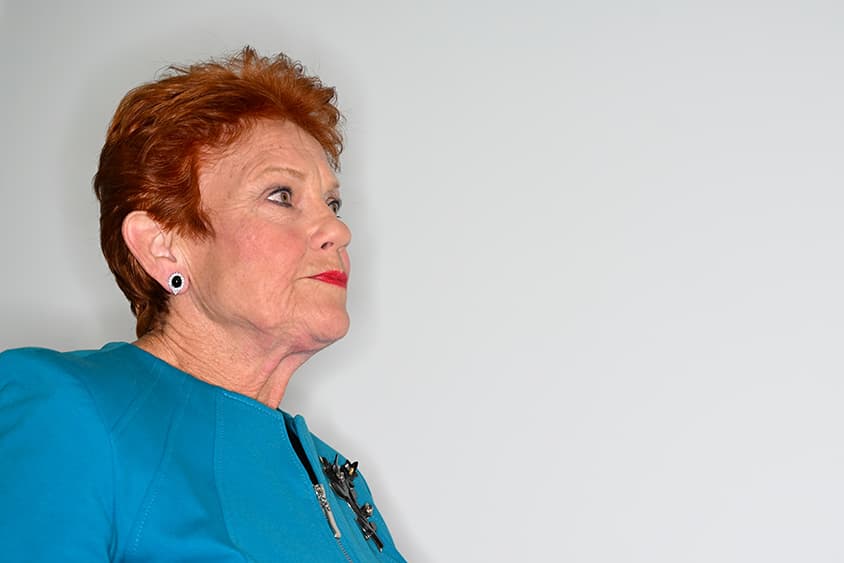
The politics of grievance that has emerged is instead being owned and operated by Pauline Hanson almost exclusively, and that needs to be challenged. She is speaking to something real and has had thirty years to perfect her schtick, but it is time for progressives to counter it, to start screaming that she is not the only one who gets to lament the loss of an idea of the country many of us still want to build.
The first thing to note is that One Nation is no longer a grassroots party, and is increasingly used by vested interests to push an extreme right-wing agenda. The party infrastructure is entwined with a network of conservative think tanks, lobby groups, media outlets and individual donors whose core business is protecting wealth and hierarchy, not redistributing it, and flattening it. Along with her overt alignment with Trump’s MAGA-ism, Hanson is little more than a delivery mechanism for a worldview that originates in boardrooms, mining companies, and reactionary churches, all laundered through her alleged authenticity and “plain speaking”.
She channels anger into dead-end bigotry and conspiracism and sells it back as the voice of the people. Progressives, including those within the unions and labour movement, the Greens and community groups, need to challenge the basis of that grievance and put it in a wider context.
I was struck by a recent article by Reg Raghavan at the advertising and marketing website, Mumbrella. It argues that Australian brands are completely missing how the country is changing because they are stuck in an outdated view of their audience and customer base. Raghavan presents it from a marketing perspective, but the political ramifications are obvious. He notes that the “insight most brand strategies haven’t fully absorbed is this: diaspora communities are not a passive audience waiting to receive messages. They are the engine behind the cultural moments that are reshaping mainstream Australia.”
The shift, he writes, is apparent in queues at stadiums, concert halls and in the streaming charts. He notes that only 2% of the crowd at K‑pop group ATEEZ’s recent Sydney show was Korean while the other 98% turned up because the culture has “crossed over”. Punjabi pop star Diljit Dosanjh sold 90,000 tickets across six cities while Bad Bunny packed out two Sydney dates straight after a Super Bowl halftime performance sung entirely in Spanish. There is also the forthcoming AFC Women’s Asian Cup 2026, where Korean fan groups have bought out whole supporter bays, and the tournament is setting new attendance records for Asian football in Australia.
This makes clear that Hanson’s game depends on an outdated image of “mainstream Australia” and we should stop indulging that fiction. After the Farrer by-election, her offsider Barnaby Joyce said they were now coming for Western Sydney, but the voters he is claiming for One Nation are already living in a cultural world Hanson only wants to tear down.
We need to remind One Nation that the new shape the country is taking is not some distortion of an idea of Australian purity; it is a legitimate shift in understanding, with a history they wilfully ignore. Since at least the Melbourne Olympics of 1956, the country has actively sought to transform itself and, until the Howard era, this had been a broadly bipartisan project (something I discuss in detail in a forthcoming book about the culture wars).
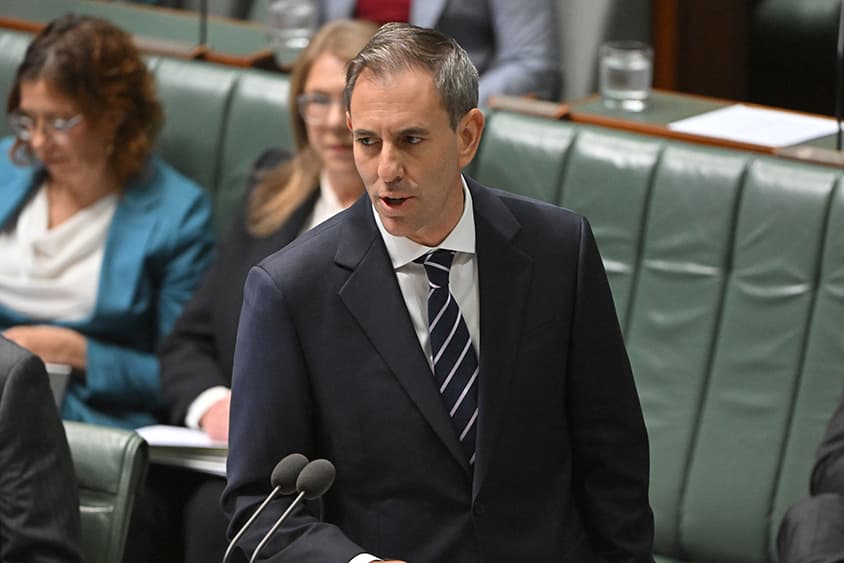
Hanson’s form of grievance is nostalgia for an ethnic and social hierarchy we were right to dismantle and that we have, for the most part, already left behind, as the Mumbrella article suggests. Progressive Australia should be expressing with force that the egalitarian instincts that aided this social transformation have been undermined by the vested interests that now support Hanson, and further eroded by the capture of the Labor Party itself. Their capitulation to a marketised understanding of the economy is now putting limits on what we consider possible.
Historically, a Labor government would ask questions like: why is housing supply dependent on private developers’ profit calculations? Why do we accept that shelter—a basic human necessity—should be allocated through a market that systematically favours those with existing capital? Why do we not tax adequately the super profits firms are making on resources we all own? Why are we spilling billions into a scheme as dubious as AUKUS while pushing people off the NDIS? The fact that such questions are largely ignored, or rendered beyond the pale, tells you how far the definitional boundary of “Labor” has shifted. It also tells you the extent to which our understanding of what is politically possible has been narrowed to something like “what the market will tolerate”.
Hansonism speaks to a particular grievance about what Australia has become, but beneath that narrow idea of the nation is a much more compelling discontent about what has been taken from us, the once and future egalitarian nation we could have been and could still be. What has been lost is a social contract that promised ordinary people security, decent services, and a genuine say in how we are governed. If we allow One Nation to fill the grievance gap unchallenged, they don’t even need win elections. They can lurk on the edges of our politics, policing the boundaries of the possible, undermining what many of us see as worthwhile change.
Hanson and her cohort shouldn’t be allowed to speak as if their vision of the country—past, present, and future—is somehow “authentic” and the only one that needs to be taken seriously. People are rightly angry about the loss of an egalitarian settlement and our politicians need to hear that anger too.
Tim Dunlop is the author five books on Australia politics, the media and the future of work. He writes a popular Substack newsletter called The Future of Everything.
His new book The Culture Wars: Identity, Belonging and the Transformation of Australian Politics is released October 13.