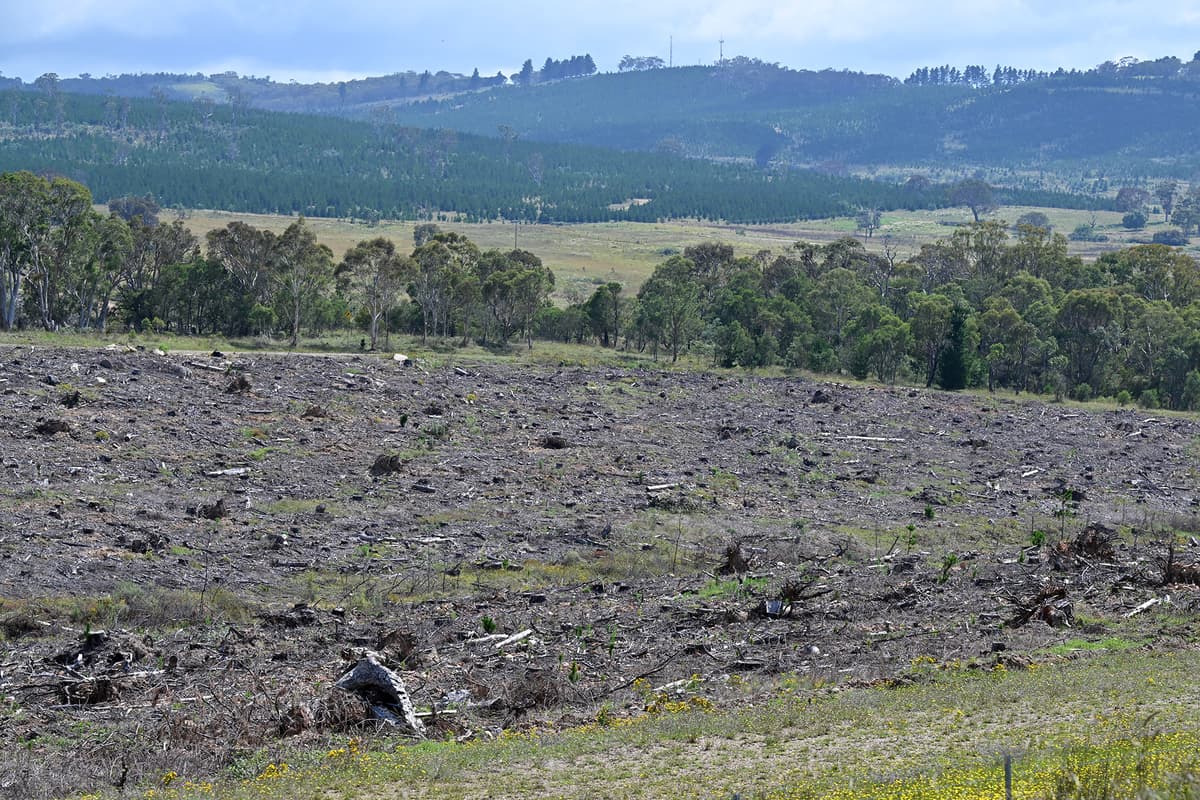
There is a bad habit in Australian politics: profits are privatised, risks are socialised, and taxpayers are left holding the bill. Tasmania’s native forest logging sector has been a repeat offender and appears to refuse to change course
The Tasmanian Government is reportedly negotiating new native forest logging contracts extending from 2027 to 2040, despite major uncertainty surrounding looming reforms to federal environmental laws. New legal and economic advice commissioned by The Wilderness Society Tasmania warns the state could be exposing itself to hundreds of millions of dollars in compensation claims if Sustainable Timber Tasmania (STT) – whose legal entity name is Forestry Tasmania – signs contracts it cannot fulfil in the future.
The problem begins with reforms to the Environment Protection and Biodiversity Conservation Act. From 1 July 2027, Tasmania’s logging industry will lose its long-standing exemption from federal environmental oversight under Regional Forest Agreements (RFAs). That means native forest logging operations will need to comply with the same federal environmental laws as other industries, including new National Environmental Standards that are still being finalised.
And that uncertainty matters enormously.
Barrister Benedict Coyne’s legal advice warns there are “significant and probable liability risks” if STT and the Tasmanian Government rush into long-term supply contracts before the post-2027 regulatory framework is settled. The advice says sawmillers could potentially pursue claims for breach of contract, misleading conduct, negligence, or statutory compensation if STT cannot meet timber supply guarantees after 2027. Critically, any compensation would likely come from public funds.
This is not some distant hypothetical. STT’s own forecasts have long warned of a looming “supply cliff” from 2027 onwards.
The independent economic assessment prepared by InEconomics notes that Tasmania’s remaining 14 sawmills currently process about 115,000 cubic metres of high-quality sawlog annually. Which is already below the legislated quota of 137,000 cubic metres. But STT estimates supply will fall to around 58,000 cubic metres after 2027. That is a reduction of roughly half.
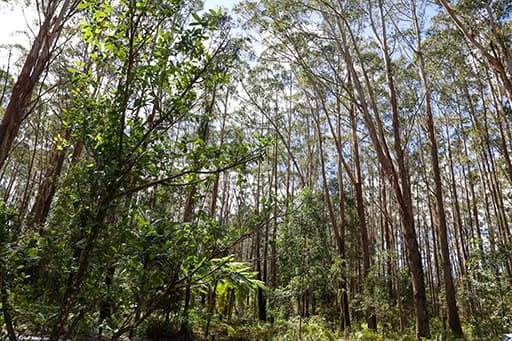
The recently released Wilderness Society Tasmania’s briefing paper argues there are limited ways to avoid that shortfall: open previously protected forests to logging, redefine what qualifies as high-quality sawlog, substitute plantation timber, or accelerate logging now at the expense of future supply. None of those options are simple; politically, socially, environmentally, or economically.
Yet negotiations reportedly continue.
If the government already knows supply is uncertain, and already knows the federal rules remain unresolved, why lock taxpayers into contracts lasting until 2040?
The answer may lie in Tasmania’s long history of public subsidies and payouts to the native forest logging industry. According to briefing documents, the Tasmanian native forest logging industry has already received more than $1 billion in subsidies and payouts since the early 2000s. As a comparison, Victoria’s exit from native forest logging reportedly cost more than $1.5 billion, with further litigation still underway.
And the subsidies continue. The Tasmanian 2026–27 Budget provides an ongoing annual allocation of $8 million in Community Service Obligation (CSO) funding to Sustainable Timber Tasmania. This is public money flowing to an entity – legally registered as Forestry Tasmania (ABN 91 628 769 359) – that is already confronting serious questions about its underlying financial viability.
At the same time, Tasmania’s industry continues to shrink dramatically. There were more than 200 sawmills operating in Tasmania in the 1980s. Today, there are 14. Direct native forest jobs have reportedly fallen from more than 4,000 in 2006 to around 1,100 by 2018. Tasmania is now effectively the last Australian jurisdiction still conducting large-scale native forest logging on public land.
Even STT’s financial sustainability has been questioned. The InEconomics report argues the organisation’s apparent profits rely heavily on government support and asset revaluations, suggesting underlying financial weakness beneath the headline figures. The report estimates potential liabilities from future compensation claims could range between $155 million and $300 million by 2040 under a medium-risk scenario.
Resources Minister Felix Ellis has already publicly acknowledged the danger. During parliamentary scrutiny hearings in late 2025, Ellis conceded the federal reforms represented “an enormous risk to taxpayers.” But despite that acknowledgement, the government appears determined to proceed with negotiations.
The politics here is well-worn and wearing out. Forestry contracts are repeatedly framed as being about ‘certainty’ for workers and regional communities. But certainty for whom?
Certainly not taxpayers, who may ultimately carry the financial risk if contracts prove impossible to fill. That leaves any workers remaining in this dwindling sector increasingly uncertain. And certainly not communities already facing the reality that climate change, biodiversity collapse, and tightening environmental regulation are reshaping how native forests can, and should, be managed.
The Wilderness Society Tasmania briefing paper notes the past 11 years have been the hottest on record globally, warning that worsening droughts, fires, and floods will inevitably affect the ability of forests to grow and recover – and therefore future timber supply. Long-term logging contracts assume a level of ecological and climate stability that no longer exists.
That is the broader issue governments still refuse to confront honestly.
This debate is not just about whether people support or oppose native forest logging. It is about fiscal responsibility, governance, and the risks associated with ecological collapse and dangerous climate change.
If governments knowingly sign long-term contracts despite unresolved supply problems and major regulatory uncertainty, taxpayers deserve full transparency about the liabilities being created in their name.
Louise Morris is an award-winning advocate with 20 years’ experience encompassing climate, energy, forest protection, and law reform in the not-for-profit sector, and federal politics before joining The Australia Institute.